What is Northern Thailand known for?
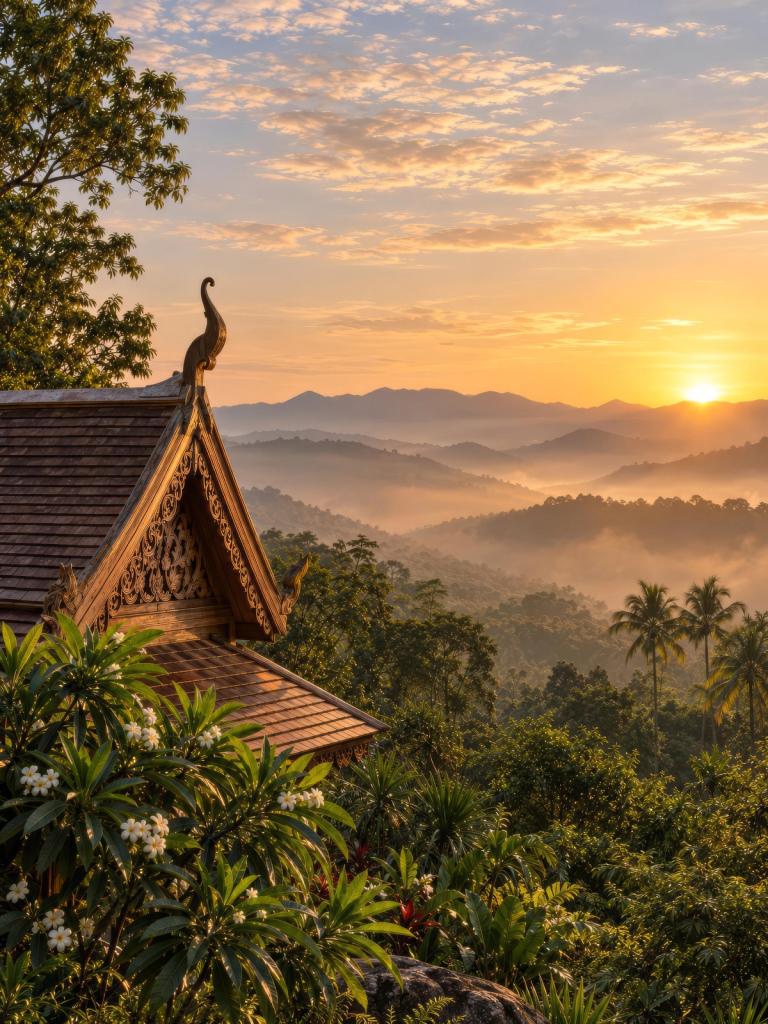
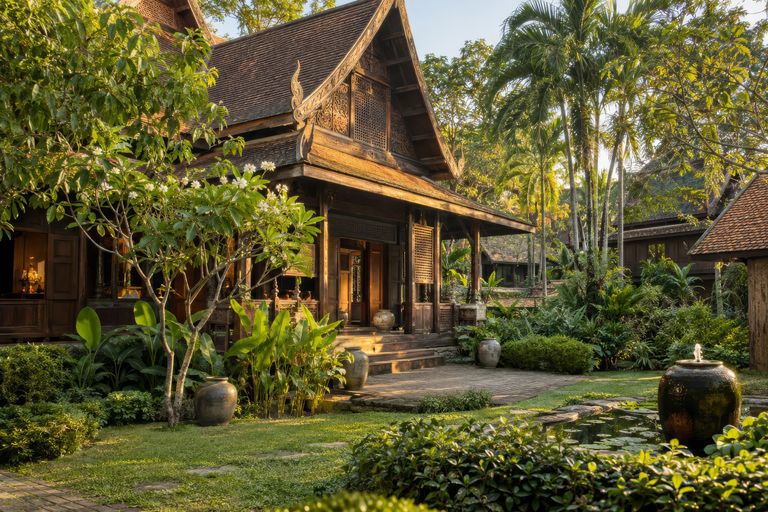
Northern Thailand is known for mountains, temples and the old Lanna culture. Its cities are full of carved teak temples and markets. Its hills hold tea and coffee farms, waterfalls and quiet villages. Its winters are cool and clear, and its festivals, such as Yi Peng, are among the most beautiful in Asia.
The north was once the Lanna kingdom, with Chiang Mai as its capital from 1296. Its food, crafts, language and temple style still differ from those of Bangkok and the south. Khao soi, a curry noodle soup, is the dish everyone remembers.
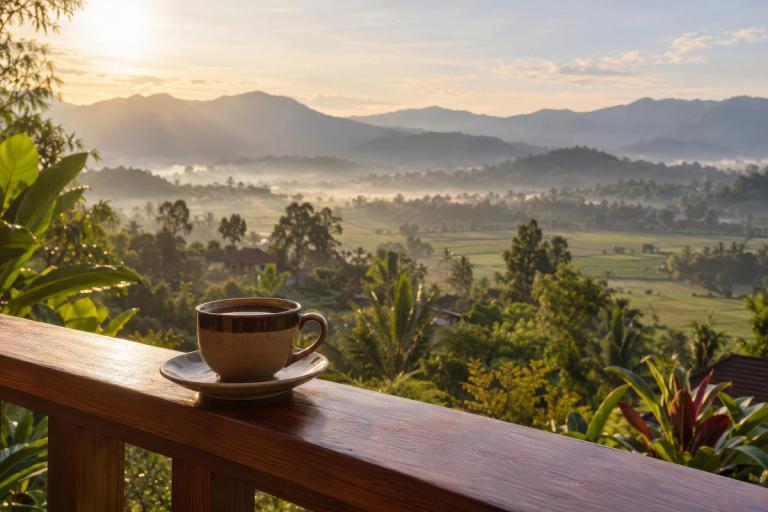
You wake in a valley pavilion to mist on the rice terraces, and by nine you are in a teak temple with a private guide. The north has some of Thailand's finest resorts, set among rice fields, forests and rivers. Days are slower, evenings are cooler, and the focus is culture, nature and wellness rather than nightlife.
Crafts are another reason to come. Silver, lacquer, woodcarving, hand-woven silk and cotton are made in workshops across the region. Wellness is a third: the north's spas, yoga retreats and quiet valleys suit guests who want rest as much as sightseeing.
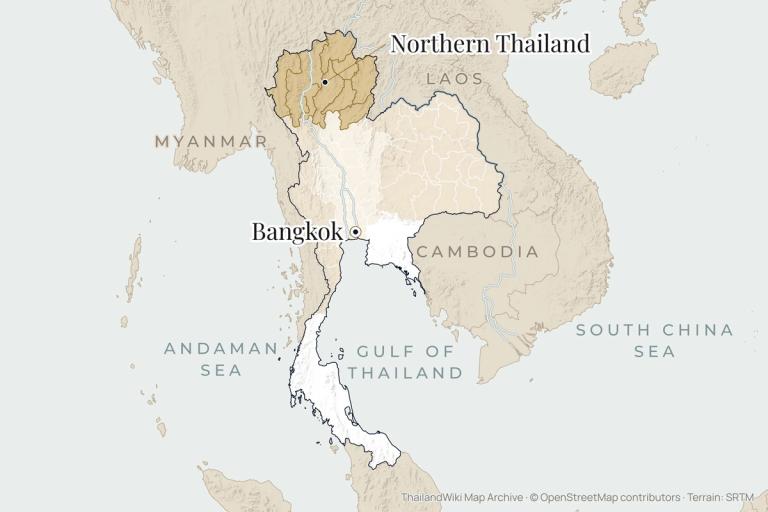
Which places count as the north depends on the scheme. The Royal Institute's six-region scheme lists nine provinces: Chiang Rai, Nan, Phayao, Chiang Mai, Mae Hong Son, Phrae, Lampang, Lamphun and Uttaradit. The National Statistical Office uses a 17-province scheme that also includes Sukhothai, Tak and Phitsanulok.
Is Northern Thailand worth it? North vs south
Yes. Northern Thailand is worth a visit for anyone who wants more than beaches. The north gives mountains, temples, food and culture. The south gives islands, beaches and the sea. Our advice: combine both. Spend four or five nights in the north, then a week on the Andaman or Gulf coast.
The north. Best for: culture, temples, nature, wellness and festivals. Weather: cool and dry from November to January. Pace: slow and calm. Stays: valley resorts, riverside hotels and heritage boutiques.
The south. Best for: beaches, yachts, diving and beach clubs. Weather: depends on the coast; one coast is usually good in any month. Pace: relaxed, with more nightlife. Stays: beach resorts and pool villas.
Combining both. A flight from Chiang Mai to Phuket or Koh Samui makes the link easy. Start in the north while it is cool, then move to the beach. Our Southern Thailand guide covers the islands and coasts.
Example plan, ten days: two nights in Chiang Mai's Old City, two nights in Mae Rim and two nights at the Golden Triangle. Then four nights on a beach. Each move is by private car, helicopter or a short flight, with one planner looking after every step.
Chiang Mai: Old City, Nimman and Mae Rim
Chiang Mai is the capital of the north and the best base for a first visit. Its moated Old City holds the great temples. Nimmanhaemin, to the north-west, is modern and full of cafes. Mae Rim, outside the city, is a valley of rice fields and fine resorts. Each area suits a different kind of stay.
Chiang Mai city. Temples, markets, food and crafts, with an international airport about 4 kilometres from the centre. Start with our Chiang Mai guide.
The Old City. Wat Chedi Luang, Wat Phra Singh and heritage boutique hotels inside the moat. See our Chiang Mai Old City guide.
Nimmanhaemin. Cafes, design shops and a younger crowd. See our Nimmanhaemin guide.
Mae Rim. Four Seasons Resort Chiang Mai sits in this valley, about 30 minutes from downtown, among rice paddies and forested hills. The resort lists 98 pavilions, villas and residences. Raya Heritage stands in gardens near the Ping River. See our Mae Rim guide.
At Four Seasons, Rim Tai Kitchen is both a restaurant and a cooking studio, and the Wara Cheewa spa offers treatments for adults and children. A Family Residence sleeps two adults and two children aged 12 and under. Raya Heritage has 11 Kraam Pool Suites, each with its own pool, and the MICHELIN Guide notes it welcomes children aged 6 and over.
For every hotel option, see our guide to the best luxury hotels in Chiang Mai.
Chiang Rai and the Golden Triangle
Chiang Rai is the northernmost province, home to striking modern temples and the Golden Triangle, where Thailand, Laos and Myanmar meet on the Mekong. It is quieter than Chiang Mai, and it holds one of Thailand's most memorable stays. That is Four Seasons Tented Camp Golden Triangle, set in bamboo jungle by the Ruak River.
Chiang Rai city. The White Temple, Wat Rong Khun, charges ฿200 for foreign visitors from 1 January 2026, according to the temple's own announcement. The city also has the Blue Temple and a lively night bazaar. See our Chiang Rai guide.
Four Seasons Tented Camp. The camp says its dining experiences are included in the stay. Its two-bedroom Explorer's Lodge has a private infinity pool, and the tents have outdoor showers or wooden tubs. Chiang Rai airport is about 60 minutes by car, and guests can also arrive by long-tail boat on the Mekong and Ruak rivers.
Choosing between the two cities? Our Chiang Mai vs Chiang Rai guide compares them.
Around the Golden Triangle, a private long-tail boat on the Mekong shows you the meeting point of three countries. Add a visit to a tea plantation in the hills and a quiet temple at sunset. Plan two nights here.

Where are the best mountain escapes in the north?
For mountains and quiet, head north or west of Chiang Mai. Chiang Dao has a great limestone peak and calm countryside. Pai is a small valley town with hot springs and views. Mae Hong Son, near the Myanmar border, is the most remote of the three, with misty valleys and old temples.
Chiang Dao. A peaceful valley with forest walks, caves and small boutique stays. It makes an easy overnight from Chiang Mai. See our Chiang Dao guide.
Hill-country stays. The best mountain stays are small and personal, with few rooms and fine views. Book early for the cool season, when the clear mornings draw Thai visitors as well as guests from abroad.
Pai. A mountain town reached by a winding road. There are no scheduled flights, so we recommend a private car with a careful driver. See our Pai guide.
Mae Hong Son. Misty valleys, Shan-style temples and a slow pace. As of November 2026, no scheduled flights link Chiang Mai and Mae Hong Son, so the trip is by road. See our Mae Hong Son guide.
These roads have many bends. If you get car sick, take medicine before the journey and sit in the front seat. We plan rest stops along the way.

Old Lanna towns: Lampang, Nan and Sukhothai
Beyond Chiang Mai, the north holds quieter historic towns. Lampang is known for horse carriages and teak temples. Nan is a remote valley town with beautiful murals. Sukhothai, in the lower north, holds the ruins of an early Thai capital. Each makes a rewarding stop on a private road trip.
Lampang. Teak temples, horse-drawn carriages and ceramics, an easy day trip from Chiang Mai. See our Lampang guide.
Nan. A calm valley town near the Laos border, with old temples and slow, local life. See our Nan guide.
Sukhothai. The historical park holds the ruins of one of the first Thai kingdoms. The Fine Arts Department charges a per-zone fee at the gates. See our Sukhothai guide.
A private road loop links these towns well. Drive from Chiang Mai to Lampang, on to Nan, then south to Sukhothai, with a night in each. The roads are good, the scenery changes every day, and you see a side of Thailand that few visitors reach.
Best time to visit the north: cool season, haze and rains
The best time to visit Northern Thailand is November to January, when the air is cool, dry and clear. The Thai Meteorological Department's records show December and January are the driest months in the north, and September the wettest. From February to April, smoke from field burning brings haze.
Cool season, November to January. Clear skies, cool mornings and the Yi Peng festival in November. Under Chiang Mai Province rules, lanterns may be released only on 24 and 25 November 2026. Pack a light jacket for mornings in the hills. This is also high season, so book resorts and guides well ahead.
Haze season, February to April. Chiang Mai's smoky season peaks in late March or early April. Chiang Mai province logged 53 days over the national PM2.5 standard from January to May 2026, against 99 days in 2023. Avoid these weeks if you are sensitive to smoke.
Rainy season, May to October. Green hills, waterfalls and fewer visitors. Rain often falls in the afternoon. Mountain roads can be slow after heavy rain. Rates at the best resorts are lower, and the valleys are at their greenest.
Our Yi Peng guide explains how to see the lantern festival in comfort.
Getting around the north: flights, private driver, helicopter
The usual route is a flight from Bangkok to Chiang Mai or Chiang Rai, then a private car. The flight takes little more than an hour. A private driver is the best way to explore the region at your own pace. For the longest links, a private helicopter can join the two Four Seasons resorts.
By air. Several airlines fly from Bangkok to Chiang Mai, and others to Chiang Rai. Chiang Mai International Airport sits about 4 kilometres from the city, according to Civil Aviation Authority data.
By train. The State Railway of Thailand's Special Express 7 leaves Krung Thep Aphiwat at 07:30 and reaches Chiang Mai at 17:50. Overnight sleepers take longer. Floods led to cancelled northern trains in September 2026, so confirm the service before you book.
By private car. A driver who knows the mountain roads makes road trips safer and calmer. We use English-speaking drivers and cars with room for luggage, golf bags and child seats. Day trips from Chiang Mai to Lampang, Chiang Dao or Doi Inthanon are easy. Doi Inthanon National Park charges an entry fee, collected by the Department of National Parks.
By helicopter. Four Seasons offers private helicopter transfers between its Chiang Mai resort and its Tented Camp in the Golden Triangle. Our helicopter charter page explains how charters work in Thailand.

Plan the north with Tanner
Share your dates and what you love: temples, food, nature, wellness or festivals. One planner chooses the resorts in Chiang Mai, Mae Rim or the Golden Triangle. We book the guides and drivers and link the north to the beaches. Our Thai staff watch the northern haze. If it makes your dates a poor choice, we suggest other weeks. We get back to you right away.