What is Mae Hong Son known for?
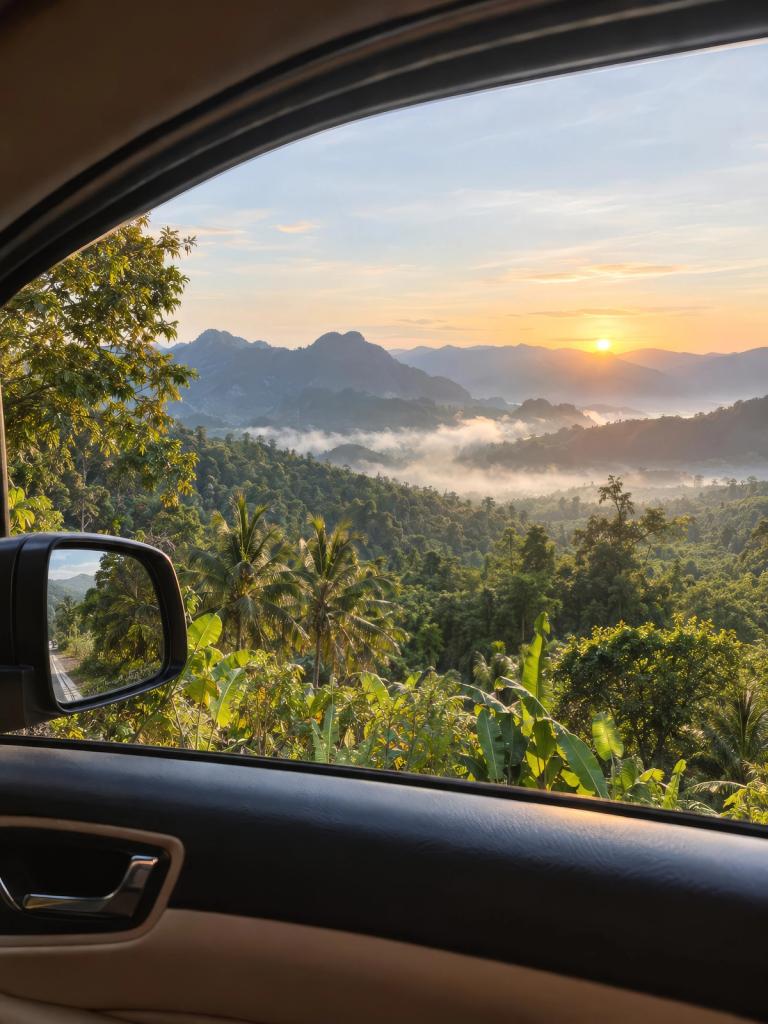
You want the far edge of the north: mist in the valleys, temples on a lake and roads with almost no one on them. That is Mae Hong Son. It is known for misty mountain valleys and for Shan-style temples such as Wat Chong Kham and Wat Chong Klang beside the town lake. Hill-tribe villages and the famous loop road from Chiang Mai complete the picture. It is a province, not a state, with a small capital town of the same name.
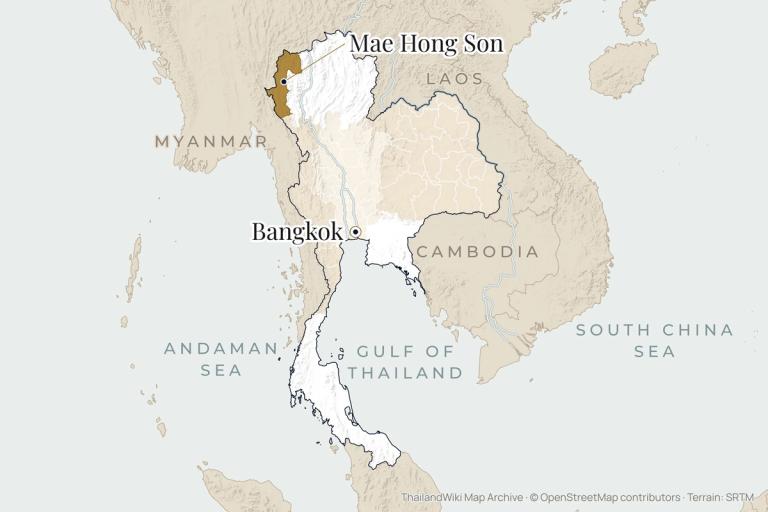
The province sits in Thailand's far north-west, along the border with Myanmar. Forested ridges cover most of the land, and small towns sit in the valleys between them. The Shan people, also called Tai Yai, shaped much of its culture, and you see it in the temples, the food and the markets.
The town of Mae Hong Son is calm and small. Its centre is a lake, with two white and gold temples reflected in the water. In the early morning, mist hangs over the hills, and the market fills with local produce.
Food is part of the experience. Look for Shan dishes such as rice noodles in a light curry, pickled tea leaf salad and pork with ginger. They appear at the morning market and in small family restaurants. Ask your guide to order for you.
The appeal is distance and quiet. Mae Hong Son feels far from everywhere, and that is the reason to go.
Is Mae Hong Son worth visiting?
Yes, for a slow, scenic stay of two or three nights on a northern road trip. Mae Hong Son rewards you if you love mountains, culture and quiet. It is remote and simple, with few luxury hotels and long, winding drives. Go if the journey matters to you as much as the arrival.
It works best as part of the Mae Hong Son loop with Pai, or as a calm break after Chiang Mai. If you want spas, fine dining and polished service every day, Chiang Mai is the better base.
It suits couples, photographers, keen walkers and families with older children who enjoy nature. Very young children and anyone who suffers badly from motion sickness may find the roads hard.
The honest trade-off is time on the road. The Tourism Authority of Thailand counts 1,864 curves between Chiang Mai and Mae Hong Son. With a good driver and short driving days, those hours become part of the pleasure.
What should you see in Mae Hong Son?
See Wat Phra That Doi Kong Mu at sunrise and the Pang Ung reservoir in the morning mist. Visit Ban Rak Thai tea village by the border and Tham Lod cave in Pang Mapha. Walk the Su Tong Pae bamboo bridge across the rice fields, and end at Pha Suea waterfall. A private driver links them over two days.
Wat Phra That Doi Kong Mu. This hilltop temple, with white Shan-style chedis, looks over the town and the valley. Come at sunrise, when the mist lies below you.
Pang Ung. A calm reservoir ringed by pine trees, often wrapped in mist at dawn. Cameras come out here more than almost anywhere in the north. Arrive early to see it at its quietest.
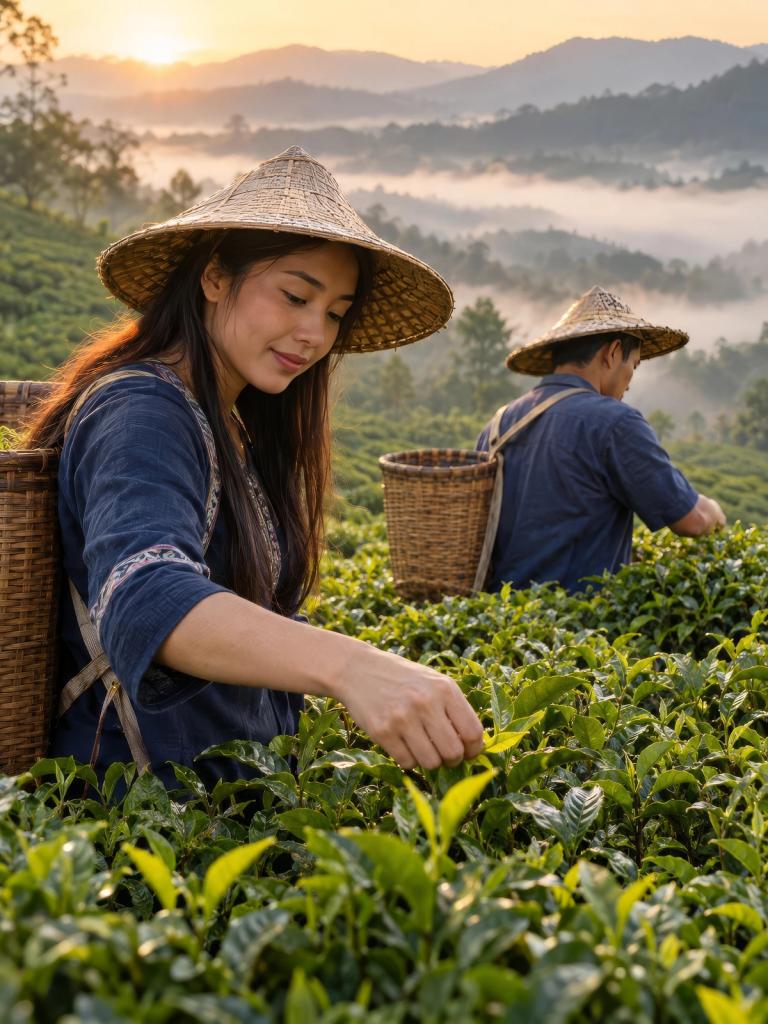
Ban Rak Thai. A village founded by Chinese Yunnanese settlers, close to the Myanmar border, with tea terraces and a lake. Stop for tea tasting and Yunnanese food.
Tham Lod. A large cave system in Pang Mapha district, explored with a local guide and lanterns, and by bamboo raft in parts. The Thailand Film Office, part of the Department of Tourism, lists it as open daily from 08:00 to 17:00.
Su Tong Pae bamboo bridge. A long bamboo walkway crosses the rice fields to a temple on the hill. Monks use it on their morning alms walk.
Pha Suea waterfall. A wide waterfall in the forest, best after the rains, from about August to November.
The morning market. The town market is busiest at dawn, with Shan snacks, mountain vegetables, herbs and flowers. Walk it with your guide before breakfast, then return for coffee by the lake.
Hill-tribe villages. Visit only with a respectful local guide who knows the community. We avoid any visit that treats people as an attraction.
How many days do you need for the Mae Hong Son loop?
Plan four to six days for the Mae Hong Son loop with a private driver. Drive Chiang Mai to Pai, then Pai to Mae Hong Son. Continue to Khun Yuam and Mae Sariang, then back to Chiang Mai. The Tourism Authority of Thailand puts the full loop at about 600 km. Example plan: five days in Mae Hong Son.
Day 1: Chiang Mai to Pai. Mountain roads, viewpoints and the canyon at sunset. See our Pai guide.
Day 2: Pai to Mae Hong Son. Highway 1095 is the Pai to Mae Hong Son road, the TAT says. Stop at Tham Lod on the way.
Day 3: Mae Hong Son. Sunrise at Doi Kong Mu, Pang Ung and Ban Rak Thai.
Day 4: south to Khun Yuam and Mae Sariang. In November, see the Bua Tong flowers at Doi Mae U Kho near Khun Yuam. Sleep by the river in Mae Sariang.
Day 5: back to Chiang Mai. Return through the mountains, perhaps via Doi Inthanon.
Short driving days make all the difference. One planner sets the stages, the rooms and the guides for the whole loop, with our Thai team a call away. Our luxury chauffeur service provides a comfortable car and an experienced driver. Our Chiang Mai to Pai route guide covers the first leg.
Where should you stay in Mae Hong Son?
Stay at The Imperial Mae Hong Son Resort in Pang Moo for the most complete hotel in town. It has 104 rooms in a local style, its own site says. Fern Resort is a rustic nature resort with bungalows and villas, not a luxury stay. The only luxury boutique stay in the province is Reverie Siam, in Pai.
Be honest with yourself about comfort. Mae Hong Son has no five-star resorts. If that matters, spend your nights in Pai and Chiang Mai, and see Mae Hong Son on a longer driving day or one night.
For families or groups, a private house with staff can be arranged in the valley. We describe each house to you in writing.
Wherever you stay, ask for a room with a mountain view and extra blankets in the cool season. Nights in December and January can be cold, and mornings at the viewpoints are colder still.
When is the best time to visit Mae Hong Son?
Visit from November to February, when days are cool and clear and mornings bring mist to the valleys. In November, the Bua Tong flowers turn the hills of Doi Mae U Kho yellow for about two weeks, the Tourism Authority of Thailand says. February to April is the haze season, with poor air at times.
Haze can be severe. From February to April, smoke from forest and farm fires settles in the valleys. We do not recommend March and early April.
The rainy season, from about June to October, brings green valleys, full waterfalls and slippery roads. In the Thai Meteorological Department's normals for the north, September is the wettest month and December and January the driest.
In the rainy season, roads can be slippery and landslides sometimes close stretches for a few hours. An experienced local driver checks conditions each morning and adjusts the plan.
How do you get from Chiang Mai to Mae Hong Son?
Drive. There is no scheduled flight from Chiang Mai to Mae Hong Son now (checked November 2026), after a planned service was shelved. The road runs either north via Pai on Highway 1095, or south via Mae Sariang. Both cross the mountains on tight curves, so plan a full day.
Via Pai. The classic route, with a night in Pai to break the journey. It is the most scenic way.
Via Mae Sariang. A longer but gentler road through forests and Karen villages, good for the return leg.
By private jet. Any public airport in Thailand can take a private aircraft with permission from the aviation authority, so a private flight is possible by arrangement. Ask us about private jet charter.
Timing. Leave after breakfast and avoid driving the mountain roads after dark. Plan stops every hour or so for coffee, viewpoints and a rest. A full day on the road feels very different when it is broken into short, pleasant stages.
Luggage. Pack light for a road trip. One medium suitcase per person fits easily in a large car, with room to stretch. Keep a small bag with water, a jacket and any medication within reach.
Motion sickness. Eat lightly, sit in front, take a tablet before you leave if you need one, and ask your driver to take it slowly. See our Chiang Mai guide for where to start.
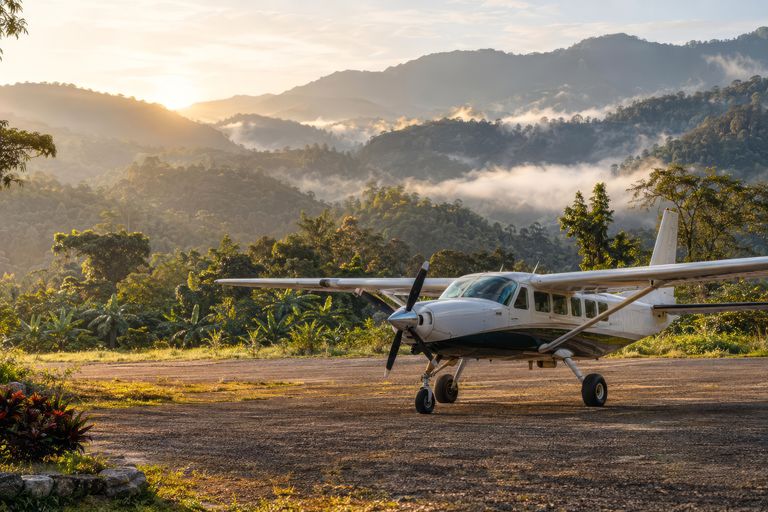
Plan Mae Hong Son with Tanner
Tanner plans Mae Hong Son as one road trip. That means the car, a driver who knows the 1,864 curves, the best rooms in each town and a guide for the villages. One planner holds every piece, for a couple or a family, and our Thai team checks the roads each morning. If the comfort level will not suit you, we say so and suggest more nights in Pai or Chiang Mai. Send your dates and party size, and you get one written plan with every price included.