Is Nan worth visiting?
You have seen Chiang Mai and Chiang Rai, and you want the north without the crowds. Then yes, Nan is worth visiting. It is a small province in the far east of northern Thailand, close to the Laos border. It has some of the country's finest temple murals, high mountain parks and villages that still weave and farm in the old way.
Nan is not on the usual first-trip route. The usual northern route stops at Chiang Mai and Chiang Rai. That is the charm. The town is quiet, the roads are empty, and the people you meet are local, not tourists.
Nan suits you if you have seen the famous places and want something calmer. It suits couples, photographers and anyone who enjoys art, mountains and slow mornings. It is the wrong choice for beach clubs, big shopping malls or a lively night out.
Three or four nights is ideal. Spend one or two in Nan town for the temples, the museum and the riverside. Then go north to the mountains of Pua and Doi Phu Kha, or east to the salt wells of Bo Kluea.
The luxury in Nan is space and quiet, not marble lobbies. Pair Nan with Chiang Mai or Lampang for a longer journey through the north.
Where is Nan? Province, town and the name
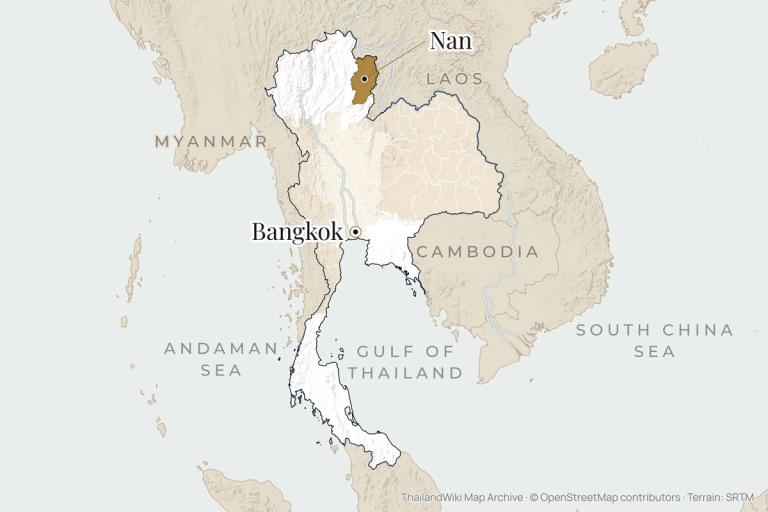
Yes, Nan is a province of Thailand. It lies in the north-east of the northern region, along the border with Laos. Its capital is the town of Nan, on the banks of the Nan River. When people say Nan, they can mean either the province or the town, and the context tells you which.
The Nan River runs south through the province and on toward the central plains. The town grew on its west bank, and many sights sit close to the water. The province stretches north to Pua and Bo Kluea, where the hills rise high and the roads climb through forest.
Nan was once a small kingdom with its own rulers and close links to Laos. The temples have a style of their own, mixing northern Thai and Tai Lue ideas. The murals show the dress and daily life of past centuries.
For planning, think of Nan in five areas. Nan town has the temples and museum. Pua and Doi Phu Kha have the mountains. Bo Kluea has the salt wells. Sapan is a village in the far north. Tha Wang Pha and Nong Bua hold Tai Lue culture. See our northern Thailand guide for the wider region.
Getting to Nan: flights, road and a private driver
The easiest way to Nan is to fly. Thai AirAsia flies from Don Mueang to Nan Nakhon Airport, and the airline gives the flight time as about 1 hour 15 minutes. The return to Bangkok takes about 1 hour 5 minutes. From the airport, Wat Phumin in the old town is about 10 minutes by car, 4 km (checked November 2026).
Your driver meets you at arrivals and stays with you for the whole trip. This matters in Nan. There is little public transport to the mountains, and the best places are spread across the province. With a car and driver, you stop at viewpoints, villages and coffee farms whenever you like.
By road, Nan is a long drive from Chiang Mai. The route crosses the hills through Lampang and Phrae, with many curves in the last stretch. Our advice: make it part of a slow northern journey, stopping a night in Lampang on the way. It is a full day in the car, so we plan good stops.
For groups and tight schedules, a charter flight is the fastest option. See our private aviation page for how charter works in Thailand.
Inside the province, our chauffeur service provides a comfortable car or van and an experienced local driver. Mountain roads to Doi Phu Kha and Bo Kluea are steep and winding. A driver who knows them makes the day safer and far more relaxing.
Flights to small airports can change with the season. We confirm the schedule when you book, and we plan a backup route through Phrae or Chiang Mai if a flight is cancelled.

Nan town: Wat Phumin and its murals
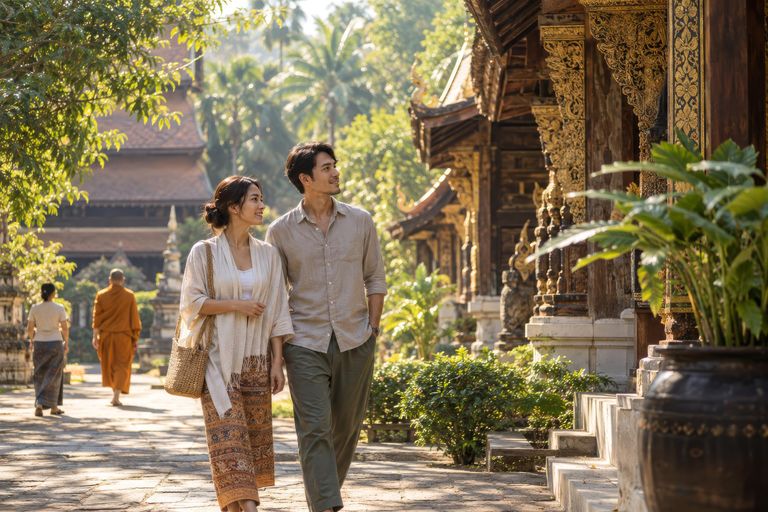
Wat Phumin is the reason many people come to Nan. This small temple in the centre of town is famous across Thailand for its wall murals. The paintings show local life, love stories and scenes from the Buddha's past lives, in bright, gentle colours. They are among the most loved murals in the country.
The building itself is unusual. The hall opens on every side, and Buddha images inside sit back to back, each facing a door. Great naga serpents form the stair rails at the entrance, their bodies running through the base of the hall.
The murals reward a slow look. Look for the men and women in Tai Lue and northern dress, the traders, the boats on the river and the small daily moments. One scene of a man whispering to a woman has become a symbol of Nan.
Visit early in the morning or late in the afternoon, when the light is softer and the hall is quieter. Inside, sit on the floor with your feet pointing away from the Buddha images, and do not use flash on the paintings. Dress with shoulders and knees covered, and leave your shoes at the door.
A local guide brings the murals to life. Many details are easy to miss, and the stories behind them are part of Nan's history. We arrange a guide who speaks good English and knows the town well. Wat Phumin's opening hours and visitor rules can change, so we check them on the day.
After the temple, walk the streets around it. The old town is small and easy on foot, with shaded lanes, wooden houses and small coffee shops. The walking street market sets up beside the temple at the weekend.
Nan town: Wat Phra That Chae Haeng, the museum and the old walls
Nan town has three more sights worth your time. They are Wat Phra That Chae Haeng, the Nan National Museum and the old city walls. The Fine Arts Department lists the museum as open Wednesday to Sunday, 09:00 to 16:00, and closed on Monday and Tuesday. Plan your town day around those hours. The museum charges a small entry fee, but the Tourism Authority of Thailand and the Thailand Tourism Directory publish different figures. We confirm it on the day.
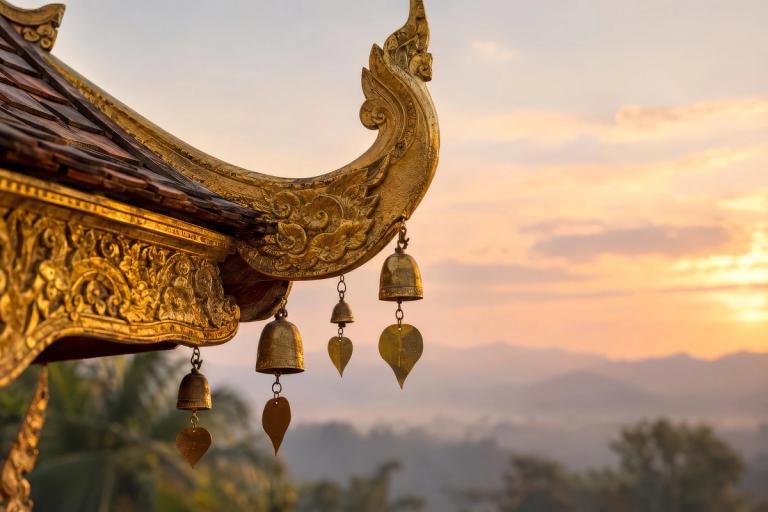
Wat Phra That Chae Haeng sits on a low hill across the river, a short drive from the centre. Its golden chedi rises above the trees and catches the late sun. Naga stairways lead up to the temple. It is one of the most important temples in the province, and local people come here to make merit.
Go at the end of the afternoon, when the gold turns warm and the view over the valley is clear. The grounds are calm, and few visitors come from outside Nan. Your driver waits below while you walk up.
The Nan National Museum stands in the centre of town, close to Wat Phumin. It tells the story of Nan as a small kingdom, with displays on its rulers, art, local peoples and crafts.
Parts of the old city walls still stand near the centre. A walk along them shows how the town was once a defended capital. Combine the walls, the museum and Wat Phumin in one easy morning on foot, then drive to Chae Haeng for sunset.
Nan town: walking street, river and food
Nan town is at its liveliest at the weekend with the Kuang Mueang Nan walking street, next to Wat Phumin. It runs on Friday, Saturday and Sunday evenings. The Tourism Authority of Thailand's attraction page lists 17:00 to 22:00, but other notices differ. Confirm before you go. It is a calm, friendly market.
Local families come to eat, and visitors are welcome. Stalls sell northern dishes, grilled sausages, sweets and handmade crafts. Some evenings, people sit on mats on the temple lawn to eat and listen to local music. It feels like a town gathering more than a tourist market.
A riverside walk at sunset is one of the simplest pleasures here. On race weekends, the banks fill with crowds watching long wooden boats speed past to the sound of drums.
The town is small and safe to walk in the evening. Wear comfortable shoes, carry some cash for the stalls, and bring a light layer in the cool season.
Pua and Doi Phu Kha National Park
Doi Phu Kha National Park is Nan's great mountain park, above the town of Pua in the north of the province. The Department of National Parks charges foreign visitors ฿200 per adult and ฿100 per child. The park is a world of high ridges, forest, viewpoints and cool air, far from the heat of the plains.
The park is known for the chomphu phu kha tree, a rare tree with pink blossoms. It grows wild on these mountains and is a symbol of the park. The nature trail to the trees closed from 1 June to 30 September 2026, the Royal Gazette notice says. Ask us about the blossom when you plan your dates.
The road up from Pua is one of the most beautiful drives in northern Thailand. It climbs in tight bends through forest, with views back over rice terraces and valleys. A good driver takes the curves slowly and safely.
Pua town itself is a pleasant stop. It has rice fields, small cafés with views of terraced paddies, and a quiet local market. Stay near Pua for a night, so you can be in the mountains at sunrise.
Bring warm clothes for the cool season, as nights on the ridges can be cold. Sunscreen with oxybenzone or octinoxate is banned in national parks, the Department of National Parks says, so pack a reef-safe kind. Our national parks guide explains the fees and rules.
Bo Kluea: the mountain salt wells
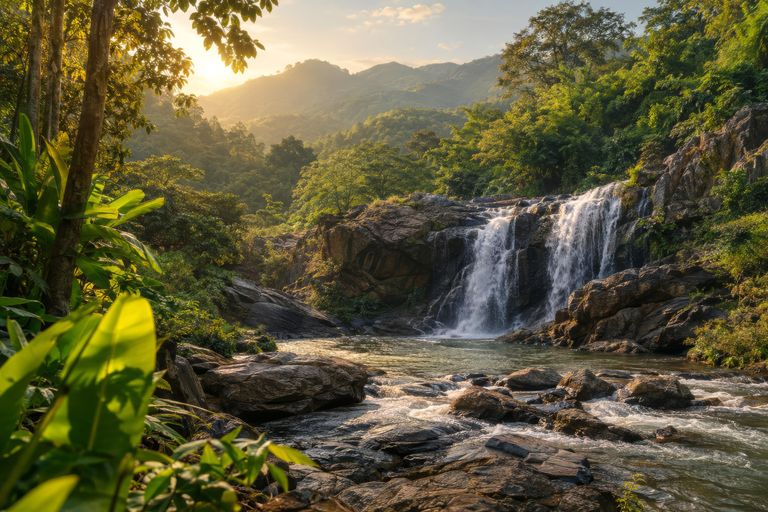
Bo Kluea is a mountain village where people make salt far from the sea. The Tourism Authority of Thailand says villagers draw salty water from wells in Bo Kluea subdistrict. It lies on Highway 1081 in the north-east of the province. They boil the water in the traditional way to make salt.
Families draw it in buckets, pour it into large pans and boil it over wood fires in small huts. When the water is gone, white salt remains.
You can watch the work and buy small bags of salt to take home. Be polite and ask before you take photographs of people at work. The huts are hot and smoky, so a short visit is enough. A local guide explains each step and the history of the trade.
Bo Kluea also has a cool climate, a clear stream and green hills. Small resorts and homestays line the valley. It makes a good overnight stop between Pua and the far north, or a long day trip from Nan town with lunch by the river.
The road to Bo Kluea is steep and winding, with sharp bends and few places to stop. Travel by day with an experienced driver, and allow time for viewpoints along the way.
Sapan village and the north
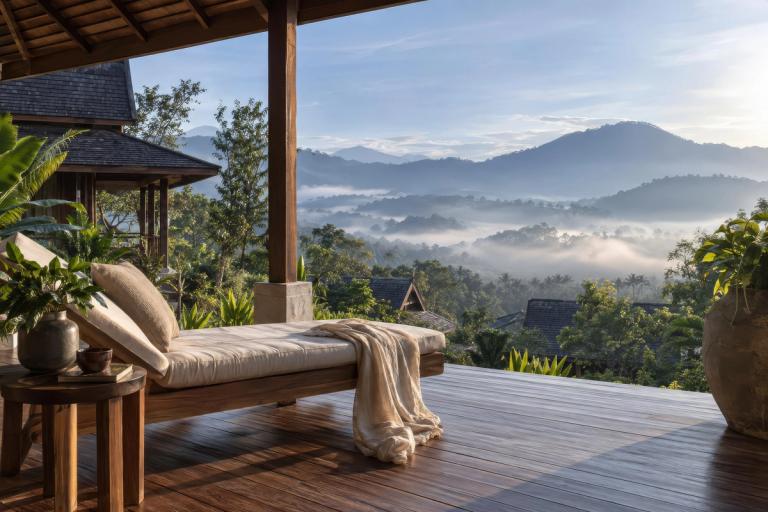
Sapan is a small village in the far north of Nan, set in a green valley with a clear stream. It is known for its peaceful setting, a bamboo bridge and a simple village temple. Many Thai visitors come for the views and the fresh air, especially in the cool season.
The village is very quiet. Walk along the stream in the morning, cross the bamboo bridge and visit the temple.
Sapan works well with Bo Kluea, as the two are in the same part of the province.
Tha Wang Pha, Nong Bua and Tai Lue culture
Tha Wang Pha and Nong Bua, north of Nan town, are the centre of Tai Lue culture in the province. The Tai Lue are a people with their own language, dress and weaving traditions. Their villages, temples and textiles are a quiet highlight of Nan that is easy to miss.
Nong Bua is known for its Tai Lue temple, with low, sweeping roofs and painted walls inside. The murals are in a style close to those of Wat Phumin, showing daily life and old stories.
Weaving is the living art here. Women work on wooden looms under their houses, making cotton cloth with fine patterns in many colours. You can watch them work, ask about the designs and buy directly from the weavers. A Tai Lue scarf or table runner is a beautiful, useful souvenir.
Tha Wang Pha also has a strong boat-racing tradition. The government's Thailand.go.th site says its traditional boat racing festival ran from 23 August to 1 September 2026.
Visit with a guide who knows the families and can translate. It makes the day more personal and helps you understand the patterns and their meanings.
Where to stay in Nan: the best boutique and mountain stays
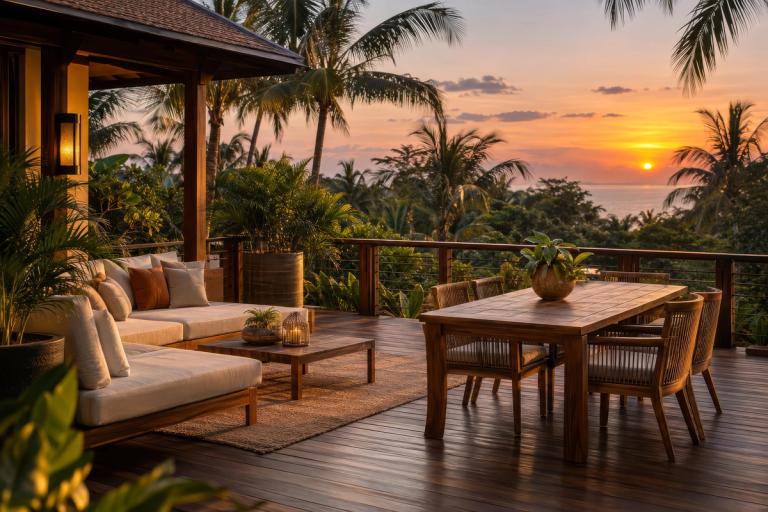
Nan has no international five-star hotel, so the best stays are small boutique resorts. The strongest choice is Sataa Resort Nan in Phu Phiang, which the MICHELIN Guide lists in its hotel selection. It has 27 rooms, the Guide says, set among rice fields close to town.
Sataa suits couples and small groups who want design, quiet and good food. Rooms look out over green fields and the hills beyond. It is the closest Nan comes to a luxury resort, and it fills early in the cool season. Book well ahead for November to February.
Nan Seasons Boutique Resort, also in Phu Phiang, describes itself as a small four-star property with teak bungalows and villas. It suits families and anyone who likes a traditional style. Gardens and wooden buildings give it a calm, northern feel.
In the centre of town, Nan Boutique Hotel calls itself a three-star boutique hotel, with standard, superior, deluxe and family rooms. It is practical rather than grand, but it puts you within walking distance of Wat Phumin, the museum and the weekend market.
For the mountains, small resorts near Pua and in the Bo Kluea valley give you sunrise views and cool nights. Rooms are simpler than in town. We choose the best available for your dates and describe each one plainly.
Our advice: stay two nights in or near town and one night in the mountains.
Food and coffee in Nan
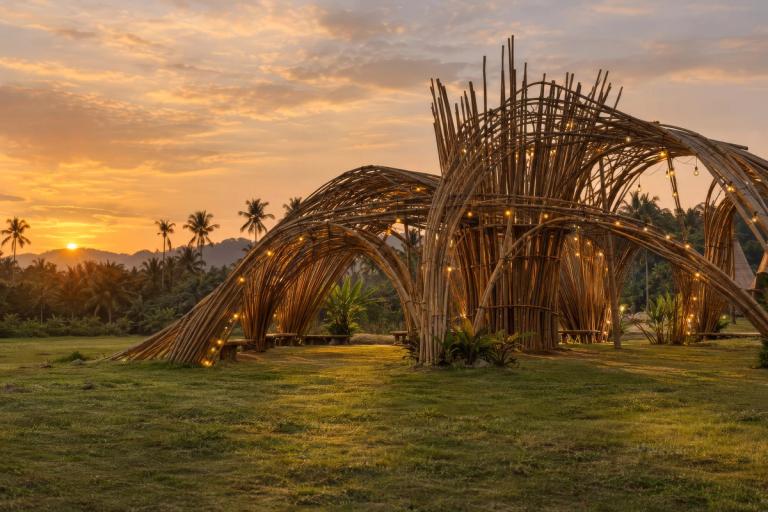
Nan's food is northern Thai at its most local. Expect khao soi, a curry noodle soup, sticky rice, spicy dips with fresh vegetables, grilled pork and herb-filled sausages. Dishes are less sweet than in Bangkok and rich with herbs from the hills. The weekend walking street is a fine place to start.
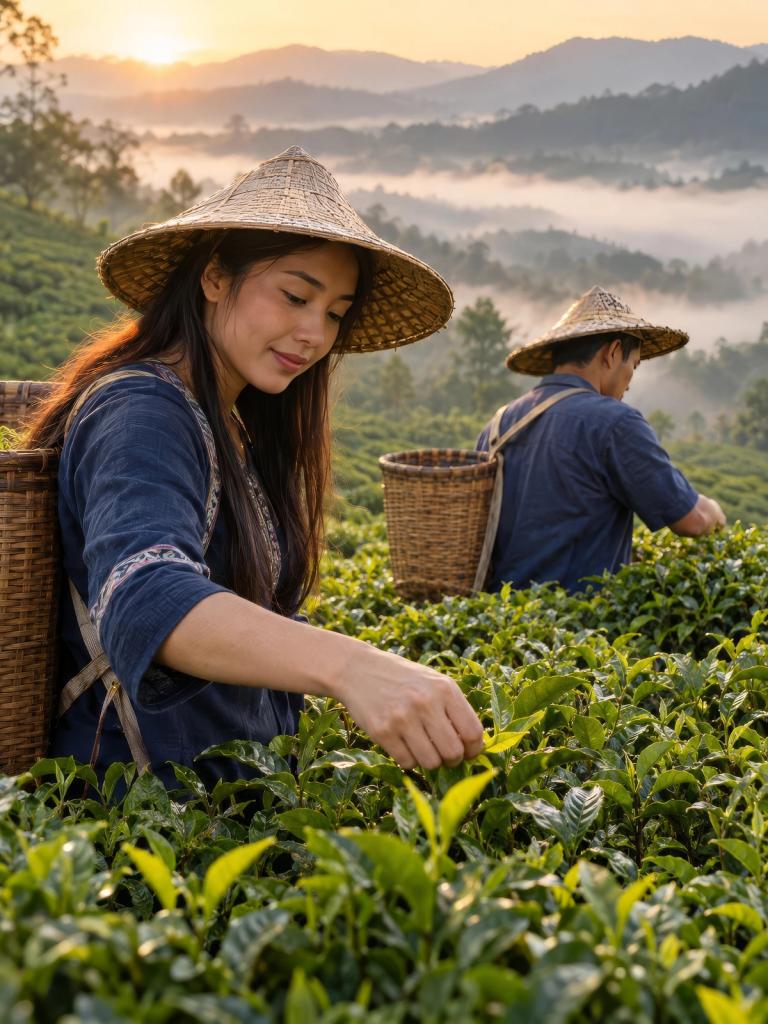
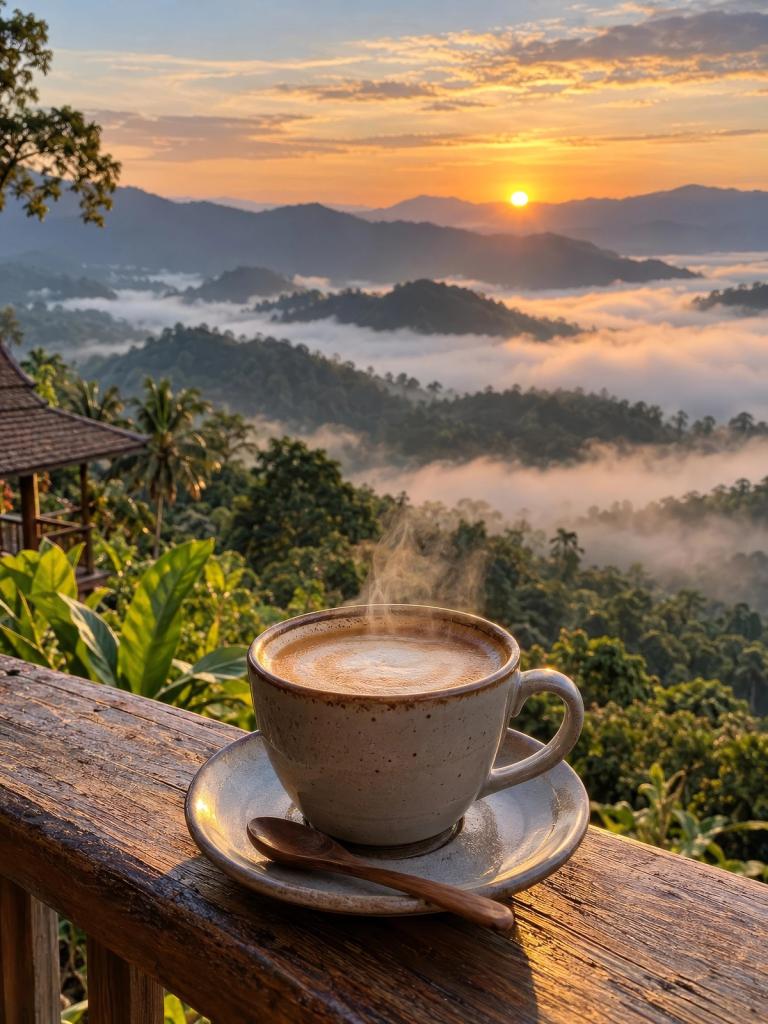
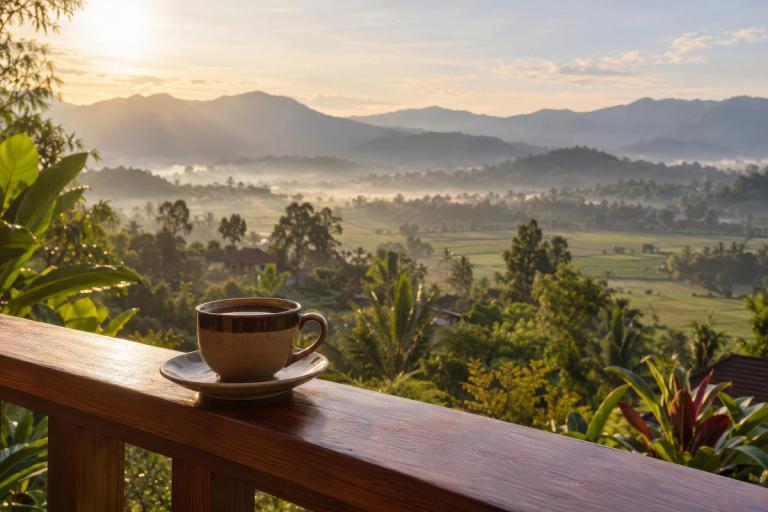
Coffee is a quiet pride of the province. Farms in the hills grow coffee, and small cafés in town and in the mountains serve it fresh. Many cafés sit beside rice fields or on hillsides with long views.
Ask your guide to arrange lunch at a village kitchen. It is often the most memorable meal of the trip.
Fine dining is limited, so we arrange private dinners where it matters. Tell us about allergies and preferences, and we plan every meal around them.
Best time to visit Nan: cool season, mist and festivals
The best time to visit Nan, Thailand is the cool season, from November to February. The Thai Meteorological Department's records for the northern region show December and January as the driest months and September as the wettest. Days are bright and clear, nights are cool and the mountains often wake under mist.
December and January can be cold at night in the mountains, so pack warm layers. The roads are dry, and the views from Doi Phu Kha and the Pua hills are at their best. This is also the busiest time for Thai visitors, so book rooms early, especially for New Year.
March and April bring heat and some haze from seasonal burning in the north. The rains arrive in May and are heaviest in September, when the rice fields are green and lush. Roads in the mountains can be slippery then, and some trails close. Our Thailand weather guide covers the north month by month.
The closing round of the provincial boat race for the royal trophy is set for 7 and 8 November 2026. It takes place at the foot of Saphan Phatthana Phak Nuea in Mueang Nan, as agreed at the Nan governor's meeting. Long boats race on the river to the sound of drums.
Race days bring the town to the river, and it is a joyful, local scene.

A 3-day private plan for Nan
Example plan: three slow days in Nan. You fly in on the morning flight and see the town on day one. Day two is the mountains, and day three the Tai Lue villages. A private driver and a local guide stay with you throughout, so every day starts and ends when you choose.
Day 1: Nan town. Land in the morning and check in at your resort. Visit the Nan National Museum, then walk to Wat Phumin for the murals and lunch nearby. Rest in the afternoon. Drive to Wat Phra That Chae Haeng for sunset, then dinner in town or at the walking street if it is a weekend.
Day 2: Pua and Doi Phu Kha. Leave early for Pua and the mountain road. Stop at viewpoints as the mist lifts, walk a short trail in Doi Phu Kha and have lunch with a view of rice terraces. Stay the night in the mountains or return to town.
Day 3: Tai Lue villages. Drive to Nong Bua and Tha Wang Pha for the Tai Lue temple and the weavers. Have a village lunch, buy textiles directly from the makers and stop for coffee by the rice fields. Return to Nan for the evening flight or a final night.
With more time, add Sapan, a second mountain night or a slow drive to Lampang and Chiang Mai. We adapt the plan to your interests, your pace and the season.

Plan Nan with Tanner
Tanner plans Nan from the first flight to the last coffee. Name what matters to you: art, mountains, food or slow days. One planner books the flights, a careful driver, the best rooms, local guides and private meals. Our Thai team stays on call through your trip. Nan has no five-star hotel, and we tell you exactly what each room offers before you book.