Why is Sukhothai important?
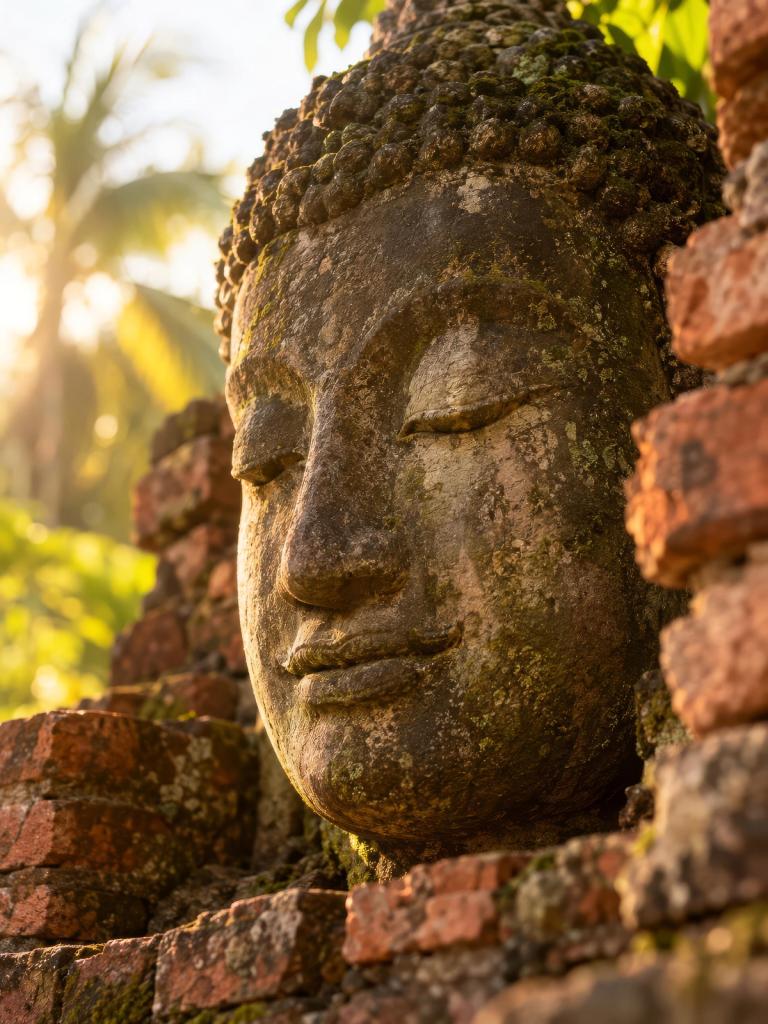
Sukhothai matters because it was the capital of the first Kingdom of Siam, founded in the 13th century, UNESCO says. Its ruins, temples and Buddha images show the start of a Thai style of art and building. UNESCO listed the Historic Town of Sukhothai and Associated Historic Towns as a World Heritage Site in 1991.
The listing covers three old cities: Sukhothai itself, Si Satchanalai to the north and Kamphaeng Phet to the south-west.
What you see today is a wide green park of moats, ponds and brick temples. The famous walking Buddha form, shown in mid-step, is one of its best-known creations.
For Thai people, Sukhothai has a special place. It is taught in school as the beginning of the nation's history, and many families visit at least once.
The value is the calm. Sukhothai is quieter and greener than Ayutthaya, with fewer tour buses and wide open spaces between the temples. At dawn, with mist on the ponds and monks walking, it feels almost untouched.
Is Sukhothai worth visiting?
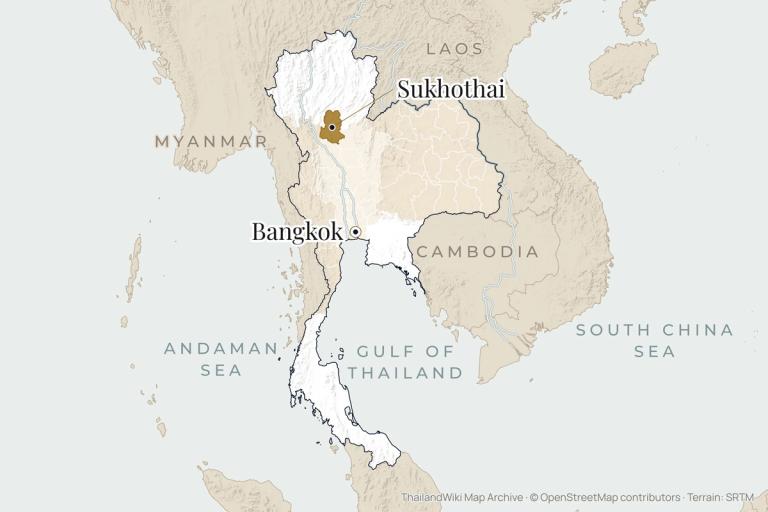
Yes, for one or two nights. If you love history, photography and quiet places, Sukhothai rewards you. It is quieter and greener than Ayutthaya, and its temples sit in a wide park with ponds and trees. It works best as a stop between Bangkok and Chiang Mai, or for Loy Krathong in November.
One full day is enough to see the central zone and the highlights of the northern and western zones. A second day adds Si Satchanalai and another sunrise among the temples.
Ayutthaya is a day trip; Sukhothai is a journey. That distance is part of its charm. Our Ayutthaya guide covers the closer option.
Example plan, two nights. Arrive in the afternoon and watch the sunset at Wat Sa Si. The next morning, cycle the central zone at opening time and rest at midday. Visit Wat Si Chum and Wat Saphan Hin in the late afternoon. On the last morning, drive to Si Satchanalai before you leave.
Kamphaeng Phet. The third city on the UNESCO listing lies to the south-west. Its forest temples and laterite Buddha images make a quiet half-day if you want to see all three.
Who should not come? If you have only a few days in Thailand, or do not enjoy ruins and history, choose Bangkok or the coast. For everyone else, few places in Thailand look this fine.
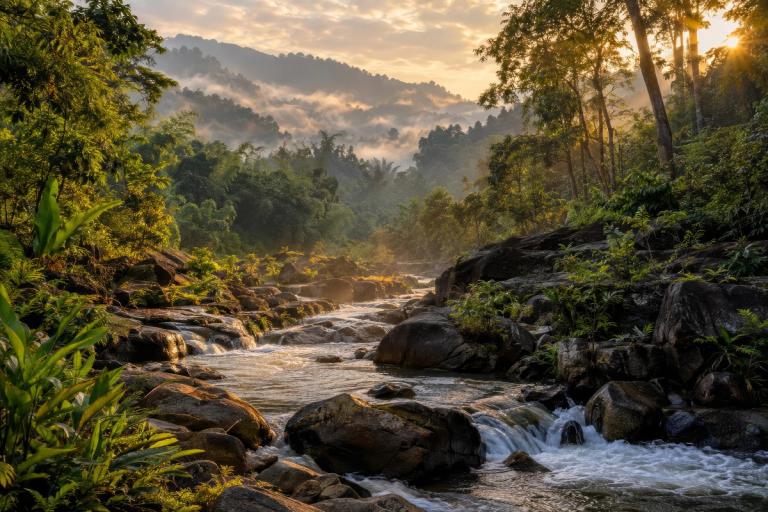
Which temples should you see in Sukhothai Historical Park?
Start in the central zone with Wat Mahathat, Wat Si Sawai, Wat Sa Si and Wat Traphang Ngoen. Then visit Wat Si Chum in the northern zone for its giant seated Buddha. Wat Saphan Hin is in the western zone, with its hilltop standing Buddha. The Fine Arts Department charges a per-zone fee at the gates.
Wat Mahathat. This is the centre of the old city and its largest temple. Rows of chedis, columns and seated Buddhas stand around a central lotus-bud tower. Come at dawn, with still ponds and low gold light.
Wat Si Sawai. Three tall towers in the Khmer style rise above a moat. The temple shows the older Khmer influence that came before the Sukhothai style.
Wat Sa Si. A chedi and a seated Buddha sit on a small island in a lake, reached by a footbridge. It is the most photographed view in the park, especially at sunset.
Wat Traphang Ngoen. Another island temple, with a lotus-bud chedi and a walking Buddha in relief. It is quiet and beautiful in the late afternoon.
Wat Si Chum (northern zone). A giant seated Buddha fills a tall, roofless hall. You see its face through a narrow doorway as you approach. It is one of the most moving sights in Thailand.
Wat Saphan Hin (western zone). A path of stone slabs climbs a low hill to a standing Buddha that looks over the plain. Walk up early, before the heat, and wear good shoes.
Opening hours. The Fine Arts Department lists the park as open from 06:30 to 19:30, and until 21:00 on Saturdays.
How should you explore the park?
Explore with a private guide, by bicycle or golf cart, starting as the gates open. The park is large and flat, and the morning is cool and quiet. Return to your resort at midday, then come back for sunset at Wat Sa Si.
By bicycle. The paths are flat and shaded in places, and a bicycle is the classic way to move between temples. Ask for good bikes with baskets and a guide who rides with you.
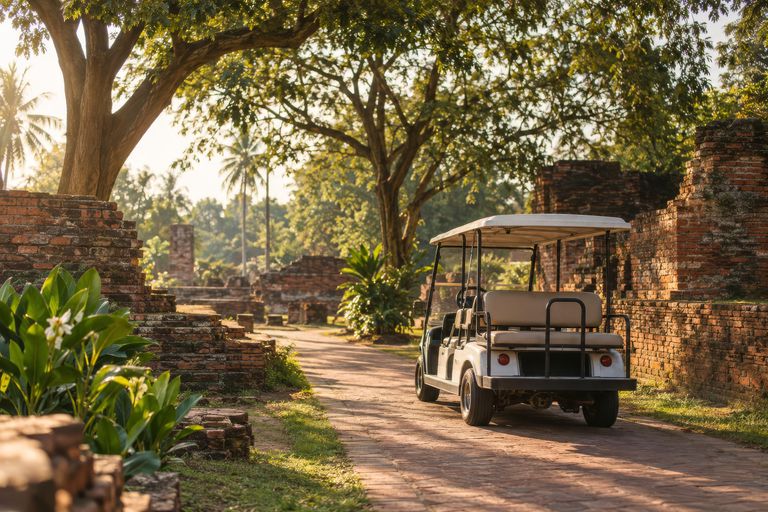
By golf cart. For families or anyone who prefers not to cycle, an electric cart covers the central zone easily. It is quiet and gives shade.
By car. The northern and western zones are further out. A car with a driver links them to the central zone and saves time in the heat.
With a guide. A good guide explains what you are seeing: the styles of the Buddha images, the role of each temple and the stories behind them. Without one, the ruins can blur together.
Saturday evenings. The Fine Arts Department keeps the park open until 21:00 on Saturdays. A late visit, when the air is cooler and the stones glow in the last light, is a fine way to end the day.
Photography. The best images come at dawn, with reflections on the still ponds, and at sunset at Wat Sa Si. Bring a light tripod for the blue hour. Drones need permission, so ask us before you plan aerial shots.
Timing. Arrive at 06:30 for the best light and the fewest people. Rest in the middle of the day.
How is Loy Krathong celebrated in Sukhothai?
Sukhothai holds Thailand's best-known Loy Krathong festival. In 2026 it runs from 15 to 24 November, with light-and-sound shows at 19:00 among the ruins. Reserved seats cost ฿500, ฿900 or ฿1,200. Loy Krathong itself falls on 24 November 2026, and 2027 is expected on 13 November.
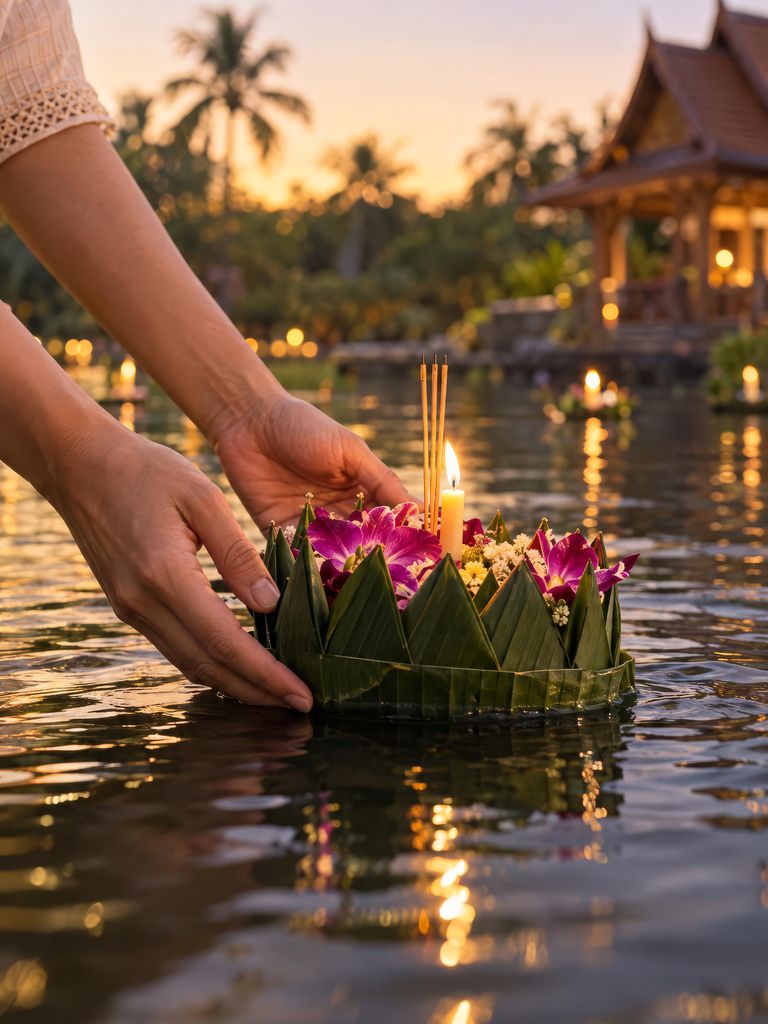
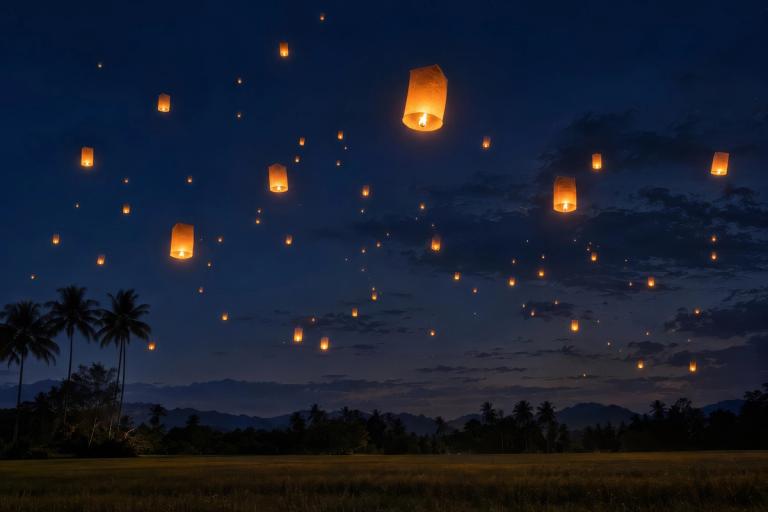
The festival fills the historical park with lights, candles and music. Ponds glow with floating krathongs, the small baskets of leaves, flowers and candles that people release on the water. Fireworks often light the sky above the temples.
The light-and-sound show is the highlight. Dancers in traditional costume tell the story of the old kingdom against the backdrop of the floodlit ruins. Reserved seats give you a clear view and an easy exit afterwards.
Respect matters during the festival. The temples are sacred sites, so dress modestly, do not climb on the ruins and keep your voice low near the Buddha images. Use krathongs made of natural materials such as banana leaf and flowers, which do not harm the water.
Plan early. Hotels in Sukhothai fill months ahead for the festival nights. Our team knows the festival crowds, and we name the nights too crowded to enjoy.
The 2027 date is expected on 13 November, following the Thai lunar calendar; we confirm it when the programme is announced. Our Loy Krathong guide covers the festival across Thailand.
Is Si Satchanalai worth the extra trip?
Yes, if you have a second day. Si Satchanalai Historical Park is about 55 km from Sukhothai town along Route 101, the Fine Arts Department says. Its ruins sit among trees by the Yom River and see far fewer visitors. The area is also known for Sangkhalok ceramics, the glazed wares of the old kingdom.
The park feels wilder than Sukhothai. Temples stand on low hills and in the forest, and you often have them to yourself. Wat Chang Lom, with its ring of elephant sculptures around a chedi, is the highlight.
Nearby, kiln sites show where Sangkhalok ceramics were made and traded across Asia.
Go in the morning, when the forest is cool and the light falls through the trees. Bring insect repellent and walking shoes, because the paths between temples are longer here than in Sukhothai.
Combine Si Satchanalai with a long lunch by the river and return to Sukhothai for sunset. A car with a driver makes the day easy. The Fine Arts Department also charges a gate fee here.
Where should you stay in Sukhothai?
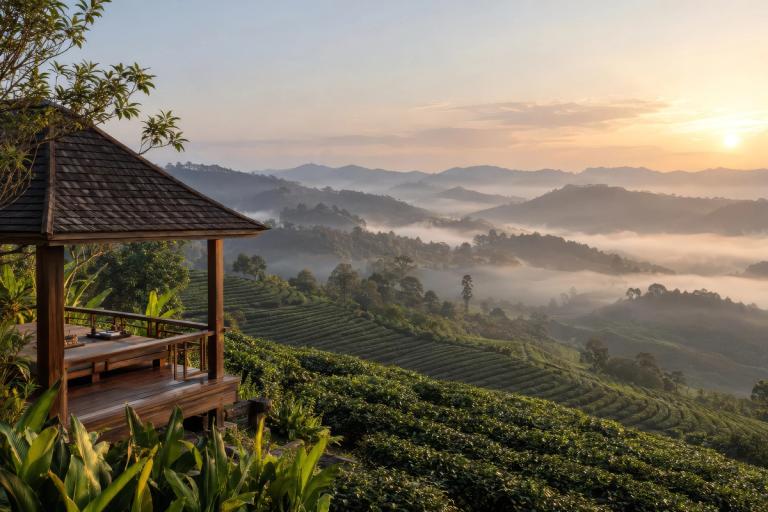
Stay at Sriwilai Sukhothai Resort & Spa or Legendha Sukhothai Resort, both in the old town near the historical park. Sriwilai has 54 rooms, its own site says, with a calm, modern design. Legendha is a garden resort in a traditional style. Both put you close to the park for early starts.
Sriwilai Sukhothai Resort & Spa. Rooms look over rice fields and gardens, and the spa is a good place to rest after a morning among the ruins. It is the most refined stay in the area.
Legendha Sukhothai Resort. This resort uses traditional architecture and gardens. Book it for a classic Thai setting close to the park gates.
Dining. Sukhothai is known for its own style of noodle soup, sweet, sour and topped with peanuts and green beans. Try it at a local shop with your guide.
A private house. For a family festival trip, a private house with staff near the old town can be arranged. Tanner sends a description of each house before you decide.
For the festival, we suggest two nights: one for the show and one for a quiet morning in the park.
When is the best time to visit Sukhothai?
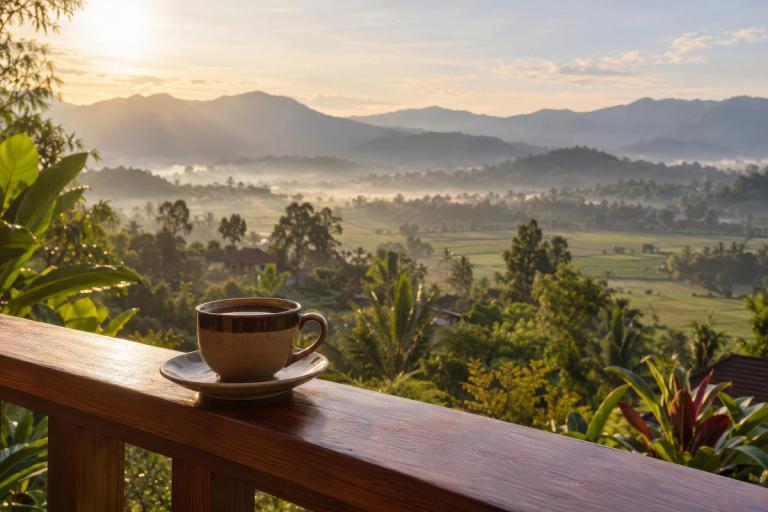
The best time to visit Sukhothai is November to February, when the air is cool and dry and the light is clear.
Clear mornings bring long shadows across the temples, and sunsets turn the brick a deep orange.
For Loy Krathong, book three to six months ahead.
How do you get to Sukhothai?
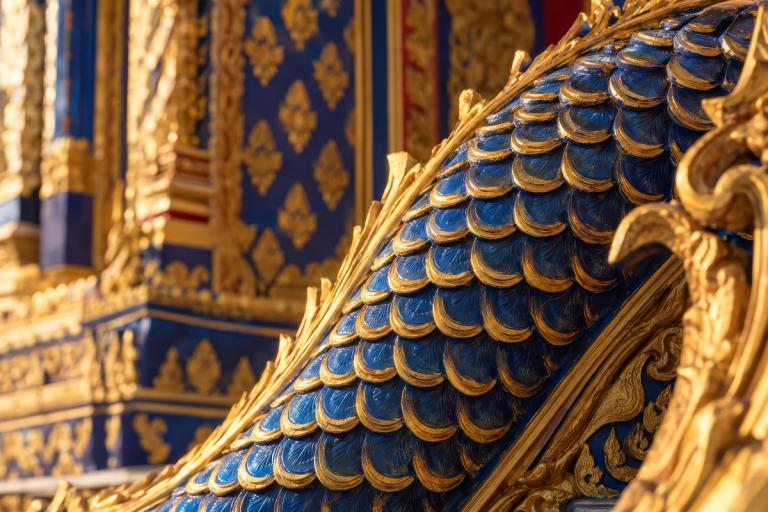
Fly from Bangkok with Bangkok Airways, which says the flight from Suvarnabhumi takes about 1 hour 20 minutes. The airline's page places Sukhothai Airport about 25 to 38 km from Sukhothai, or 30 to 40 minutes by road. The historical park lies west of the new town. The drive from Sukhothai Airport to the park takes about 45 minutes by car (checked November 2026).
By air. A private car meets you at the airport and takes you straight to your resort near the park. This is the simplest way from Bangkok.
By road from Bangkok. It is a long day's drive north. A private car with stops, perhaps in Ayutthaya on the way, turns it into a journey through central Thailand.
From Chiang Mai. You can drive from Chiang Mai to Sukhothai by private car, through the hills and the old northern towns. It pairs well with a northern trip. Our Chiang Mai guide covers the start.
By private jet. Any public airport in Thailand can take a private aircraft with permission from the aviation authority. Ask us about private jet charter to Sukhothai for festival dates.
Getting around. Taxis are few near the park, and the sights are spread out. Your driver waits at each zone and takes you back to the resort for the midday break.
Our luxury chauffeur service covers transfers and day trips to Si Satchanalai.
Plan your Sukhothai stay with Tanner
Tanner plans Sukhothai as a two-night stop on a northern trip or as a festival stay. One planner books the flight, a car and driver, a private guide for the park and a resort near the gates. For Loy Krathong, we hold reserved show seats and two resort nights, and we tell you early if a night is too crowded to enjoy. Send us your dates and your group, and you get one clear plan in return.