What is living in Thailand like?
A weekday here can start with the school run at eight and end with dinner by the river. On Friday, a short flight takes you to the beach. For us, Thailand is one of the easiest places in Asia to live well, once the visa is right. Private hospitals, international schools and food in the main cities are excellent. Tourist entry alone does not cover a long stay, so start with the visa.
Bangkok is fast, global and full of great restaurants. Chiang Mai is calmer, cooler and closer to nature. Phuket, Koh Samui and Hua Hin offer life by the sea, each with its own rhythm. Our call: a Bangkok base with a beach home gives you the best of both.
Expect strong heat and humidity from March to May, and a rainy season from mid-May to mid-October. Traffic in Bangkok is heavy at peak hours, so where you live matters.
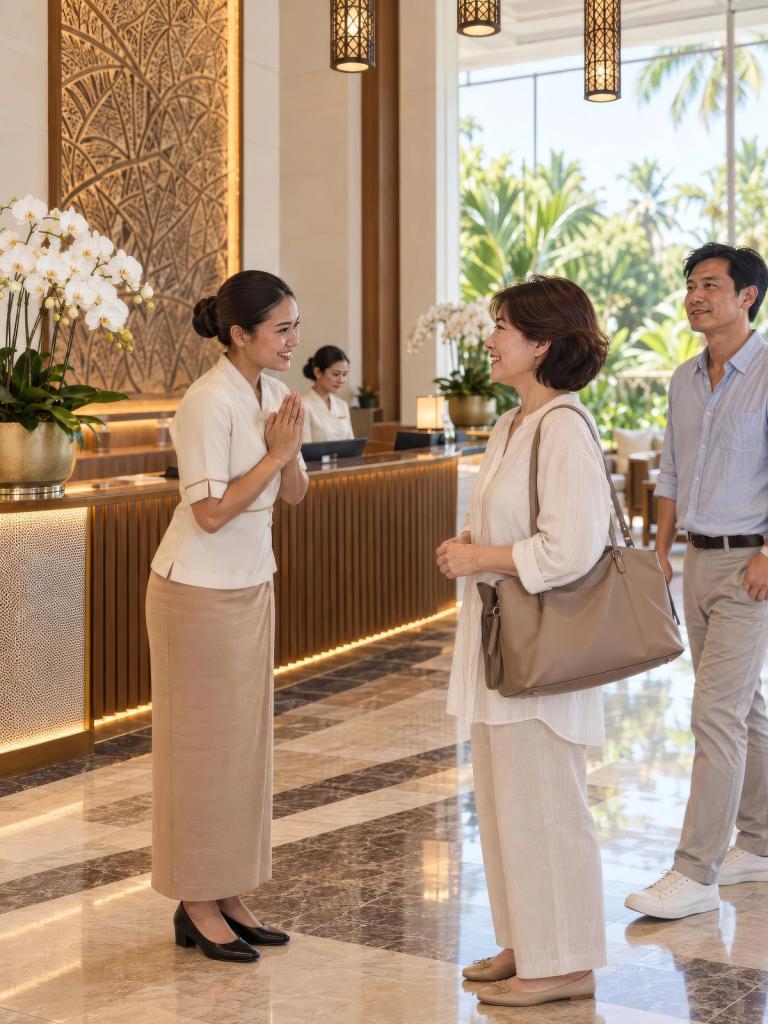
Thai culture rewards calm and respect. The wai, palms together with a slight bow, is the Thai greeting. Stand for the national anthem at 08:00 and 18:00 in public places, and dress modestly at temples.
Start with our moving to Thailand guide for the full step-by-step plan.
Bangkok's Suvarnabhumi Airport has non-stop flights to the Gulf, Europe, Australia and most of Asia. Emirates, Etihad, Singapore Airlines and Cathay Pacific all fly to Bangkok. English is widely used in hotels, hospitals, international schools and banks in the main cities. A few Thai phrases help with neighbours, drivers and market sellers.

Visas for living in Thailand
Choose the visa first, because every other step depends on it. Remote workers take the DTV, and people aged 50 or over take the retirement visa. Other routes are the LTR for wealthy or skilled foreigners, or Thailand Privilege membership. Since 15 September 2026, the visa exemption for tourism allows only up to 30 days, so it is not a way to live here.
The Destination Thailand Visa (DTV) is a 5-year multiple-entry visa. It suits remote workers, freelancers and people doing Thai soft-power activities, such as Muay Thai or cooking courses. The Ministry of Foreign Affairs allows up to 180 days per entry, with one extension of up to 180 days. You need ฿500,000 in the bank over the last 3 months, and the fee is ฿10,000.
The retirement visa, the Non-Immigrant O-A, is for people aged 50 or over. It needs ฿800,000 in the bank, ฿65,000 a month in income, or a mix. You also need health insurance of at least ฿3,000,000 or USD 100,000. The O-X gives 5 years to nationals of 14 countries with a larger deposit.
The Long-Term Resident (LTR) visa lasts 10 years. The Board of Investment runs it in four categories: Wealthy Global Citizens, Wealthy Pensioners, Work-from-Thailand Professionals and Highly-Skilled Professionals. The fee is ฿50,000 per person when the visa is collected in Thailand. For some categories, the LTR also offers a digital work permit at ฿3,000 a year; Work-from-Thailand Professionals cannot get it.
Thailand Privilege, formerly Thailand Elite, is a paid membership with a long-stay visa. Tiers run from Gold, ฿900,000 for 5 years, to Reserve, ฿5,000,000 for 20 years or more, by invitation. Bronze (฿650,000, 5 years) is still listed by Thailand Privilege and expected to close to new applicants at the end of 2026.
Here is a quick guide to the best fit:
- Working remotely for a company abroad: the DTV, or the LTR if your income is high enough.
- Retired and aged 50 or over: the O-A, the O-X, or the LTR Wealthy Pensioner category.
- Wealthy with assets to invest: the LTR Wealthy Global Citizen category or Thailand Privilege.
- Moving for a Thai job: a work visa and permit through your employer.
Every long stay brings two duties: an address report every 90 days and a re-entry permit before you travel. Our guides cover each route: the DTV visa, the retirement visa, the LTR visa, Thailand Privilege and our visa comparison. Our long-stay visa data page lists every figure with its source and check date.
Our call: the DTV is the most flexible choice for active people under 50 who work for a company abroad. The LTR suits high earners and wealthy families who want ten years without repeated paperwork.
Family members usually follow the main visa holder. The DTV covers a spouse and children under 20, the Ministry of Foreign Affairs says. Other routes have their own rules for dependants, so check each one before you apply.
Bank statements, insurance certificates and translations take weeks to gather. Start the visa file early, ideally before you choose a home, so your arrival date is secure.
Where do foreigners live in Thailand?
Most foreigners live in Bangkok, Chiang Mai, Phuket, Hua Hin, Koh Samui or Pattaya. Each suits a different life. Bangkok is for business and city living, Chiang Mai for a calm life in the hills, and the coast for life by the sea.
Bangkok is the centre of business, culture and international schools. Families often live along Sukhumvit, in Thonglor and Ekkamai, near the BTS Skytrain, or by the river in Sathorn and Riverside. Our Bangkok property guide covers the main districts.
Chiang Mai suits a quieter life, with cool mornings in the cool season, a creative community and easy access to the mountains. The smoky season from February to April is the main drawback, so plan your travel for those months. It has two JCI-accredited hospitals.
For us, Phuket is the most international island, with an airport, marinas, international schools and private villas. For families, we would start on the west coast, from Surin to Kata. Our Phuket property guide explains the areas.
Koh Samui is smaller and calmer, with villas on hillsides and beaches. It has an airport run by Bangkok Airways and a strong villa market. Read our Koh Samui property guide for more.
Hua Hin is a calm royal seaside town about 200 km south of Bangkok, popular for golf and wellness. Pattaya, on the eastern seaboard, is close to Bangkok and has a JCI-accredited hospital, Bangkok Hospital Pattaya.
On Phuket, live close to the international schools and the airport if you have children; the quieter headlands suit couples. On Koh Samui, the north coast is the most convenient for the airport and the piers.
Before you sign a lease or buy, test the area. We arrange serviced apartments or villas for trial stays of one to three months, so you can feel the school run and the traffic. Expect those first three months to be the busiest of the move.

What does a premium life in Thailand cost?
Your three big costs are the home, the school fees and the household staff. The total depends on your city: Bangkok and Phuket cost the most, while Chiang Mai and Hua Hin cost less. In our experience, staff cost less than in Western and Gulf capitals. A full-time housekeeper, a driver and a gardener are within reach for many families.
Your home is the largest item. A high-floor condominium in central Bangkok or a sea-view villa in Phuket costs far more than a house in Chiang Mai.
School fees are the second big cost for families. The leading international schools in Bangkok and Phuket charge fees similar to good private schools abroad, with extra fees for enrolment and building funds. Budget for health insurance from the start, because private hospital care is priced like private care elsewhere.
Prices change by building, area and school, so our Bangkok cost of living and Chiang Mai cost of living guides give detailed, dated figures. We help you build a budget around the home, the school, the staff and the way you travel, before you choose the city.
Remember that exchange rates move. The Bank of Thailand reference rate on 29 October 2026 was about 33.7 baht to the US dollar. Plan with a margin, especially if your income is in another currency.
Homes: renting, buying and branded residences
Our advice: rent first, then buy a condominium once you know the area. Foreigners may own a condominium unit freehold in their own name, under the Condominium Act. Foreign ownership in the building must stay within 49% of the floor area. The money for the purchase must come from abroad in foreign currency. Keep the bank records of every transfer: you need them to buy, and again when you sell.
Land is different. Under section 86 of the Land Code, a foreigner can own land only under a treaty, with the Minister's permission. Thailand has had no such treaty in force since 27 February 1971, the Department of Trade Negotiations notes. A foreigner can, however, own a building on leased land.
Leases of land and buildings are capped at 30 years per term under section 540 of the Civil and Commercial Code. The Department of Lands guide explains this. A longer term is cut to 30 years. Renewal options are contract terms and are not guaranteed by law, so take legal advice before you sign.
Renting is simple and flexible. Leases of one year are common, and landlords usually hold one or two months' rent as a deposit. Check what is included: furniture, appliances, internet, building fees and maintenance. Villas on the islands are often rented for a season or a year.
Branded residences, run by luxury hotel groups, give you hotel-style service at home. They are residences, not hotels, so check the ownership structure and the service charges with care.
Use a qualified lawyer for every purchase. They check the title, the foreign quota and the money transfer records. Our guides cover buying property and branded residences in detail.
For villas on leased land, the lease, the building ownership and any company structure need careful legal work. Take independent advice, and avoid structures that rely on nominee shareholders.
New projects in Bangkok, Phuket and Koh Samui sell off-plan. Visit the developer's finished buildings, check their record on completion, and read the payment schedule before you commit.

Healthcare and health insurance
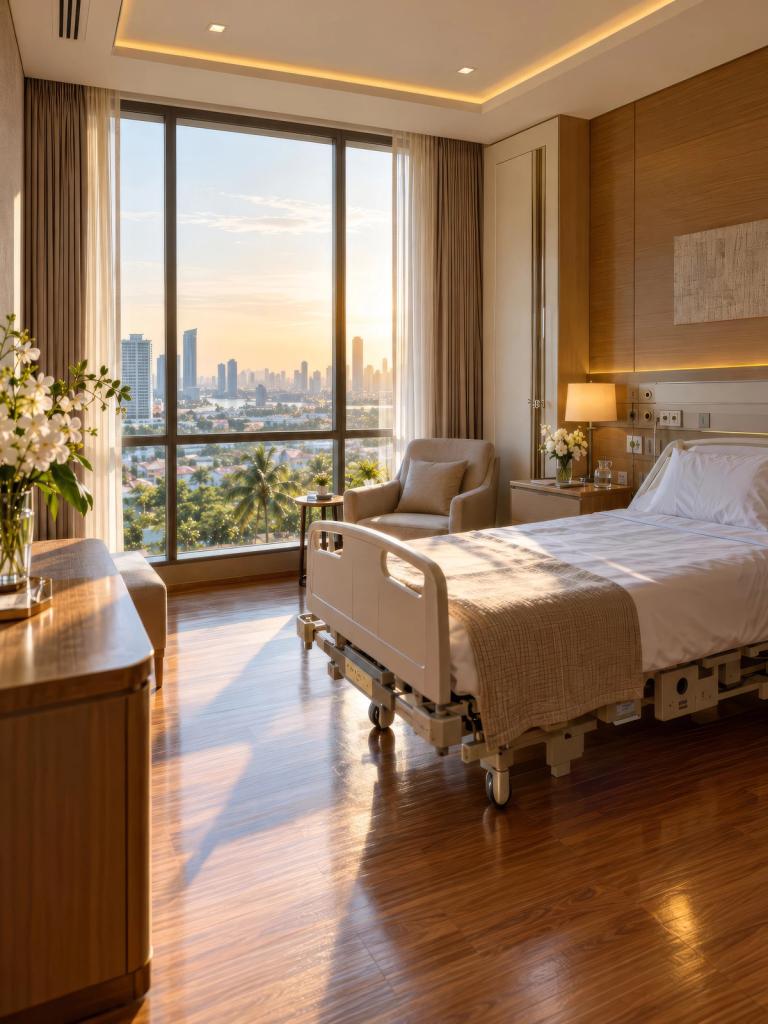
Healthcare in Thailand's private hospitals is excellent, and several hold Joint Commission International (JCI) accreditation. In Bangkok, the JCI list includes Bumrungrad International, Samitivej Sukhumvit, BNH and Vejthani. Chiang Mai has Bangkok Hospital Chiang Mai and Chiangmai Ram Hospital; Phuket has Bangkok Hospital Phuket and Bangkok Hospital Siriroj.
On the eastern seaboard, Bangkok Hospital Pattaya is also on the JCI list. On Koh Samui, Bangkok Hospital Samui is the main international hospital; it is not on the JCI list, checked October 2026. Koh Phangan has Phangan International Hospital, a branch of Bangkok Hospital Samui.
Private care is fast and modern, with English-speaking doctors and nurses. For complex treatment, Bangkok is a short flight from the islands and the north. Register with a hospital and a family doctor soon after you arrive. In an emergency, private hospitals in the main cities can send an ambulance.
Health insurance is essential, and some visas require it. The O-A needs at least ฿3,000,000 or USD 100,000 of cover, and the LTR needs at least USD 50,000 or an alternative. Even where a visa does not ask, good insurance protects you from large private hospital bills.
Thailand is also a centre for medical tourism, from health checks to dental work and surgery. Read our guides to healthcare, health insurance and medical tourism.
Pharmacies are everywhere, and pharmacists are helpful. Some medicines need a prescription in Thailand even if they do not at home, so bring a doctor's letter for regular medicines.
For older residents, choose a home within easy reach of a JCI-accredited hospital. In Bangkok, Chiang Mai and Phuket, that is simple. On the smaller islands, agree a plan for transfer to a larger hospital before you need it.
Schools and family life
Thailand has many international schools, most in Bangkok, with good choices in Phuket and Chiang Mai too. They teach British, American, International Baccalaureate and other curricula. Places at the leading schools fill early, so apply as soon as your move is likely, ideally a year ahead. If you move mid-year, talk to schools early: some accept students at any time, and others prefer the start of a term.
Visit each school in person. Look at class sizes, the curriculum your child will continue with, the commute from home and the activities. Most leading schools have waiting lists for popular year groups, so apply to two or three at once. Ask about entry tests, interviews and documents such as past school reports. For older students, check the exam results, the university advice and the range of sports, music and arts.
Pets can move with you, but the import process takes time and paperwork. Start early, and use an experienced pet relocation service.
Our guides cover international schools and pet relocation in detail.
A trusted nanny can work full time or part time. Ask for references and the level of English, and agree hours and duties clearly.

Money, banking and tax
You will need a Thai bank account for rent, bills and visa money tests. Tax is the bigger question. The Revenue Department treats you as a Thai tax resident if you stay 180 days or more in a tax year. Foreign income earned from 1 January 2024 is taxed when you bring it into Thailand.
Income earned before 2024 is not taxed when you bring it in, the Revenue Department says. A proposed exemption for foreign income brought in the same or next year was only a draft at our last check. No Royal Gazette notice was found. Before you move money, take advice in both countries on where your investments are held and how income will reach Thailand.
Value added tax is 7%, including local tax, until 30 September 2027 under Royal Decree No. 807, the Royal Gazette shows. The standard legal rate is 10%. Menus marked ++ add a service charge and VAT on top of the price.
For cash, the Bank of Thailand rules ask you to declare foreign cash above USD 15,000 when you enter. Moving larger sums is best done by bank transfer, with records kept for the visa, tax and any property purchase. Baht leaving Thailand also has limits. Up to ฿50,000 in cash may be taken to most countries, and amounts over ฿450,000 must be declared.
Our guides to banking and tax and opening a bank account explain the steps.
Opening a bank account is easier with a long-stay visa and proof of address. Banks have their own rules and can ask for a letter from your employer, your embassy or your landlord.
If you shop for jewellery, watches or designer goods before you leave, the tourist VAT refund may apply. Shops show a VAT Refund for Tourists sign, and the goods must leave Thailand with you within 60 days.
Daily life: driving, staff and home help
Hire a housekeeper and a driver first. Add a nanny, a cook or a gardener as you need them.
Thai law accepts an International Driving Permit under the 1949 Geneva Convention, or a licence from another ASEAN country. Otherwise, you can get a 30-day temporary licence at the Provincial Land Transport Office, and residents usually convert to a full Thai licence. The drink-driving limit is 50 mg per 100 ml of blood.
Traffic in Bangkok is heavy, so a driver is worth having. On the islands, a car is useful for school runs and shopping. Grab and Bolt work in all main cities for short trips.
Good staff are found through recommendations and specialist agencies. Agree duties, hours and days off in writing from the start, and treat staff with respect.
Read our guides to domestic staff and the Thai driving licence.
Local customs shape daily life in small ways. Shoes come off before you enter a Thai home, and people notice a polite smile. Respect for the monarchy is deep, and Thai law protects it strictly, so speak with care.

Working remotely from Thailand
You can work remotely from Thailand on the DTV, as long as your work is for an employer or business outside Thailand. Royal Thai embassies state that DTV holders may not get a Thai work permit, work for Thai companies or freelance for Thai clients. For higher earners, the LTR Work-from-Thailand Professional category is another route.
The LTR Work-from-Thailand Professional category needs a personal income of at least USD 80,000 a year over the past two years. The Board of Investment sets this test. With USD 40,000 to 80,000, you also need a master's degree or higher. An employment contract with a qualifying overseas company is required.
Remember: 180 days or more makes you a Thai tax resident. Read our remote work guide.
For the DTV, the official document list asks for proof of employment or freelance work. It also asks for bank statements showing at least ฿500,000, and a criminal record certificate. The Ministry of Foreign Affairs added further documents in a notice of 28 August 2026, so check the latest list before you apply.
For founders and investors, Thailand also offers business routes, from BOI-promoted companies to the LTR Highly-Skilled Professional category for targeted industries. These need careful structuring, so we introduce you to the right lawyers and accountants.
Moving to Thailand: checklist and help
Move in this order: visa, school, home, then the move itself. Start six to twelve months ahead if you have children, because each step depends on the one before.
Here is the order we suggest:
- Choose the visa that fits your age, income and work, and prepare the money proof.
- Apply to schools early and visit them on a scouting trip.
- Choose the area and the home around the school and your work.
- Arrange health insurance and register with a hospital.
- Open a Thai bank account and set up money transfers.
- Plan the shipment, the pets and the arrival week.
- After arrival, file your first 90-day report on time and get a re-entry permit before you travel.
Read our relocation checklist, and see our relocation services and retire in Thailand guides.
In the arrival week, we meet you at the airport and take you to a hotel or serviced apartment. Then we guide you through the bank, the phone, the school and the home handover.
Bring certified copies of key documents: passports, birth and marriage certificates, school reports, medical records and degree certificates. Some may need translation or an embassy stamp, so check before you leave.
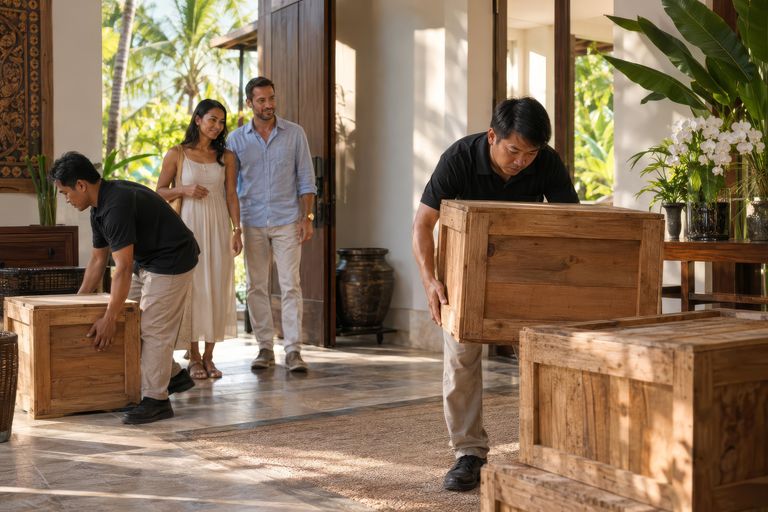
Plan your shipment around your home. A furnished rental may need only a few boxes, while a new villa may need a full container. Shipping by sea takes weeks, so send an air shipment for the first months.
Here is what Tanner, your planner, handles for you. Visa paperwork: he prepares the file with you and checks every document before you apply. Contacts: lawyers, tax advisers, schools and bank staff used to foreign clients. Housing: he shortlists homes and comes to the viewings with you. Drivers: a car and driver from your first day. Household staff: a referral to a recruitment partner for a housekeeper, nanny or cook, on monthly terms. You have one person to call for the whole move. After it, he reminds you of visa dates and plans your trips around Thailand and the region. Tell him what matters most. We get back to you right away.