Before you fly: visa, arrival card and passport
Your flight is booked and the hotel is confirmed. Three checks, done in the week before, make the arrival calm.
Check three things before you book. Since 15 September 2026, nationals of 60 countries and territories can stay up to 30 days without a visa, for tourism only. Everyone must file the free Thailand Digital Arrival Card online. Your passport needs at least six months of validity.
The 30-day visa exemption. The old 60-day exemption ended on 15 September 2026. The list includes Singapore, Hong Kong, Malaysia, Taiwan, the United Arab Emirates, Saudi Arabia, the United Kingdom, the United States, Australia and India. Anyone who entered before 15 September keeps the stay stamped in their passport.
Staying longer. You can ask immigration once for up to 30 more days, at the officer's discretion, for a fee of ฿1,900 (Immigration Bureau). Land entries under the exemption are limited to two per calendar year, except for nationals of Malaysia, Brunei, Indonesia and Singapore.
Visa on arrival. Since 15 September 2026, visa on arrival is open to only three nationalities: Azerbaijan, Belarus and Serbia. It gives up to 15 days, for a fee of ฿2,000 paid in cash.
Long stays. For longer visits, Thailand offers the Destination Thailand Visa for remote workers and soft-power activities, the Long-Term Resident visa and Thailand Privilege. Our Thailand visa guide explains each one and who qualifies.
The Destination Thailand Visa lasts five years, with stays of up to 180 days per entry and one extension. It needs ฿500,000 in the bank over the last three months, or a sponsor letter; the fee is ฿10,000. The Board of Investment's Long-Term Resident visa lasts 10 years and costs ฿50,000 when collected in Thailand. Thailand Privilege starts with the Gold tier at ฿900,000 for five years.
The arrival card. Submit the Thailand Digital Arrival Card within 3 days before you land, on the official site at tdac.immigration.go.th. It is free and it is not a visa. Look-alike sites charge a fee; ignore them. One submission can cover up to 10 people, the Immigration Bureau says. Our arrival card guide walks you through each screen.
The Immigration Bureau's form asks for your passport details, flight number, arrival date, address in Thailand and trip purpose. A health section appears only for visitors from certain countries. You can edit a submitted card before you travel with your card number, date of birth and nationality. If you forget, kiosks and free Wi-Fi help on arrival at Suvarnabhumi, Don Mueang, Phuket, Chiang Mai and Hat Yai. Transit passengers who stay airside need no card.
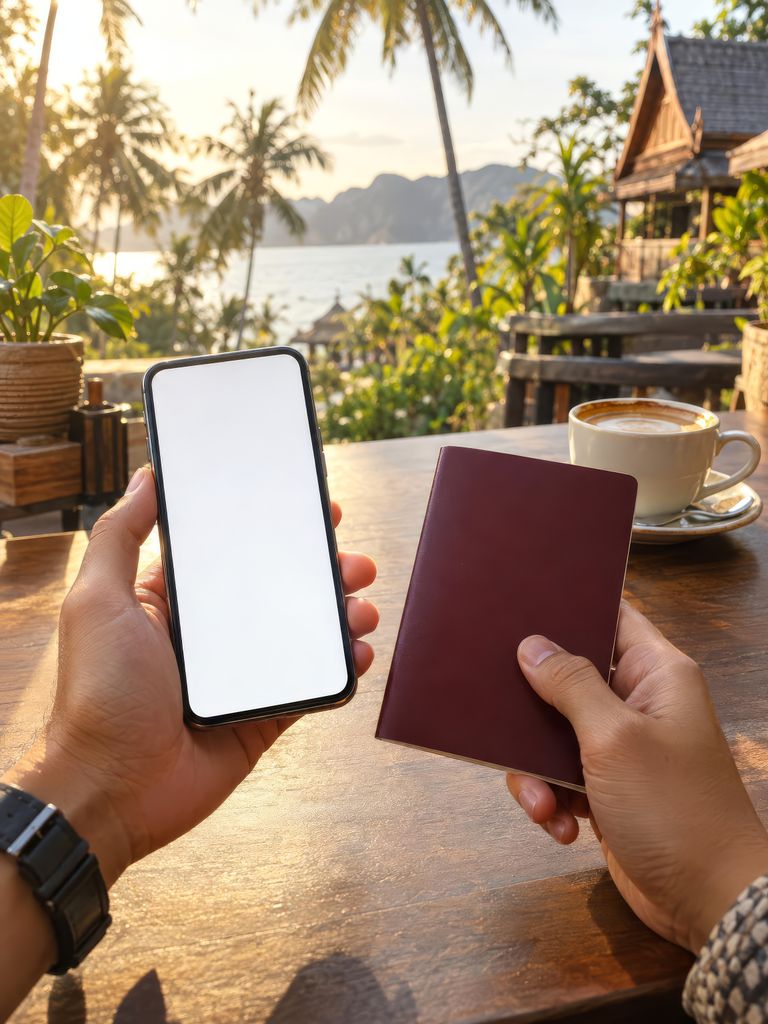
Before you fly, save a return or onward ticket on your phone, keep the hotel address in English and Thai, and save your planner's number.
Passport and entry checks. Officers may ask for proof of funds, set at ฿10,000 per person or ฿20,000 per family for visa-exempt visitors. They may also ask for an onward or return ticket within your permitted stay. Not everyone is asked.
Business trips. The visa exemption is for tourism only. If you are coming for meetings, conferences or work, check with the Thai embassy which visa you need before you fly. We can help business groups with the right documents and arrival plan.
Families. Every child needs their own passport and arrival card. Children under 12 are not counted in the proof-of-funds rule. If a child travels with one parent, carry a signed consent letter from the other parent; officers may ask.
A proposed entry fee. Thailand has proposed a ฿450 entry fee for foreign visitors. It is not in force, and no start date has been published in the Royal Gazette.
Arriving: airports, meet-and-assist and transfers
Most international flights land at Suvarnabhumi Airport in Bangkok, run by Airports of Thailand. Don Mueang, Bangkok's second airport, handles mostly low-cost and domestic flights. Phuket has its own international airport, and Bangkok Airways owns and runs Samui Airport. A private driver should meet you at every one.
Immigration queues. Thai airport immigration has no paid fast-track service with any company, the Immigration Division confirmed in March 2024. Instead, we book a private meet-and-assist service: an agent meets you on arrival and stays with you until you reach your car. Airlines also run premium lanes for their own first and business class passengers.
The mistake to avoid: paying a fake 'official' site. Some sites claim to be the official Airports of Thailand fast-track service. The real domain is airportthai.co.th. Book meet-and-assist only through a planner you trust.
What happens at immigration. The officer checks your passport, arrival card and stay, and may ask about your plans or your return ticket. Fingerprints and a photo are taken. You then collect your bags and pass Customs, declaring cash above the limit and any goods that need it.
Your transfer. A driver waits in the arrivals hall with your name, takes your bags and walks you to the car. Water, Wi-Fi and a phone charger in the car make the first hour easy.
Phuket and Samui. Both island airports are close to the main resort areas. On Samui, the open-air terminal is small and calm. In Phuket, the drive to the west-coast beaches takes longer in high season.
Late arrivals. Many long-haul flights land in Bangkok late at night or before dawn. Book your room from the night before, so you can sleep the moment you arrive.
Private jets. Any public airport in Thailand can take a private aircraft with permission from the Civil Aviation Authority of Thailand. You also need a ground handler and a landing slot. Phuket, Don Mueang and U-Tapao have private jet terminals. Samui Airport opens from 06:00 to 22:00, so plan arrival times within those hours.
Going home. Airports of Thailand advises allowing at least 3 hours for international flights and 2 hours for domestic flights in the rainy season. Our VIP arrivals service covers both arrival and departure.
For connecting flights, check whether your bags are checked through. On a separate ticket, you clear immigration in Bangkok, collect your bags and check in again, so allow plenty of time. Ask us to arrange an agent for the connection.
Money: baht, cards, cash rules and VAT refund
Thailand's currency is the baht, written ฿. The Bank of Thailand's reference rate on 29 October 2026 was about 34 baht to the US dollar and about 45 baht to the pound. Carry some cash for markets, small shops, tips and boat trips.
Exchange rates. On 29 October 2026, the Bank of Thailand's averages were about 26 baht to the Singapore dollar. Other rates were about 24 to the Australian dollar and 4.3 to the Hong Kong dollar. The dirham and the riyal are pegged to the dollar, so each is worth about 9 baht, calculated from the dollar rate. Rates move every day.
Cards and cash. Visa and Mastercard are widely accepted in cities and resorts, though some smaller places add a card fee. Bank machines charge a fee for foreign cards, so take out larger amounts less often. Bank counters usually give better rates than your hotel. When a card machine offers your home currency, choose baht; the rate is usually better.
Cash rules at the border. There is no limit on foreign cash you bring in, but declare amounts above USD 15,000 to Customs. You may take up to ฿50,000 in Thai baht out to most countries.
Hotel deposits. Most hotels take a card deposit at check-in for extras, released when you check out. Your planner can also settle extras for you in one invoice.
Prices with ++. A price ending in ++ means a service charge and 7% VAT are added to the bill. VAT stays at 7% until 30 September 2027 under Royal Decree No. 807.
VAT refund for tourists. Buy at least ฿2,000 per shop per day at shops with the VAT Refund for Tourists sign, and ask for the P.P.10 form. Goods must leave Thailand with you within 60 days. Show purchases of ฿5,000 or more to Customs before check-in. Jewellery, watches and other items over ฿10,000 go in your hand luggage, for a second check after immigration. Departures from Bangkok's two airports can also use a downtown refund counter.
Our money guide and our VAT refund guide cover each step in detail.
Shopping and bargaining. Prices in malls, hotels and brand stores are fixed. In markets, gentle bargaining is normal: smile, offer a little less and settle on a fair price. Never bargain hard over a small amount; it causes loss of face on both sides.
Keeping money safe. Use the safe in your room for passports and spare cash, and carry one card and a modest amount of cash when you go out. Keep a photo of your passport and cards on your phone.
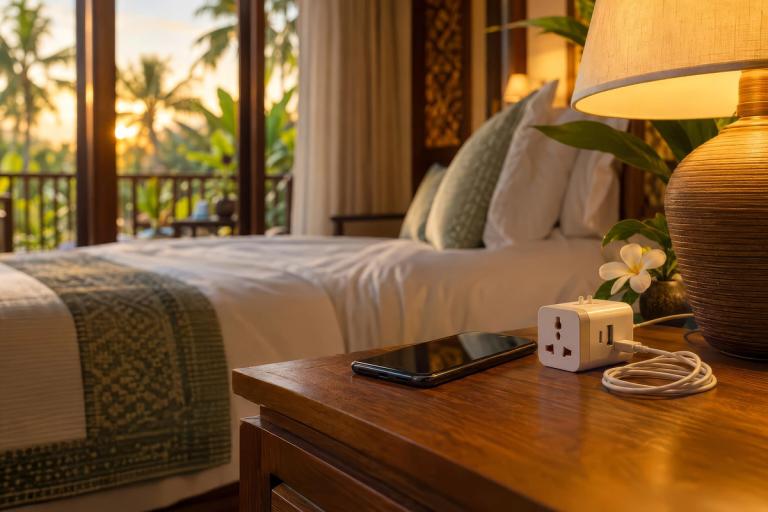
Tipping and service charge
Tipping in Thailand is welcome but not required. Most hotels and better restaurants already add a service charge. The Department of Internal Trade says it should be 10% or less and shown before you order.
Restaurants. If the bill shows a service charge, there is no need to add more, though rounding up for very good service is welcome. In simple restaurants without one, leave a little change on the tray.
Hotels. In five-star hotels, a small tip for the porter and for housekeeping at the end of your stay is appreciated. If your butler or guest relations manager helped all week, thank them with a note and a tip in an envelope.
Drivers and guides. For a full-day private driver or guide, a tip when you say goodbye is customary if you were happy. Give it directly, with a word of thanks.
Group trips. For a family or company group, agree one service tip for drivers, guides and crew at the start. Your planner handles it at the end, so nobody carries cash for tips.
Spas. Spa therapists often rely on tips. Hand it to your therapist, or ask reception to pass it on.
Boats and yachts. On a private boat day or a multi-day charter, a tip for the crew at the end is usual, handed to the captain to share.
Temples. Temples do not charge a tip, but a small donation in the box is welcome. It supports the monks and the upkeep of the buildings.
Hand over a tip with your right hand, or both hands, and a smile. Our tipping guide suggests amounts for each situation.
Phones, SIMs and power plugs
Staying connected in Thailand is easy. AIS, True and dtac sell tourist SIM cards at airport counters, open 24 hours at the main airports. You need your passport to register, and each person may buy up to three SIMs per brand.
SIM cards and eSIMs. AIS has counters at Suvarnabhumi, Don Mueang, Chiang Mai, Chiang Rai, Samui, Hat Yai and Phuket airports. True and dtac merged their networks and sell the tourist SIM under both names. The dtac brand also sells a tourist eSIM you can set up before you fly. AIS said in early 2026 that its 5G network covers more than 95% of the Thai population.
Messaging. LINE is the most popular messaging app in Thailand, used by restaurants, shops and drivers. WhatsApp also works well.
Wi-Fi. Hotels, cafes and malls offer free Wi-Fi, but a local SIM is more reliable for maps, ride-hailing and messages to your driver.
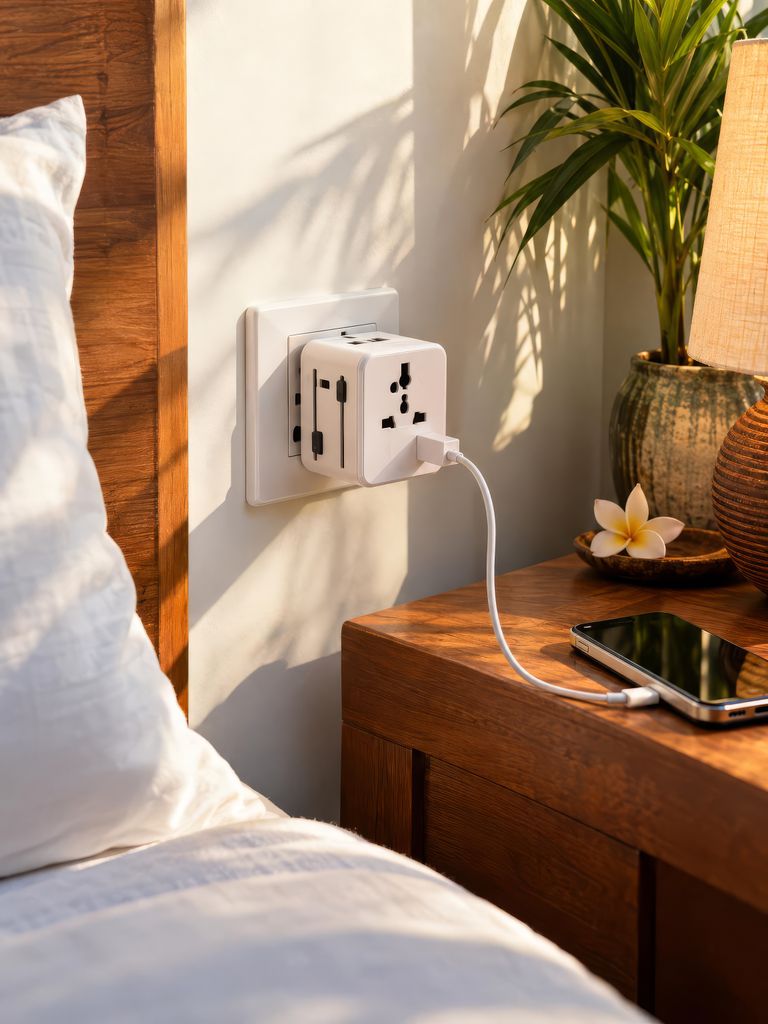
Power. Thailand uses 220 volts at 50 hertz. Sockets take plug types A, B, C, F and O; type O is the Thai standard. Most phone and laptop chargers work without a converter. Bring a universal adapter for older buildings with two-hole sockets. New sockets must be the three-hole earthed type under Thai standard TIS 166-2549, the Metropolitan Electricity Authority says.
Time. Thailand is on UTC+7 all year, with no daylight saving.
Our SIM and eSIM guide and our plugs and power guide give the full details.
Dos and don'ts: etiquette, temples and the monarchy
Thai people are polite, calm and forgiving of visitors, and a few customs matter a great deal.
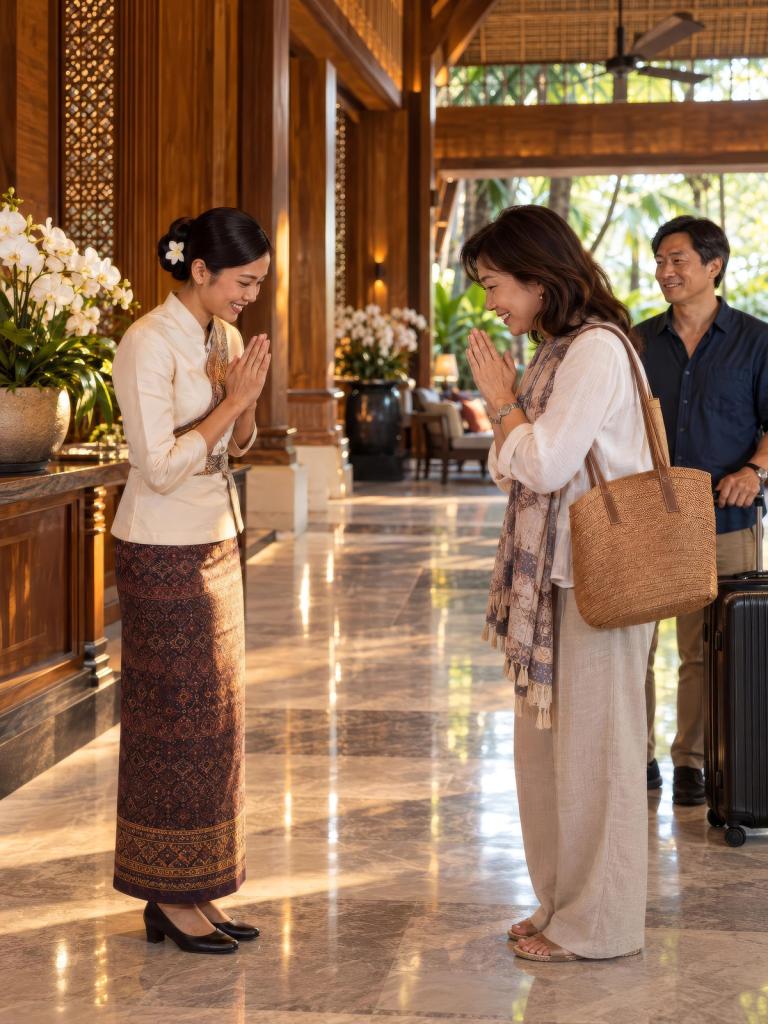
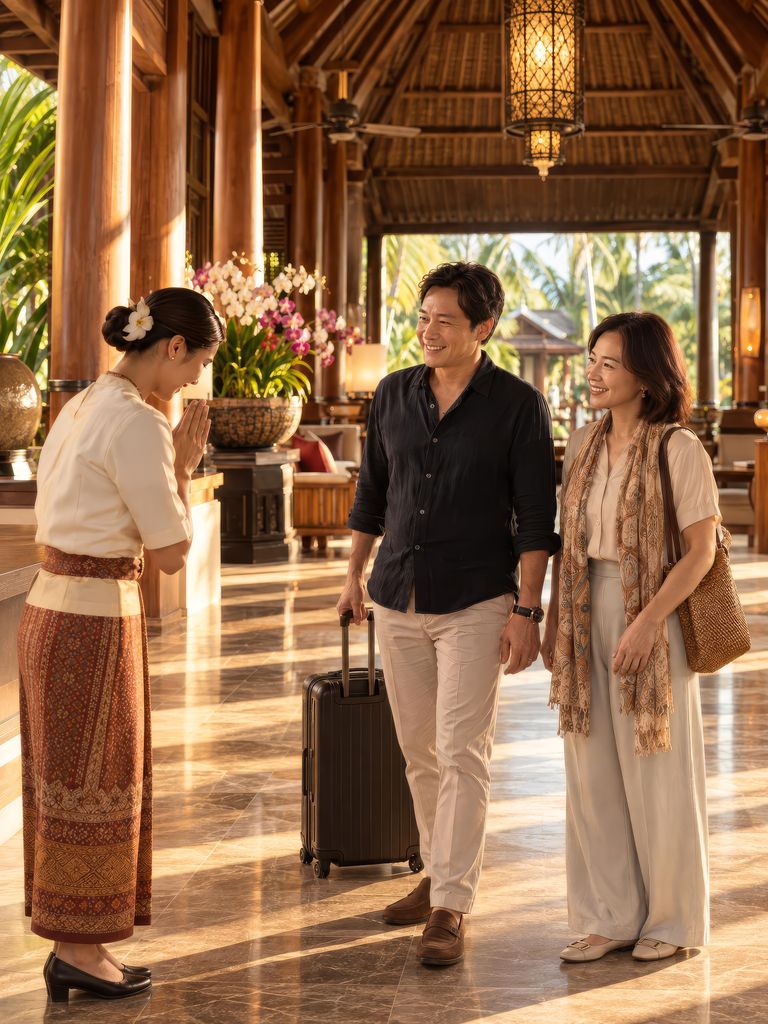
The wai. The Thai greeting is a wai: palms together and a slight bow. It also says thank you or sorry. The younger or junior person usually offers it first. A smile and a small nod in return is always fine for a visitor.
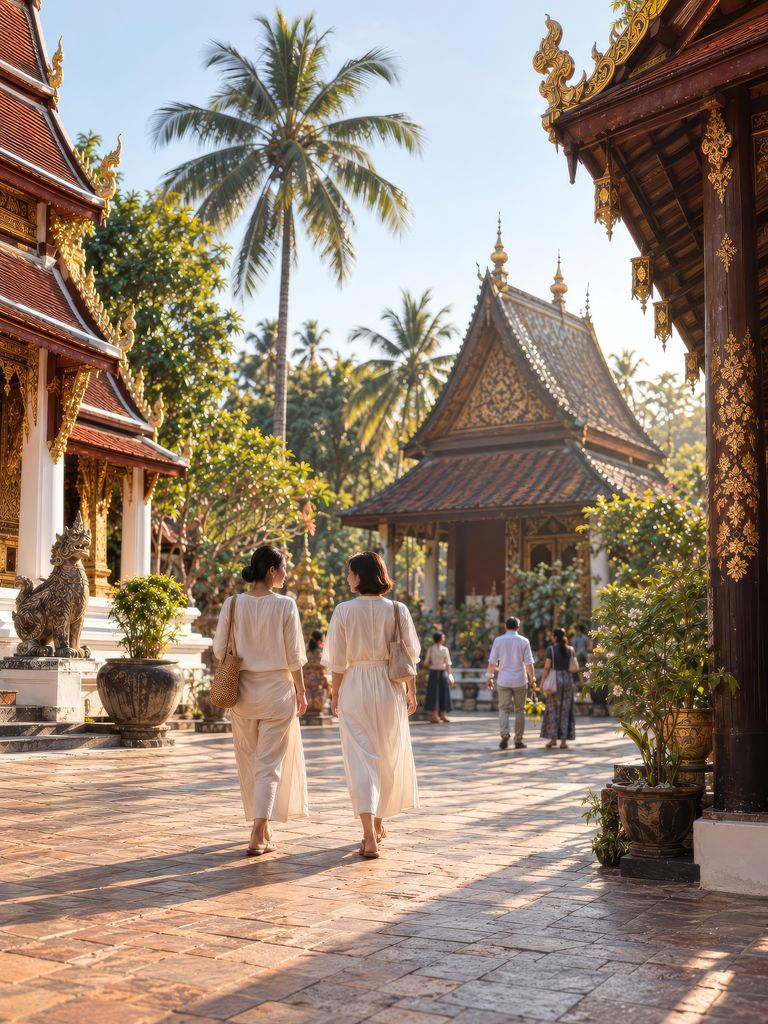
Temples. Cover your shoulders and knees: wear a top with sleeves and trousers or a knee-length skirt. Avoid sleeveless, cropped or tight tops. Take your shoes off before you enter a temple building. The Grand Palace has a stricter dress code of its own. Our temple dress code guide explains what to pack.
The monarchy. Insulting the King, Queen, Heir or Regent is a serious crime in Thailand under Section 112 of the Criminal Code, and this includes online posts.
Photos. Ask before you photograph people, especially monks and villagers. Many temples ban photos inside the main hall; look for the signs, or ask your guide.
The national anthem. Stand still when it plays at 08:00 and 18:00 in public places. In cinemas, stand for the royal anthem before the film.
Body language. The head is the highest part of the body and the feet the lowest. Do not touch a person's head or point your feet at people or a Buddha image. Pass items with your right hand.
Keeping calm. Raising your voice causes loss of face for everyone. If something goes wrong, call your planner and let us fix it.
Dress in cities. Bangkok's rooftops and fine restaurants expect smart-casual clothes. Some rooftop bars turn away guests in shorts, sleeveless shirts or flip-flops, so men should pack long trousers and closed shoes for the evening.
Our Thai etiquette guide covers business meetings, gifts and dining customs too.
Monks. Monks are highly respected. Women should not touch a monk or hand him anything directly; place it on a cloth or ask a man to pass it. On public transport, seats are often reserved for monks.
Buddha images. Treat every Buddha image with respect. Do not climb on statues or pose for playful photos with them. Buying Buddha images as decoration is discouraged, so choose other souvenirs.
Homes and shops. Take your shoes off at the door of a Thai home and some small shops; follow what others do.
At the table. Thais eat with a spoon in the right hand and a fork in the left, pushing food onto the spoon with the fork. Dishes are shared: take a little from each, and do not leave chopsticks standing in a bowl.
Laws visitors should know: alcohol hours, cannabis, vapes, drones
Alcohol. Since 29 May 2026, shops and restaurants may sell alcohol from 11:00 to 24:00, with no afternoon ban. Hotels, airport terminals and licensed entertainment venues within their hours are exceptions. Sales stop on five Buddhist holy days: Makha Bucha, Visakha Bucha, Asanha Bucha, Khao Phansa and Ok Phansa. In 2027 the first falls on 21 February. Breaking the rule can bring up to 6 months in prison or a ฿10,000 fine. The minimum age is 20. Our alcohol rules guide lists the dates.
Nightlife hours. Licensed entertainment venues in Bangkok, Chonburi (including Pattaya), Phuket, Chiang Mai and Koh Samui may open until 04:00. In Bangkok the licensed clubs are in Silom, New Phetchaburi (including RCA) and Ratchadaphisek. Licensed venues inside hotels anywhere in Thailand may do the same; ordinary bars usually close by 02:00.
Cannabis. Since June 2025, cannabis flowers are a controlled herb, sold by licensed shops only with a prescription from an approved health professional. Online sales, advertising and smoking in the shop are not allowed. Bringing any part of the plant into Thailand is prohibited, and taking cannabis out is illegal. See our cannabis rules guide.
Vapes. E-cigarettes and vapes are illegal in Thailand. Importing them has been banned since 2014 and can lead to up to 10 years in prison.
Drones. Register a drone with both the telecoms regulator and the Civil Aviation Authority of Thailand, and hold third-party insurance of at least ฿1,000,000. Fly in daylight, within sight and never within 9 kilometres of an airport. Flights above 90 metres or at night need written approval, and national parks need their own permission.
Medicines. Bring prescription medicines in their original packs, with a copy of the prescription. Some medicines legal at home are controlled in Thailand; if unsure, ask the Thai embassy before you travel.
ID. Carry your passport or a copy of the photo page and the latest entry stamp. The fine for not doing so is up to ฿2,000.
Driving. You may drive with an International Driving Permit under the 1949 Geneva Convention. The drink-drive limit is 50 milligrams per 100 millilitres of blood. Our driving permit guide explains the rules. Our advice: use a private driver.
Security. Foreigners cannot work as security guards in Thailand. If you travel with your own protection team, we arrange licensed local security instead.
Our laws for visitors guide brings all of these rules together.
Health, hospitals and insurance
Thailand has excellent private hospitals, many of them internationally accredited. In Bangkok, Bumrungrad International, Samitivej Sukhumvit, BNH and Vejthani are on the Joint Commission International list. Travel insurance is not required for tourists, but we strongly advise it.
Emergency numbers. Call 191 for police, 1155 for the English-speaking tourist police, 1669 for an ambulance and 199 for fire. The Tourism Authority of Thailand call centre is 1672.
Hospitals by region. Bangkok Hospital Phuket and Bangkok Hospital Siriroj in Phuket are JCI-accredited, as are Bangkok Hospital Chiang Mai and Chiangmai Ram Hospital. In Pattaya, Bangkok Hospital Pattaya is accredited. On Koh Samui, Bangkok Hospital Samui in Chaweng is the main international hospital. Our hospitals and emergencies guide lists each one.
Insurance. Some long-stay visas require insurance. A good policy covers medical care, evacuation and cancellation. Read our travel insurance guide before you buy.
Water. The Metropolitan Waterworks Authority says its tap water in Bangkok, Nonthaburi and Samut Prakan is safe to drink. Old tanks and pipes in buildings can spoil it, so bottled or filtered water is the safer choice everywhere.
Pharmacies. Pharmacies are common in cities and resorts, and many pharmacists speak some English. For more than a minor problem, see a doctor at an international hospital.
Food and stomach. Thai food is fresh and well cooked, and you can eat widely without trouble. Start gently with chilli and choose busy places.
Insects. Mosquitoes are active all year, especially at dawn and dusk and in the rainy season. Use repellent, wear light long sleeves in the evening and choose rooms with screens or air conditioning.
Medical care for visitors. Bangkok's private hospitals have international patient centres with interpreters and help with visas and insurance. Dental clinics in Bangkok are also of a high standard, and you can book treatment during your stay.
Heat and sun. The sun is strong all year. Drink plenty of water, rest in the shade at midday and use high-factor sunscreen.
Air quality. Field burning brings smoke to the north from February to April, worst in Chiang Mai in late March or early April.
Safety: roads, sea and scams
Thailand is a safe country for visitors, and most trips pass without any problem. The real risks are on the roads and at sea, not from crime. The World Health Organization estimates more than 18,000 road deaths in Thailand in 2021.
Roads. Do not rent a motorbike or scooter, even on an island. Traffic is fast, rules are loosely followed and accidents are common.
Sea. On the Andaman coast, the south-west monsoon from May to October brings large waves and rip currents. A red flag means do not swim. On boats, wear a life jacket and choose licensed operators with proper safety equipment.
Health and safety on excursions. Choose activities with qualified guides, proper equipment and insurance. Avoid wildlife shows and photo props with wild animals, and visit only an ethical elephant sanctuary that does not offer riding.
Scams. Most scams target first-time visitors. Common ones are taxis that refuse the meter, gem shops that promise resale profits and strangers who say a famous temple is closed. Use only official sites and trusted planners.
Travel advice. The United States rates Thailand at Level 1, exercise normal precautions, with higher levels for some areas, according to its July 2026 advisory.
Border areas. Foreign governments advise against travel near parts of the Cambodian border and in the far south. The UK Foreign Office advises against all but essential travel within 20 kilometres of the Cambodian border. None of our usual destinations lie in these areas.
Our safety guide covers each risk and how to avoid it.
Nights out. Keep your drink in sight and use your own driver or a ride-hailing app to return. Licensed, high-end venues are well run and staffed. If anything feels wrong, call your planner or the tourist police on 1155.
Villas and hotels. Lock balcony doors at night and keep your planner's number saved. In private villas, our team checks the property before you arrive, including pool safety for children and a working phone line.
Natural events. Wet-season rain can bring flash floods in the north and on the islands. Follow local advice, avoid waterfalls after heavy rain and check boat schedules on stormy days.
Weather and when to go
Thailand has three seasons: hot from mid-February to mid-May, rainy from mid-May to mid-October, and cool from mid-October to mid-February. The Andaman and Gulf coasts have different dry seasons, so one coast is usually good in any month.
Bangkok and central Thailand. Best from November to February, when the air is drier and cooler. The Thai Meteorological Department's records show September is Bangkok's wettest month.
The north. Chiang Mai and Chiang Rai are cool and dry from November to January. The province banned outdoor burning from 1 January to 31 May 2026. Days over the national PM2.5 standard fell from 99 in 2023 to 53 in the first five months of 2026.
The Andaman coast. Phuket, Krabi and Khao Lak are driest from December to March. September is the wettest month.
The Gulf coast. Koh Samui is driest from February to April and wettest in November.
Our Thailand weather guide gives month-by-month detail for every region.
Festivals. Loy Krathong falls on 24 November 2026, when people float candlelit offerings on rivers. In Chiang Mai, sky lanterns are released only on 24 and 25 November 2026, in permitted areas. Songkran, the Thai New Year, runs from 13 to 15 April 2027 as national public holidays, with water fights across the country.
What to pack. Light cotton and linen, and a light jacket for air-conditioned rooms and cool northern mornings.
Getting around: drivers, flights, boats
Thailand is easy to travel around with good planning. Domestic flights link Bangkok with every major destination in about one to two hours. Trains are scenic but slow over long distances.
Private drivers. Ask for an English-speaking driver, a car with space for luggage and child seats if needed.
Domestic flights. Thai Airways, Bangkok Airways and other airlines link Bangkok with Phuket, Chiang Mai, Krabi and Koh Samui. Book premium seats early in high season. Domestic baggage allowances can be lower than international ones, especially on smaller aircraft, so check before you pack golf bags or diving gear.
Trains. The State Railway of Thailand's fastest day train from Bangkok to Chiang Mai leaves Krung Thep Aphiwat at 07:30 and arrives at 17:50. Check that the line is running before you plan around it. A fast service also runs to Ayutthaya in just over an hour, an easy day trip to the old capital.
Between regions. A classic first trip combines Bangkok, the north and one beach. Fly to Chiang Mai, then on to Phuket or Koh Samui, and home from the beach. We plan the order around the weather in each region.
Boats. Speedboats and yachts link the islands of the Andaman Sea and the Gulf. A private boat leaves when you choose and skips the busy public piers.
Traffic. Bangkok traffic is heavy in the morning and evening rush hours, and on Friday evenings. Plan meetings and dinners near your hotel at those times, or use the Skytrain for the busiest stretches.
In Bangkok. The BTS Skytrain and MRT underground avoid the traffic and serve most hotels and malls. River boats are a pleasant way to see the old city.
Private aviation. For longer distances or tight schedules, a private jet or helicopter can save a full day of travel. We arrange permission, handling and ground transport.
Ride-hailing. Grab and Bolt work in all main cities. Since 1 October 2026, drivers on these apps must hold public driving licences and use registered vehicles.
Useful Thai phrases and LGBTQ+ travel
A few Thai words make a real difference. Sawasdee means hello, and khop khun means thank you; men add krap at the end and women add ka. Thailand is also known as one of the most welcoming countries in Asia for LGBTQ+ visitors, in cities and resorts alike.
Useful words. Mai pen rai means never mind, and you will hear it often. Aroi means delicious, tao rai means how much, chai means yes and mai chai means no. Thai people are delighted when visitors try, even with the wrong tones. Put Khun before a first name, as in Khun Somchai, to sound polite.
Numbers and prices. Learning the Thai word baht and the numbers one to ten helps in markets, though most tourist price tags use Western numbers.
English. Staff in hotels, good restaurants and tourist-area shops speak English. In rural areas, a guide or a translation app helps.
LGBTQ+ visitors. Bangkok, Phuket and Pattaya have well-known LGBTQ+ scenes, and same-sex couples are welcome at hotels and restaurants. Keep public displays of affection of any kind discreet, as in most of Asia.
Smiles. A smile can mean happiness, but also embarrassment or polite disagreement. Read it with the situation, and answer with patience.
Our Thai phrases guide and our LGBTQ+ travel guide go further.
What a luxury trip costs
The cost of a luxury trip to Thailand depends on where you stay, how you travel and what you do. Thailand still gives excellent value at the top end, compared with other luxury destinations.
For official context, the Ministry of Tourism and Sports reports that visitors in 2025 stayed an average of 9.89 days and spent ฿4,865 per day. Luxury trips run well above that average. The same ministry counted 32,974,321 foreign arrivals in 2025, so the best villas, yachts and tables book out early in high season.
Four things shape the cost: the season, the length of stay, the number of moves between destinations and the level of privacy. A week in one villa with a chef costs less to arrange than four hotels and three flights. We help you choose the shape of the trip before you fix the budget.
Value also comes from timing. The weeks just before and after peak season give the same beaches and hotels with fewer people. We tell you honestly when a change of dates saves money without spoiling the trip.
We quote every service on request, with VAT included and every extra listed in writing. Our luxury travel cost guide breaks a trip into its main costs.
Plan it with Tanner: one person for the whole trip
Tanner takes care of the whole trip. Tell us your dates, who is coming and what you want to do. We check every arrival card, book the airport meet-and-assist, the drivers and the hotels, and handle every other booking. You message one person on WhatsApp for the whole journey. We get back to you right away.