What is Lopburi famous for?
You have one day out of Bangkok and want ancient stone, royal history and a story for dinner. Lopburi gives you all three. It is famous for its Khmer-era temples and the palace of King Narai, the Ayutthaya king who made the city his second royal seat. Then there are the long-tailed macaques that roam the old town. Few places in Thailand mix ancient stone, royal history and wildlife so closely, all within a short walk.
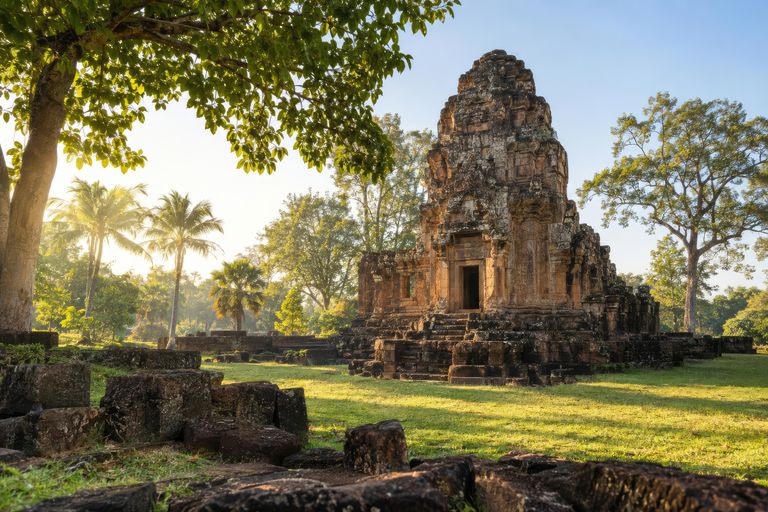
The best-known image is Phra Prang Sam Yot: three linked laterite towers built in the Khmer style, with monkeys climbing over the stone. Across the railway line stands San Phra Kan, a shrine where the largest troop of macaques lives. A short walk away, King Narai's palace shows a different Lopburi, of whitewashed walls, gateways and gardens.
The province around the city is farming country, known for sunflower fields in the cool season and for the large Pa Sak Jolasid Dam. It is part of the central plains; our guide to central Thailand shows how Lopburi fits with Ayutthaya, Kanchanaburi and Khao Yai.
What does a visit feel like? Expect busy streets and a railway line running through the centre. Old stone towers rise between the shops, and monkeys sit on the roofs and wires. It is lively and real, not polished. That contrast is part of its charm, and with a guide and a car it is easy to enjoy.
Is Lopburi worth visiting? How long to spend
Yes, for half a day or a full day if you enjoy history and photography. Lopburi's main sights sit close together in the old town, so three to four hours covers the temples, the monkeys and the palace. Add Ayutthaya on the same day and you have one of the best day trips from Bangkok.
Be honest with yourself about the monkeys. You may love them or find them too bold. If you dislike animals close to you, see the palace and view the temple towers from the street. If you enjoy them, Lopburi will be one of the most memorable stops of your trip.
The town itself is busy and practical rather than pretty, and it has no luxury hotels. That is why we plan Lopburi as a private day out, returning to Bangkok, an Ayutthaya riverside hotel or Khao Yai for the night.
Choose the season with care. The cool months from November to February are the most pleasant, with fresh mornings and the sunflowers in bloom. From March to May the central plains are very hot, so start at dawn and finish by noon. In the rainy months, short storms come in the afternoon, so mornings still work well.
Phra Prang Sam Yot and San Phra Kan: the monkey temples, calmly
To see Phra Prang Sam Yot and San Phra Kan calmly, arrive early, carry nothing the monkeys can grab, and move slowly. The Thailand Tourism Directory lists Phra Prang Sam Yot as open daily from 08:30 to 17:30; check on the day. A small entry fee is charged, but published figures disagree, so we confirm it at the gate. Mornings are cooler, quieter and kinder for photographs.
Leave bags, sunglasses, hats and loose jewellery in the car. The macaques are quick and curious, and anything shiny or rustling interests them. Keep your phone on a wrist strap, and do not carry food or drinks in plastic bags. Never feed them yourself.
Stay calm if a monkey climbs on you. Stand still, do not shout or pull away, and let it jump down. Avoid eye contact and never show your teeth when you smile at them, which they read as a threat. Staff at the temple carry sticks to keep the animals in order and can help.
Inside the temple grounds, dress as you would for any Thai temple: shoulders and knees covered, and shoes off before entering a building. Our guide walks with you, explains the Khmer carving on the towers and keeps a watchful eye on the monkeys.
San Phra Kan, the shrine across the railway, is where the monkeys are most numerous. Our advice: watch it from the car window or the pavement opposite, and save your time for the quieter towers of Phra Prang Sam Yot.
Children usually love the monkeys, but keep small ones close and hold their hands. Teach them not to reach out or run. A visit of twenty or thirty minutes among the towers is plenty for a family. Follow it with a cold drink in the car and the calm of the palace grounds.
Phra Narai Ratchaniwet palace and the old town
Phra Narai Ratchaniwet is the palace King Narai built in Lopburi, and today it houses the Somdet Phra Narai National Museum. It is the calm, elegant half of a Lopburi visit. Expect gateways in thick white walls, lawns, ruins of royal halls and galleries of sculpture from the city's long history.
The palace's pointed arched doorways show the outside influences that reached the royal court. They make some of the most photographed frames in the city. The museum's collection includes Lopburi-style Buddha images and Khmer stone carving. Allow an hour, more if you enjoy museums.
Official listings disagree on the museum's opening days and on its fee for foreign visitors. We confirm both before your visit rather than print a number that may be wrong. Wear the same temple-style dress here, because parts of the site are religious.
From the palace, walk the old town's lanes towards Phra Prang Sam Yot, past ruined temple bases standing between the shophouses. In the cool of the morning it is a pleasant half-hour stroll with your guide.
For photographs, the palace is at its best in the morning. The low sun lights the white walls, and the shadows in the arches are deep. The grounds are spacious and shaded in places. It is also the best spot to rest between the temples.
Sunflower fields and Pa Sak Jolasid Dam (in season)
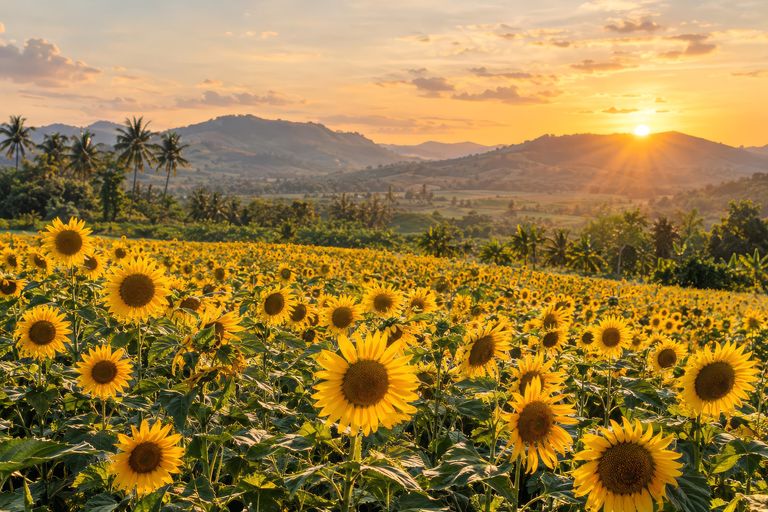
In the cool season, Lopburi's countryside turns yellow with sunflower fields. TAT has described sunflowers in central Thailand blooming from about November to January or February. It suggests trips to Pa Sak Jolasid Dam in December. A sunrise among the flowers makes a beautiful start to a Lopburi day.
Blooms move from field to field each year, depending on planting and rain. Our team checks which farms are in flower that week. We plan the route so you arrive in the soft early light, before the heat and the crowds.
Pa Sak Jolasid Dam, on the province's eastern edge, holds back a wide reservoir with hills behind. Its long embankment is lovely in the late afternoon. Combine it with the sunflowers on a cool-season day, and keep the temples for the following morning or for another trip.
Dress for the fields in light, long clothes and closed shoes, and bring a hat. Farmers often charge a small entry fee to walk among the flowers; your guide handles it. Please stay on the paths, because the crop is the farmer's living.
The Monkey Banquet festival
The Monkey Banquet is Lopburi's best-known festival, when tables of fruit and vegetables are laid out for the macaques around Phra Prang Sam Yot. It is traditionally held in late November. No official date for 2026 had been announced when we checked, so we confirm it with the organisers before planning a visit.
It is a lively, crowded morning with photographers from around the world. If you want to see it, arrive very early and keep belongings to a minimum. Watch from a slightly raised spot at the edge of the crowd.
If crowds are not for you, visit on another day. The temples and the monkeys are there all year. On an ordinary weekday morning you can see Phra Prang Sam Yot with only a handful of other visitors.
A private day from Bangkok: Ayutthaya and Lopburi together
The best way to see Lopburi is a private day from Bangkok with Ayutthaya on the way. Leave early by car and reach Lopburi for the cool morning. Then drive back south to Ayutthaya for lunch by the river and its great temples in the afternoon. You are back in Bangkok for dinner.
Example plan: one day in Lopburi. You leave Bangkok at about seven. The palace and Phra Prang Sam Yot fill the cool of the morning, with time for the old town. You drive south to Ayutthaya for a riverside lunch. Two or three of its great temples follow in the softer afternoon light. You are back in Bangkok in the early evening.
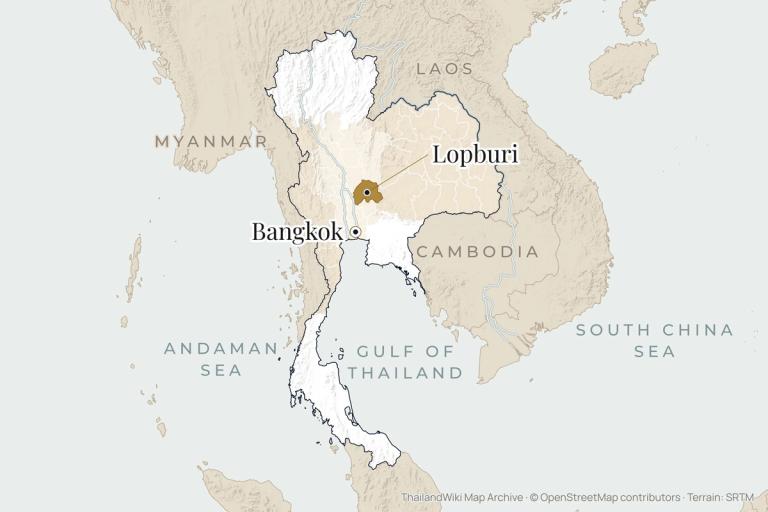
By road, TAT's Lop Buri guide gives 153 km from Bangkok by Highway 1, through Saraburi and Phra Phutthabat. A private chauffeur makes the day easy. The car waits at each stop, and cold water and towels are ready. The bags and cameras stay safe from the monkeys.
If you enjoy trains, take Special Express 7 from Krung Thep Aphiwat. The State Railway of Thailand timetable lists it leaving at 07:30 and reaching Lop Buri 2 (Tha Wung) station at 09:06. Your driver can meet the train and take the luggage by road.
In Ayutthaya, the Fine Arts Department charges ฿50 per temple or ฿220 for a combined ticket. The SRT has also run a fast service from Bangkok to Ayutthaya, just over an hour, since 1 August 2026. See our guide to getting from Bangkok to Ayutthaya.
Where to stay: Bangkok, Ayutthaya riverside or Khao Yai
Lopburi has no luxury hotels, so our advice is to sleep in Bangkok and make it a day trip. For a slower pace, stay a night at a riverside hotel in Ayutthaya. Or continue east to Khao Yai, where luxury resorts sit among hills, vineyards and a national park.
Lopburi and Khao Yai make a good two-day pair. You see the temples and monkeys on the first morning, then drive to a hill resort for dinner. Khao Yai National Park charges foreign visitors ฿400 at its Noen Hom and Pak Chong gates, according to the park authority and TAT.
If you prefer one base, our Bangkok guide helps you choose a hotel that makes an early start easy.
A night in Ayutthaya has its own reward: the temples lit at night and a quiet breakfast by the river before the day visitors arrive. From there, Lopburi is an easy morning drive north, and you reach the temples before the heat.
Plan Lopburi with Tanner
Tanner plans Lopburi as a private day that flows. An early car and a guide take you to the temples and the palace before the heat. Lunch is by the river in Ayutthaya, and you are home by evening. One planner handles the car, the guide, the tickets and the table, with our Thai team on the road. If the monkeys are not for you, we tell you which half of the day to keep. Tell us your date and your interests, and we send one written plan with every price included.