What makes Thai cooking different?
You have eaten well all week, and now you want to know how they do it. Thai cooking is about balance. A good dish brings together salty, sweet, sour and spicy flavours, often with a touch of bitterness, so that no single taste wins. Fresh herbs, pastes pounded by hand and fast cooking over high heat give Thai food its brightness.
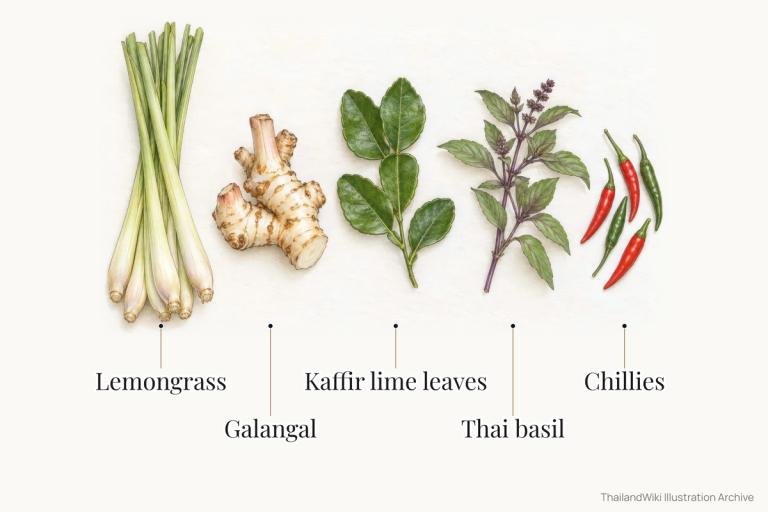
Salt usually comes from fish sauce, sweetness from palm sugar, sourness from lime or tamarind, and heat from fresh or dried chillies. Herbs such as lemongrass, galangal, kaffir lime leaves and Thai basil add perfume. Cooks taste and adjust at every step, which is why recipes in Thai kitchens are guides, not rules.
Regional food differs too. The north uses milder, earthier flavours and dishes such as khao soi, a curry noodle soup. The north-east is known for grilled meats and salads. The south is the spiciest, with rich curries. Bangkok draws on all of them.
Rice is the base of every meal. Jasmine rice is served with most central and southern dishes, while sticky rice, eaten by hand, belongs to the north and north-east. A class usually teaches you how to cook both, and how to match them to the right dishes. Our street food guide shows the dishes you will meet on the street.
The best Thai cooking classes in Bangkok
Our pick for the best Thai cooking class in Bangkok is a half-day course. It starts at a fresh market and ends with lunch of the dishes you cooked. Long-running schools such as Blue Elephant in Sathorn and the Bangkok Thai Cooking Academy run this format. We check each class before we book it.
Blue Elephant Cooking School (Sathorn). A long-running name in Thai fine dining, with its own cooking school in Sathorn. It suits couples and families who want a polished setting.
Bangkok Thai Cooking Academy. A dedicated cooking school for visitors. Book it for a practical, hands-on class.
Blue Elephant's Bangkok course is a half day of about 3.5 to 4 hours. The market tour comes only with the morning session, the school says. At the Bangkok Thai Cooking Academy, each student chooses and cooks five dishes.
Hotel kitchens. Some of Bangkok's luxury hotels teach Thai cooking to their guests, in calm private settings. Mandarin Oriental Bangkok lists Thai cooking classes led by a Thai chef, for one guest or a group. Each session lasts three hours and ends with lunch of the dishes you cooked. At Capella Bangkok, Phra Nakhon serves Thai home cooking in a riverside garden conservatory, the hotel says. When you stay, we ask its kitchen about a private lesson.
Is a cooking class in Chiang Mai worth it?
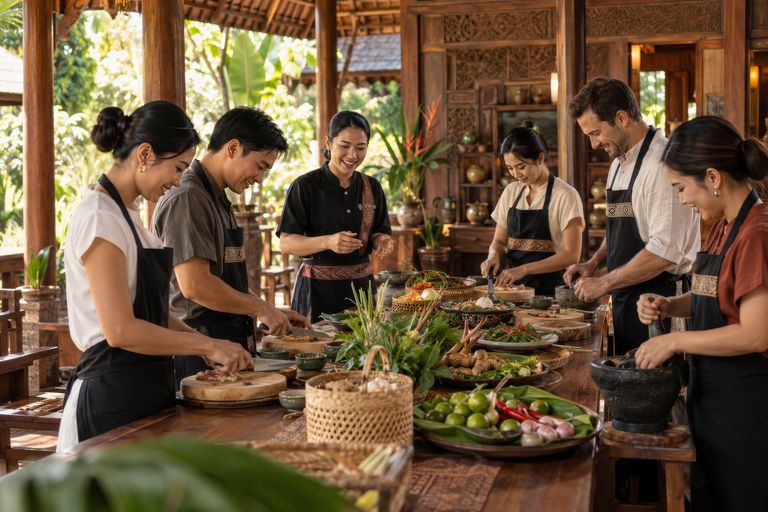
Yes. Chiang Mai is one of the best places in Thailand to learn to cook. Classes run on farms and in garden kitchens outside the city, at a slower pace than Bangkok. You can learn northern dishes, such as khao soi, that you rarely find in a class elsewhere. The cool season adds comfort.
For a luxury class, Four Seasons Resort Chiang Mai is the standout. The resort says its Rim Tai Kitchen, designed by Bill Bensley, is both a Thai restaurant and a cooking studio. Classes take centre stage there. It sits in the resort's Mae Rim valley grounds, and you eat what you cook. See our Four Seasons Chiang Mai review.
Farm-based schools outside the city add a garden walk, where you pick herbs and vegetables before you cook. They suit families and anyone who likes to see where food comes from. We choose one that runs small groups and private sessions. A morning class is best in the hot months, before the midday heat.
Combine a class with the rest of a Chiang Mai stay. Visit temples in the morning, cook at midday and relax in a spa in the afternoon. Our Chiang Mai guide shows how to plan the days.
Cooking classes in Phuket and Koh Samui
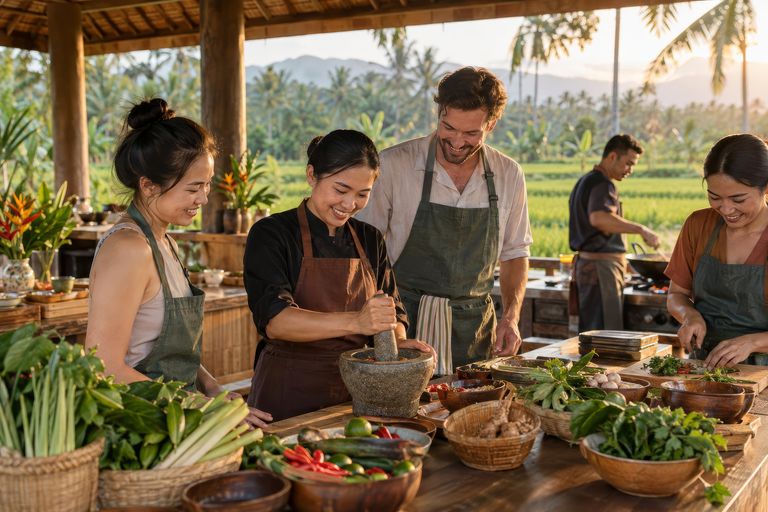
In Phuket and Koh Samui, the best classes are usually at your resort. Its own chefs teach, often with a sea view and no transfer. Several resorts we book list cooking classes for guests. Southern Thai cooking is spicier and richer than the north, with seafood at the centre.
The Slate, Phuket. The resort lists Moo's Kitchen cooking classes among its family activities, beside its Tin Box Kid's Club. A good choice for families with children.
Six Senses Yao Noi, Phang Nga Bay. Above its Nithan restaurant, the Chef's Table hosts cooking classes, wine evenings and tasting dinners, the resort says.
Six Senses Samui. The resort lists cooking classes among its activities for children aged four and over, alongside kids' yoga and Muay Thai.
Conrad Koh Samui. Its Turtle Club kids' club includes cooking among its activities.
For adults who want a serious class on the islands, we arrange a private lesson. A resort chef or a private chef teaches at your villa. It is calmer than a group class and built around your favourite dishes.
Southern dishes worth asking for include a rich massaman or yellow curry and a fiery dry curry. Fresh seafood with a lime, garlic and chilli dressing is another favourite. Phuket's own Peranakan cooking, shaped by Chinese and Malay traders, adds another layer for curious cooks. A good island teacher brings these local flavours into the class, so you learn more than the dishes you already know from home.
What a class includes and how long it takes
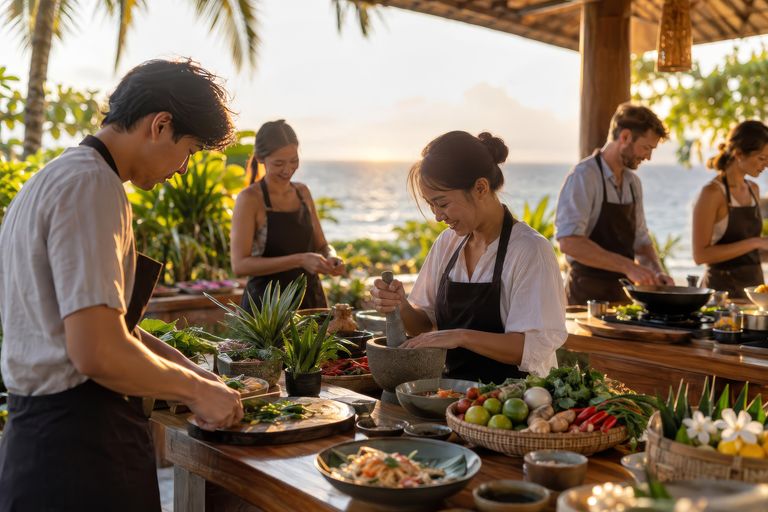
Most Thai cooking classes run for a half day, about three to four hours, and many start with a market visit. You cook several dishes, usually a soup, a curry, a stir-fry and a dessert, and eat them together at the end. A full-day class adds more dishes and often a curry paste from scratch.
After the cooking, the meal. You eat what you made, often with the group. Many schools give you a recipe book to take home.
No experience is needed. Teachers explain each step slowly, and they adjust the spice to your taste. If you already cook at home, ask for harder dishes, such as a curry paste from scratch or a whole steamed fish. A good teacher welcomes the challenge.
Common dishes in a first class include tom yum soup, a green or red curry and a stir-fried noodle dish such as pad thai. A fresh salad and mango sticky rice for dessert often complete the menu. Ask for a menu that matches your taste: many schools change the dishes by day, so you can pick the day that suits you.
Private classes: in your villa or a hotel kitchen
A private Thai cooking class is the most comfortable way to learn, especially for families and groups. A chef comes to your villa, brings the ingredients and teaches in your own kitchen, or a hotel opens its kitchen for your group. You choose the dishes, the time and the pace.
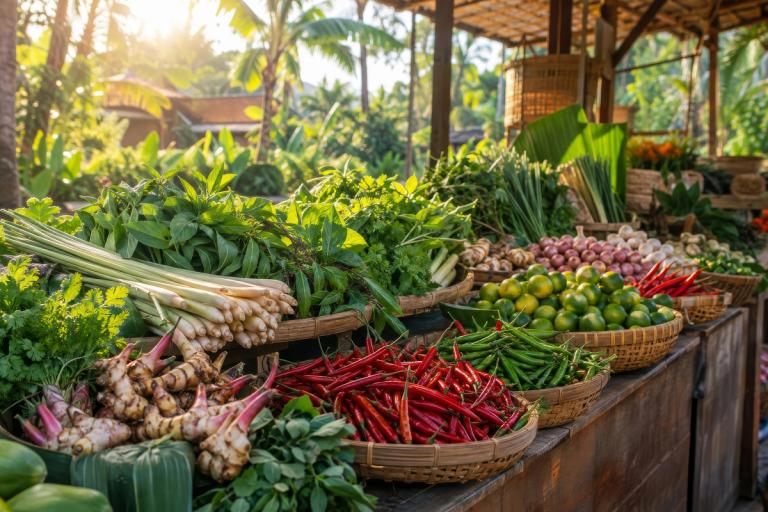
Example plan. You walk a fresh market with the chef in the cool of the morning. Back at the villa, the ingredients wait on the counter. Each of you pounds a curry paste and cooks two dishes. Lunch is one long table of what you made. The afternoon belongs to the pool.
Private classes suit every diet. A chef can teach a fully halal menu, a vegetarian or vegan menu, or dishes without nuts or gluten. Children can join with simple tasks, such as rolling spring rolls or making mango sticky rice.
We often build a private class into a celebration: a birthday lunch, a family reunion or a team-building afternoon. The class ends with a long table and the dishes you made together. See our private chef service.
A private class also works for corporate groups. Teams cook in pairs, then share the meal, and the afternoon becomes a relaxed way to bring colleagues together. We arrange the room, the chef, the ingredients and the drinks.
For long stays, Thailand's Destination Thailand Visa (DTV) also covers Thai cooking courses as a soft-power activity, the Ministry of Foreign Affairs says. It allows stays of up to 180 days per entry.
How much does a Thai cooking class cost?
The cost depends on the school, the length of the class and whether it is private. Group classes at schools cost least. Hotel and private classes cost more, and they give you the kitchen and the teacher to yourself. We print a school's price only when it is published on the school's own site, with the date we checked.
Two published prices were checked on 2 November 2026. Blue Elephant lists its standard class at ฿2,800++ (฿3,296 net) per person on its own site. The Bangkok Thai Cooking Academy lists ฿1,300 per person on its site.
Private classes at your villa are priced on request, because the menu, the number of guests and the chef's travel all change the cost. A private chef needs 1 to 2 days' notice, one guest is fine, and groceries are in the quote. Hotel classes may be priced per guest or included in a stay package; we check what your rate covers first.
Royal Thai dishes to learn
Royal Thai cuisine is the refined cooking of the old palace kitchens, known for delicate flavours and careful presentation. Some classes teach one or two royal-style dishes, such as finely carved fruit or elegant small bites. Ask for it when you book, and we find a teacher who can.
Fruit and vegetable carving is another palace art. A carving lesson is calm and precise, and it is for you if you enjoy craft more than cooking. It is also a lovely activity for older children.
Read more in our guide to royal Thai cuisine.
Plan it with Tanner
Tell Tanner where you are staying, who is coming and what you would like to cook. We choose the right class, a school, a hotel studio or a private chef, and book the market visit, transfers and any dietary needs. One planner handles the class, the car and the rest of your trip. We also tell you when a famous school is too busy to be worth it.
We plan for any group, from a couple to a family reunion or a company team. A class pairs well with a temple morning or a spa afternoon, so the day feels complete. If you already know which dishes you love, tell us, and we choose the teacher who cooks them best.