Do you need a visa for Thailand?
You may need no visa for a holiday of up to 30 days. The Tourism Authority of Thailand lists 60 countries and territories for this exemption since 15 September 2026. It covers tourism only. You show your passport on arrival, and the officer stamps your permitted stay.
You are packing for Bangkok, and the visa is the one paper you are unsure of. For most passports on our trips, there is none to get.
Check your passport date first. It must have 6 months left on the day you enter, not on the day you book.
Here is how the rule applies to the most common passports on our trips:
- United Arab Emirates: up to 30 days without a visa
- Saudi Arabia: up to 30 days without a visa
- Singapore: up to 30 days without a visa
- Hong Kong: up to 30 days, under a bilateral agreement
- Malaysia: up to 30 days, with no limit on land-border entries
- Taiwan: up to 30 days without a visa
- India: up to 30 days without a visa (extensions are shorter, see below)
- United Kingdom, United States and Australia: up to 30 days without a visa
If your passport is not on the list, or you plan to stay longer, apply for a tourist visa before you fly. The Ministry of Foreign Affairs runs applications online through the Thai e-Visa portal. Business trips also need the right visa, because the exemption is for holidays only.
What are the new visa rules for Thailand?
The rules changed on 15 September 2026. The 60-day visa exemption ended, and 60 countries and territories now get up to 30 days. The Ministry of Foreign Affairs says the Interior Ministry notices were published in the Royal Gazette on 31 August 2026. Visa on arrival shrank to three nationalities.
Three points matter most. First, anyone who entered before 15 September keeps the stay stamped in their passport. Second, entries by land under the exemption are limited to twice a calendar year. Malaysia, Brunei, Indonesia and Singapore are outside that limit. Third, the ministry lists two further nationalities with a shorter 15-day exemption.
A ฿450 entry fee for foreign visitors has been proposed by the government. It is not in force, and no start date has been published in the Royal Gazette.
Who can get a visa on arrival in Thailand?
Only nationals of Azerbaijan, Belarus and Serbia can get a visa on arrival since 15 September 2026, the Royal Thai Embassy in Doha states. It allows up to 15 days and costs ฿2,000 in cash. It normally cannot be extended. Bring a return ticket, and not one to a neighbouring country.
Older lists with around 30 countries are out of date. If you hold any other passport, you either enter visa-free or apply for a visa before you travel.
What do you need to enter Thailand?
You need a passport valid for at least 6 months on the day you enter, say Royal Thai Embassies. You also need the free Thailand Digital Arrival Card, filed online within 3 days before arrival. Officers may ask for an onward ticket and proof of funds. Tourists do not need insurance.
The government's Thailand.go.th guide sets the funds rule. Visa-exempt and visa-on-arrival visitors may be asked for ฿10,000 per person or ฿20,000 per family. Tourist-visa holders may be asked for ฿20,000 per person or ฿40,000 per family. Children under 12 are not counted. The check is not made for everyone.
So, do you really need ฿20,000 to enter? Only if you hold a tourist visa and the officer asks. A recent bank statement or a credit card on your phone is usually enough to show.
File the arrival card only on the Immigration Bureau's own site. Look-alike sites charge a fee for a form that is free. Our arrival card guide shows each step.
Can you extend a 30-day visa exemption?
Yes, once. The Immigration Bureau grants one extension of no more than 30 days, counted from the end of your permitted stay. The Bureau's fee page lists ฿1,900 per application. You apply in person at an immigration office with form TM.7. The officer decides; an extension is not automatic.
Some nationalities get less. The Bureau limits nationals of India, Sri Lanka, Pakistan, Bangladesh, Iran, Nepal, Togo, Nigeria and Uganda to 7 extra days. If you need longer, choose a visa before you fly.
Which visa suits a longer stay in Thailand?
For stays of months or years, four routes fit best. The Destination Thailand Visa suits remote workers. The Long-Term Resident visa suits wealthy residents and professionals. Thailand Privilege is a paid membership. The O-A and O-X visas are for people over 50. Each has its own money and insurance rules.
The Destination Thailand Visa lasts 5 years, with up to 180 days per entry and one extension of up to 180 days. The Ministry of Foreign Affairs asks for ฿500,000 in the bank and charges ฿10,000.
The Long-Term Resident visa lasts 10 years. The Board of Investment runs it in four categories, and the fee is ฿50,000 when collected in Thailand.
Thailand Privilege membership starts at ฿900,000 for the 5-year Gold tier, the programme's own price list shows. The O-A retirement visa needs ฿800,000 in the bank and health cover of USD 100,000. The O-X visa is open to 14 nationalities and needs ฿3,000,000.
How do you arrive smoothly at a Thai airport?
The calmest arrival starts before you land. File the arrival card at home, and keep your onward ticket and a recent bank statement on your phone. Then a funds question at the desk takes seconds. Thai airport immigration has no paid fast lane, so what we arrange is a private meet-and-assist service.
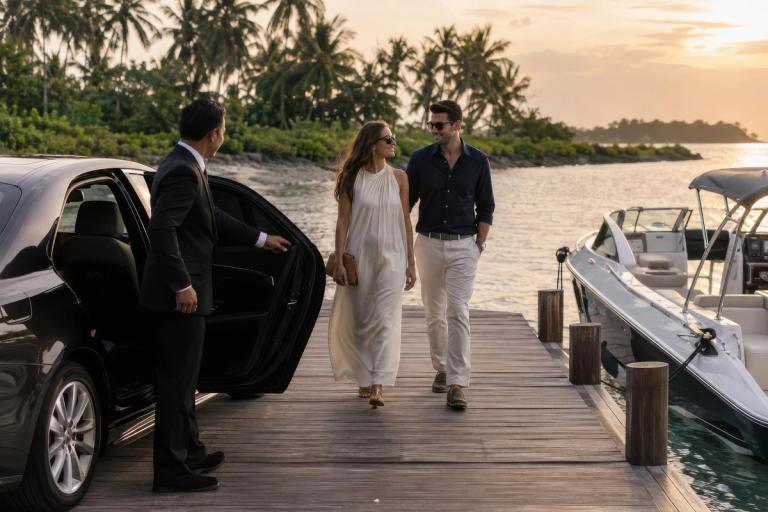
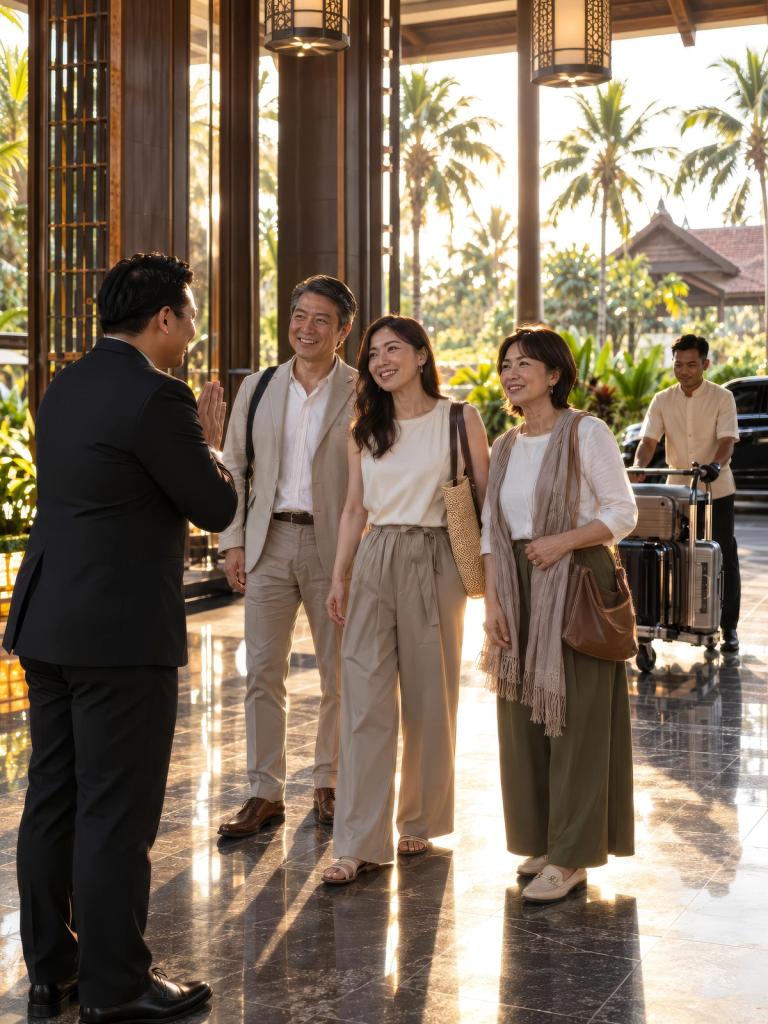
Our host meets you in the arrivals hall and walks you through, using the priority lane where your ticket or status allows. A chauffeur waits outside, and the bags are handled. Send Tanner your flight and every passport in the group, and we arrange the rest. We get back to you right away. See our VIP arrivals service for Bangkok, Phuket and Samui.