How much does it cost to live well in Bangkok?
Your company is moving you to Bangkok, and the family comes too. The cost of living in Bangkok for a high-end household comes down to rent, school fees and staff. Dining, transport and health care add less than most newcomers expect. Here are the main monthly and yearly lines, each with its source and date where one exists.
- Rent: a luxury condo or serviced residence in Sukhumvit, Sathorn or the Riverside. Rent is quoted to your plan: tell Tanner the area and the number of bedrooms, and we send three homes with their prices.
- School fees: ฿515,000 to ฿1,197,000 a year in tuition at three leading Bangkok schools for 2026-27, the Board of Investment (BOI) says. One-off fees come on top.
- Household staff: a housekeeper, nanny or driver, paid by monthly agreement and never below the legal minimum wage, the Ministry of Labour says.
- Dining: a five-star Sunday brunch costs ฿3,200 to ฿3,990 per person at the hotels named below.
- Transport: MRT Blue Line fares run from ฿17 to ฿44 a trip, Bangkok Expressway and Metro (BEM) says. Grab and Bolt work across the city.
- Health insurance: the LTR visa asks for cover of at least USD 50,000, a useful floor for any long-stay plan.
Prices change. Treat every figure as a guide with a date, not a quote, and check the latest numbers before you sign anything.
Can I live comfortably on US $2,000 a month in Thailand?
A budget of US $1,500, $2,000 or even $3,000 a month covers a simple life in Thailand. The life this page describes starts higher. Rent in a luxury building and international school fees are the reasons. One year of high-school tuition at a leading school costs more than many such budgets for a whole year.
At about 34 baht to the dollar, the top ISB tuition of ฿1,197,000 a year is about US $35,000 on its own. Add a family home in a prime area, staff and travel. Then a comfortable high-end budget is a multiple of the figures people often quote online.
What you get for it is the good news. Service is warm and the hospitals are excellent. A driver, a housekeeper and fine dining are part of normal life here, not rare luxuries.
Rent: serviced residences and luxury condos
Most newcomers rent first, in a serviced residence or a luxury condo in Sukhumvit, Sathorn or along the river. A serviced residence comes furnished, with cleaning and a front desk, and suits the first months. A condo lease costs less over a year but needs furniture and more admin.
The deposit and advance rent are agreed in the lease. Read the clauses on repairs, early exit and pets before you sign. Keep a photo record of the unit on the day you move in.
Pick your area around your daily life. Choose the school first and the building second: a home close to the school keeps the daily run short in Bangkok traffic. Our guide to property in Bangkok compares the main areas.
If you later want to buy, foreigners may own a condo unit freehold in their own name. Foreign ownership in one building may not go over 49% of the total unit floor area, under the Condominium Act. The money must come from abroad in foreign currency.

Buying instead of renting
Buying makes sense if you plan to stay for years. Foreigners can own a condo unit but cannot own land in their own name, under the Land Code. A registered land lease runs for up to 30 years per term, and renewal options are contract terms, not rights guaranteed by law.
Plan for the government costs on a transfer, the Department of Lands and the Revenue Department say. The transfer fee is 2% of the official appraised value. Specific business tax is 3.3% including local tax on a sale within 5 years of purchase. Stamp duty of 0.5% applies only when that tax is not due. Withholding tax also applies.
Who pays which cost is agreed in the contract. Keep proof of the foreign-currency transfer, because you will need it at the Land Office. Read more in our guide to buying property.
School fees
International school tuition in Bangkok runs from ฿515,000 to ฿1,197,000 a year for 2026-27 at three leading schools, the BOI says.
These figures are tuition only. Schools also charge application, registration or capital fees, often in the first year, plus extras such as buses and lunches. At ISB, for example, the first-year registration fee is ฿260,000, its fee schedule says.
Our guide to international schools in Thailand explains curricula and how to choose.
Household staff and drivers
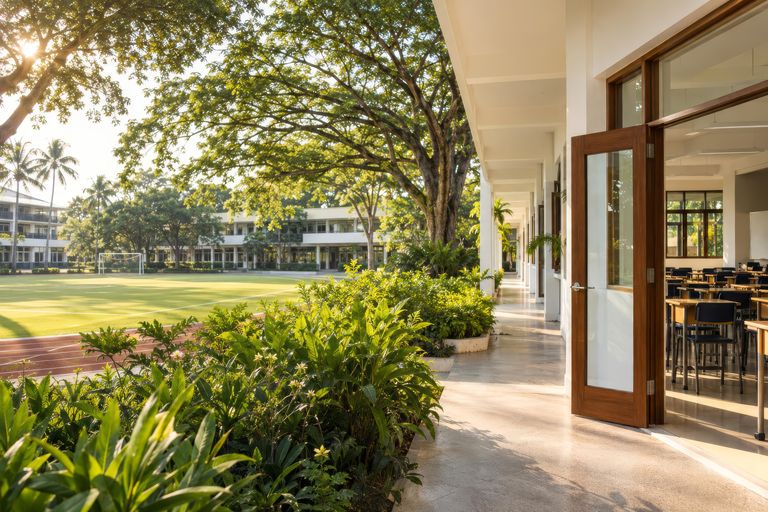
Many families in Bangkok employ a housekeeper, a nanny or a driver. Domestic workers have legal protections under Ministerial Regulation No. 15, in force since 30 April 2024, the Ministry of Labour says. These include a maximum of 8 working hours a day and at least one hour of rest.
The regulation also gives leave for necessary personal business and 98 days of maternity leave, 45 of them paid. A worker may not be dismissed for pregnancy, and wages may not fall below the minimum wage. Agree the wage, hours and days off in writing.
Good staff stay for years when they are treated well. Many households add a yearly bonus and pay for health cover. For a driver on demand rather than a full-time hire, Tanner quotes our chauffeur service to your plan. Read more about hiring at home on our domestic staff page.

Dining, brunch and nights out
Fine dining in Bangkok costs less than in most global cities. A Sunday brunch at a five-star hotel is a good benchmark. ALATi at Siam Kempinski costs ฿3,200++, Dusit Thani ฿3,300++, Anantara Siam from ฿3,400++ and Lord Jim's ฿3,800 plus service and tax, the hotels say. District Grill at Marriott Sukhumvit charges ฿3,990 net.
"++" on a menu means a service charge and 7% VAT are added on top. The Department of Internal Trade says a service charge should be 10% or less and must be shown before you order.
Other prices from the venues themselves: a 90-minute Asian Trinity treatment at The Peninsula Spa costs ฿4,900. A day pass at the Sun Club at The Standard, Mahanakhon costs ฿1,200 net, with ฿600 of food and drink credit. A cooking class at Blue Elephant costs ฿2,800++.
Bangkok's best restaurants hold Michelin stars, and a tasting menu is the city's top dining spend. See our guide to Michelin dining.

Health care and insurance
Bangkok has excellent private hospitals, and many expats use them for everything from check-ups to surgery. Bumrungrad International, Samitivej Sukhumvit, BNH and Vejthani are all accredited by the Joint Commission International (JCI), according to the JCI list checked in October 2026.
Health insurance is the main cost. The LTR visa asks for cover of at least USD 50,000, and that is a sensible minimum for any long stay. Families often buy more, with cover for treatment abroad.
Check how your insurer pays. Bumrungrad asks for an admission deposit when your insurer has no contract with the hospital, the hospital says. With a contracted insurer, it asks for a full deposit if the guarantee letter has not arrived after 48 hours.
Getting around
Public transport in Bangkok costs little. MRT Blue Line fares run from ฿17 to ฿44 for adults until 2 July 2028, BEM says. Grab and Bolt work in all main cities. Most high-end residents keep a car and driver for school runs and evenings out.
A driver saves time in traffic and handles parking. For visitors and new arrivals, we arrange a chauffeur or a van when you need one.
Visas, tax and the costs people miss
Visa and tax costs are easy to forget in a budget. The Long-Term Resident (LTR) visa costs ฿50,000 per person for 10 years when collected in Thailand, the Board of Investment says. Thailand Privilege membership runs from ฿900,000 for Gold, 5 years, to ฿5,000,000 for Reserve, 20 years or more.
Each extension of stay costs ฿1,900, the Immigration Bureau says. A Non-Immigrant O-A visa costs ฿5,000 for multiple entries, the Ministry of Foreign Affairs says. Anyone staying over 90 days must report their address every 90 days.
Tax matters too. You become a Thai tax resident after 180 days in Thailand in a calendar year, the Revenue Department says. Foreign income earned from 1 January 2024 is taxed when you bring it into Thailand in a year you are resident. Get advice before you move money.
Our Live in Thailand section covers visas, tax and banking in more detail.
Plan it with Tanner
A real budget starts with a scouting week in Bangkok. Tanner plans the week around your questions: residences to view, school visits, a hospital check and a car with a driver each day. You see the city as you would live in it.
For a home to buy or rent, we can connect you with a property agent we trust and an independent lawyer. See our relocation services for the full picture.
You leave the viewings, school calls and transport to us, and you go home with figures you can plan on. Tell Tanner your family size and moving date. We get back to you right away.