Where do you climb in Railay?
You step off the boat at Railay and the cliffs rise straight above the sand. Railay rock climbing spreads across four areas of the Phra Nang peninsula: Railay West, Railay East, Tonsai Bay and Phra Nang Beach. Mountain Project, the climbers' route database, divides the peninsula this way. It notes that the routes are bolted sport climbs. Each area has a different feel and level.
Railay East has walls such as the 1-2-3 Wall, at the south end of the beach. It is an easy walk from Railay West through the resort paths. Tonsai Bay, next door, links to Railay by a jungle trail. Phra Nang Beach adds climbing with famous sea views. Your guide chooses the area that suits your level.
Our Railay guide explains the beaches, trails and viewpoints if you want to explore beyond the walls.

How tall are the cliffs at Railay?
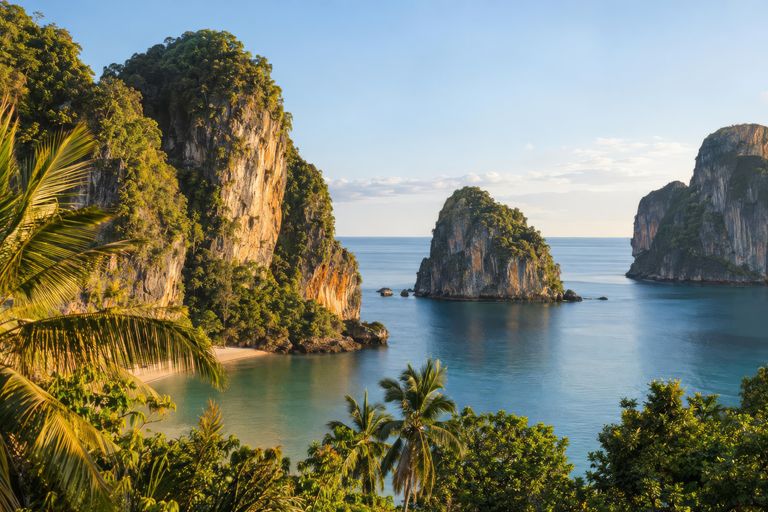
Railay's cliffs range from short practice walls near the beaches to tall limestone towers that rise straight from the sea. Beginner routes use the lower sections, so you climb only part of a cliff on your first day. Your guide chooses routes that match your strength and comfort.
Climbing as a beginner
Yes, beginners can climb at Railay with a qualified guide. A half-day course is the usual start. Climb On Railay runs half-days from 9:00 to 12:30 or 14:00 to 17:30, and Real Rocks describes a four-hour session. Schools supply the harness, shoes and helmet.
A beginner session starts at the foot of the wall. The guide fits your gear, teaches the basic knots and explains how the rope system keeps you safe. Then you climb short routes on a top rope, with the guide holding the rope from below. By the end of the morning you have several climbs behind you.
Example plan: a first morning on the rock. Meet your guide at 9:00 on the beach. Spend twenty minutes on gear and safety. Climb three or four short routes, resting in the shade between them. Finish with a cold drink and a swim by 12:30, before the strongest sun of the day.
Safety first. Always climb with a qualified guide, and never on a route the guide has not checked. Wear the helmet at all times near the wall, as small stones can fall. Tell the guide about any injury or fear of heights before you start.
You do not need to be very strong. Good footwork matters more than arm strength. Wear light sports clothes and bring water, sunscreen and a small towel. Avoid a heavy meal just before you climb.

Private guides and climbing schools
Several climbing schools are based on the Railay peninsula. King Climbers, Real Rocks and Climb On Railay all run beginner courses. Real Rocks says its instructors are internationally certified and offers private courses. A private session gives you a guide to yourself and a pace that suits you.
A private guide also means you can choose quieter walls, start early to avoid the heat and stop when you like. It suits couples, families with older children and experienced climbers who want a local partner for harder routes. We book the school and the guide for you.
For experienced climbers. If you already lead outdoors, a local guide still saves time. The guide knows which routes are in good condition and where the shade falls at each hour. Our call: book a guide for the first day, then climb with a partner.
Ask about the guide's training and the condition of the gear before you book. Tanner works only with schools that meet our safety checks.
Best time to climb
The best time to climb at Railay is December to March, the dry season on the Andaman coast. Thai Meteorological Department figures for Phuket, the nearest long-term station on this coast, show February as the driest month and September as the wettest. Wet rock is slippery, so rain matters.
From May to October the rain is heavier and the sea rougher, and some boat trips are cancelled. Climbing is still possible on dry days, often under overhangs that stay dry, but plans need to stay flexible.
Climb early in the morning or late in the afternoon, when the walls are in shade and the air is cooler. Some walls get morning shade and others afternoon shade. Ask your guide to plan the day around the sun, not around the boat timetable.
Where to stay
The best place to stay for climbing is Rayavadee, on the tip of the peninsula itself. It has 94 pavilions and 7 villas in gardens below the cliffs, on the edge of the marine national park. You can walk to the beaches and walls, and return to calm after a morning on the rock.
If you stay in Phuket or Ao Nang, a private boat makes a climbing day easy. It drops you at the beach near the wall and waits while you climb. Then it takes you on to lunch or a quiet island in the afternoon.
Rayavadee says it is about 20 minutes by road from Krabi airport to Nong Nuch pier, then about 20 minutes by boat. Bhu Nga Thani, on Railay East, is another option on the peninsula. Ao Nang, across the bay, has a wider choice of hotels; see our Krabi guide.
Plan your climbing day with Tanner
Tanner plans your climbing day at Railay as one booking. Our pick is a private boat, a qualified guide, the right wall for your level, lunch by the sea and a stay at Rayavadee. One planner covers any group size, and we say plainly when a wall or a season is not worth it. Pair it with a day on a yacht from Phuket or other adventure experiences.