Is Thailand a good place for scuba diving?
You have a week by the sea and a dive card in your bag. Yes, Thailand works: it has two seas with opposite seasons, so you can dive in one of them in any month. The Andaman side has the famous reefs and granite boulders of the Similan Islands. The Gulf side has Koh Tao, a popular place to learn. Both are easy to reach from Phuket or Koh Samui.
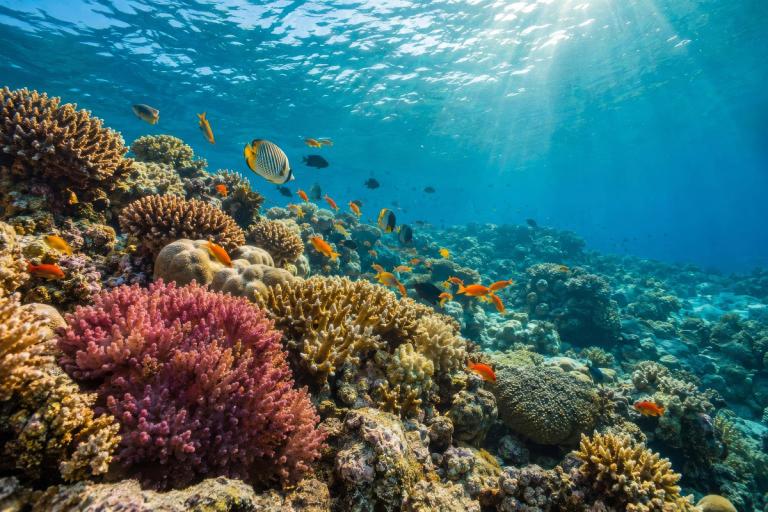
The water is warm all year, visibility is good in the dry months, and the reefs are protected inside national parks. For a first-time diver, Thailand is one of the easiest places in the world to start. For an experienced diver, the Similans and the far south give big boulders, fast currents and large fish.
It also fits well into a wider holiday. You can dive in the morning and be back at a five-star resort for lunch, a spa treatment and a good dinner. Few dive regions give you that comfort so close to the reefs.
What is the best season to dive in Thailand?
The best season depends on the coast. On the Andaman side, dive from mid-October to mid-May. The Department of National Parks opens the Similan Islands from 15 October 2026 to 15 May 2027. On the Gulf side, Koh Tao is driest from February to April. The Tourism Authority of Thailand names June to September as its main season for dive trips. Thai Meteorological Department normals for Samui show the heaviest rain from October to December.
The Andaman peak runs from December to March, when Phuket is driest. These are also the busiest weeks at the main sites, so a private boat that leaves early makes a real difference. In the Gulf, plan around November, the wettest month on Samui, when seas can be rough and boats are sometimes held in port.
Some parks close in the rainy season. The Similan and Surin Islands close from mid-May to mid-October. TAT notes that the smaller islands of Mu Ko Lanta National Park are usually closed from May to October.
Which island is the best for diving?
There is no single best island; it depends on what kind of diver you are. For reefs and boulders on a multi-day trip, choose the Similan and Surin Islands. To learn, choose Koh Tao. For easy day trips from a resort, choose Phi Phi or Koh Lanta, which reaches the deep pinnacles of Hin Daeng and Hin Muang.
If you are experienced, combine both: a long day or a liveaboard to the Similans, then a few calmer dives near Phi Phi or Lanta. If you are new, stay on Koh Tao for a few days, then move to a beach resort to relax. Our Koh Tao guide covers the island itself.
The best dive sites, by region
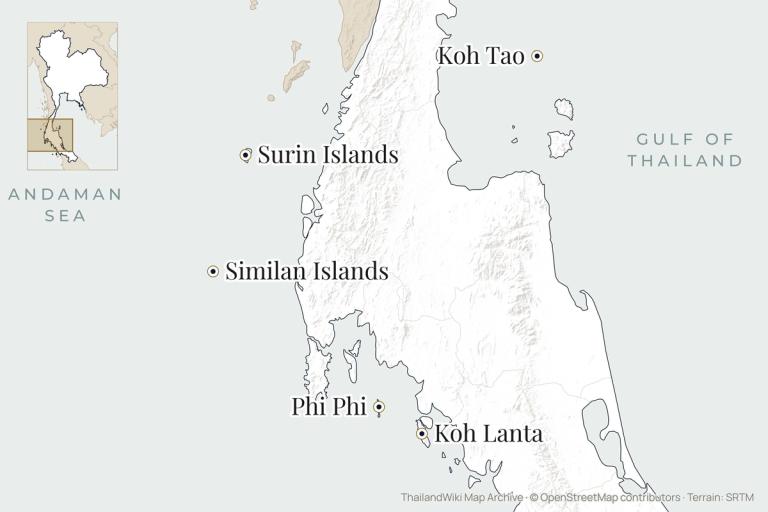
The best diving is in the Similan Islands off Khao Lak, around Phi Phi and the Lanta islands, and around Koh Tao. Each region has its own character. The Similans have big granite boulders, the south Andaman has walls and pinnacles, and Koh Tao has sheltered bays for learning.
Similan Islands. Our pick for the best diving in Thailand: granite boulders, swim-throughs and clear water, about a long day by fast boat from Khao Lak. The Department of National Parks has closed some sites indefinitely, including Ko Tachai and its reef, Fantasy Reef and Hin Muan Diao. Daily visitor numbers are limited, so book early in peak season. Read our Similan Islands guide.
Surin Islands. Further north, near the border with Myanmar, the Surin Islands share the Similan season and fee. They are quieter and best reached on a multi-day trip.
Phi Phi. Easy reef dives and walls close to the islands, with many sites for all levels. Swimming is not allowed at Maya Bay, and the bay closes every year from 1 August to 30 September.
Hin Daeng and Hin Muang. Two deep pinnacles south of Koh Lanta, for experienced divers. They lie in a special-fee area of Mu Ko Lanta National Park. TAT and the Department of National Parks list ฿400 for a foreign adult.
Koh Tao and Koh Nang Yuan. Koh Tao's sheltered bays suit training dives and gentle reefs. Koh Nang Yuan, the small island next to Tao, charges ฿250 per visitor on arrival, according to the island resort.
What are the park rules and fees?
Most Thai dive sites lie inside national parks, so you pay a park fee and follow park rules. The Similan and Surin Islands cost ฿500 for a foreign adult and ฿250 for a child. Other parks charge ฿100, ฿200 or ฿300, with ฿400 at Phi Phi and at Hin Daeng and Hin Muang.
Similan tickets are e-tickets that need each foreign guest's passport number, so send us your passport details when you book. Your crew buys the tickets and carries them on board.
Every boat must moor at buoys, piers or marked areas, never on coral. Boats must keep to 3 knots or less within 100 m of reefs and dive sites. Drones need park permission. Sunscreen with oxybenzone, octinoxate, 4-MBC or butylparaben is banned in all national parks, with fines up to ฿100,000. See our national parks data page for every fee.
Is scuba diving expensive in Thailand?
Diving in Thailand costs less than in many dive regions, and the top end is where the value shows. Costs depend on the boat, the number of dives, the park fees and the guide. Dive centres publish their own rates, which change with the season.
We do not print dive prices here. A private dive guide and your own boat cost more than a shared trip. You get the sites, the timing and the pace you want, and a quiet deck. Tell us your level and dates, and we give you the options side by side.
Snorkelling for non-divers
Non-divers can enjoy most of the same trips. The Similan Islands have white beaches and shallow reefs close to shore. Phi Phi has calm bays for snorkelling, although swimming at Maya Bay itself is not allowed. Koh Tao's sheltered bays and Koh Nang Yuan are good for snorkelling straight from the beach.
On a private boat, divers and snorkellers travel together. The crew drops the divers at one site and takes the snorkellers to a shallow reef nearby, then everyone meets for lunch. It is the easiest way for a mixed group or a family to share the same day. Children who are not old enough to dive can still see colourful reef fish from the surface, with a crew member beside them.
In the Gulf, TAT lists Koh Samui and Koh Phangan among areas where box jellyfish can occur. It asks hotels and dive operators to keep vinegar ready. Wear a light rash suit when you snorkel, and ask your crew about conditions before you get in.
The private way: a dive yacht or liveaboard
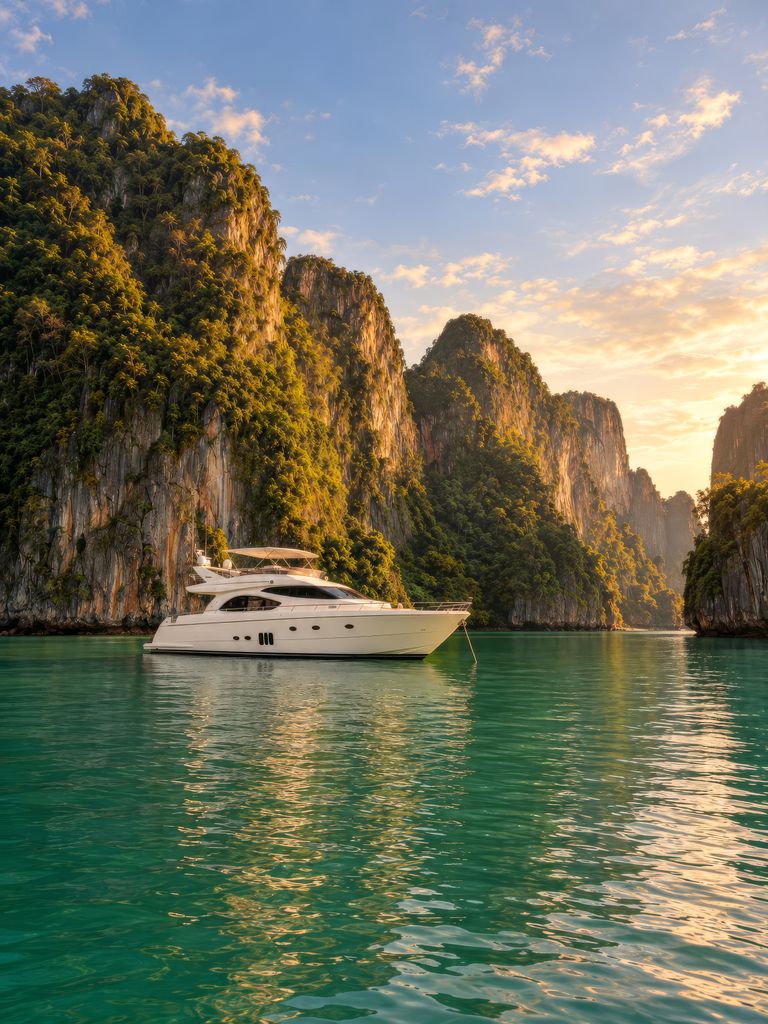
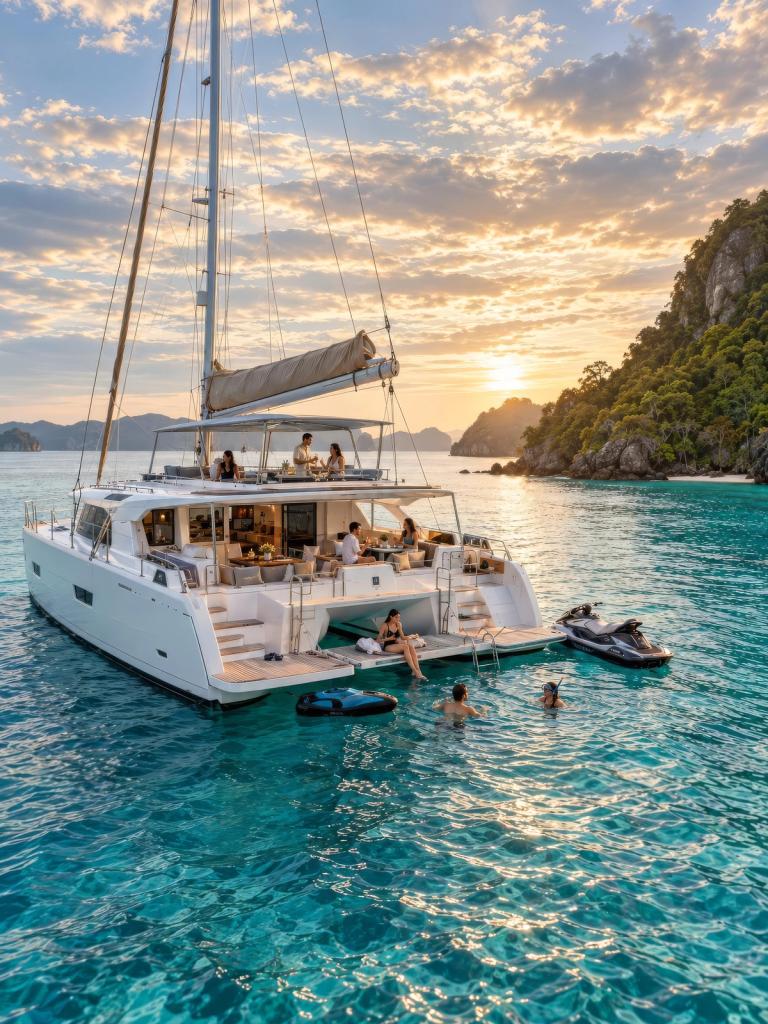
Our pick is the private way: your own crewed motor yacht or catamaran with a dive master on board. We describe the boat, never name it: for example, a 30-metre motor yacht from Phuket. You choose the sites and the timing, dive before the day boats arrive, and rest on deck between dives.
Example plan. You leave Khao Lak at first light on a crewed motor yacht. You are on the first Similan site before the day boats arrive. Between dives you rest on deck in the shade, while the snorkellers swim off a white beach. Lunch is on board, then one more dive in the afternoon light.
A dive yacht suits a long day to the Similans or two to three days through the Andaman islands. The crew handles tanks, weights and safety checks. Non-divers can snorkel, swim or simply relax. Under the Navigation in Thai Waters Act, a boat carrying more than 12 passengers is a passenger vessel. Larger groups need a larger licensed boat or a second one.
Prices depend on the boat and the route, so they are on request. See our Phuket yacht charter page for how we choose boats and crews.
Safety and medical
Take out dive insurance before you travel, and keep your certification card and logbook with you. In Phuket, Bangkok Hospital Phuket and Bangkok Hospital Siriroj are both JCI-accredited international hospitals. Tell your dive master about any medical condition, and leave at least a day between your last dive and your flight home.
Choose a dive centre with a good safety record and small groups. In Koh Tao, Jamahkiri Dive Resort & Spa combines a dive centre with resort rooms on Thian Og Bay. Your crew should give a full briefing before each dive and carry oxygen and a first-aid kit on board. For decompression illness, Bangkok Hospital Siriroj and Vachira Phuket Hospital both run recompression chambers in Phuket, the hospitals say.
If you have not dived for a year or more, book a short refresher dive in calm water on your first day. It costs a morning and makes the rest of the trip safer and more enjoyable. That matters most before deeper sites such as Hin Daeng and Hin Muang.
Plan your dive trip with Tanner
Start with your level, your dates and who is coming. We plan the coast for your month, book the boat and dive master, and arrange the resort and transfers. Non-divers in your group get their own plan for each day. One planner runs all of it, for a couple or a group that needs two boats. If the captain cancels for weather, we look for a new date while you are still in Thailand. When a dive site is not worth the crossing that week, our Thai staff on the coast say so. Our island hopping guide shows how to add more islands to the trip.