What is Phuket Old Town famous for?
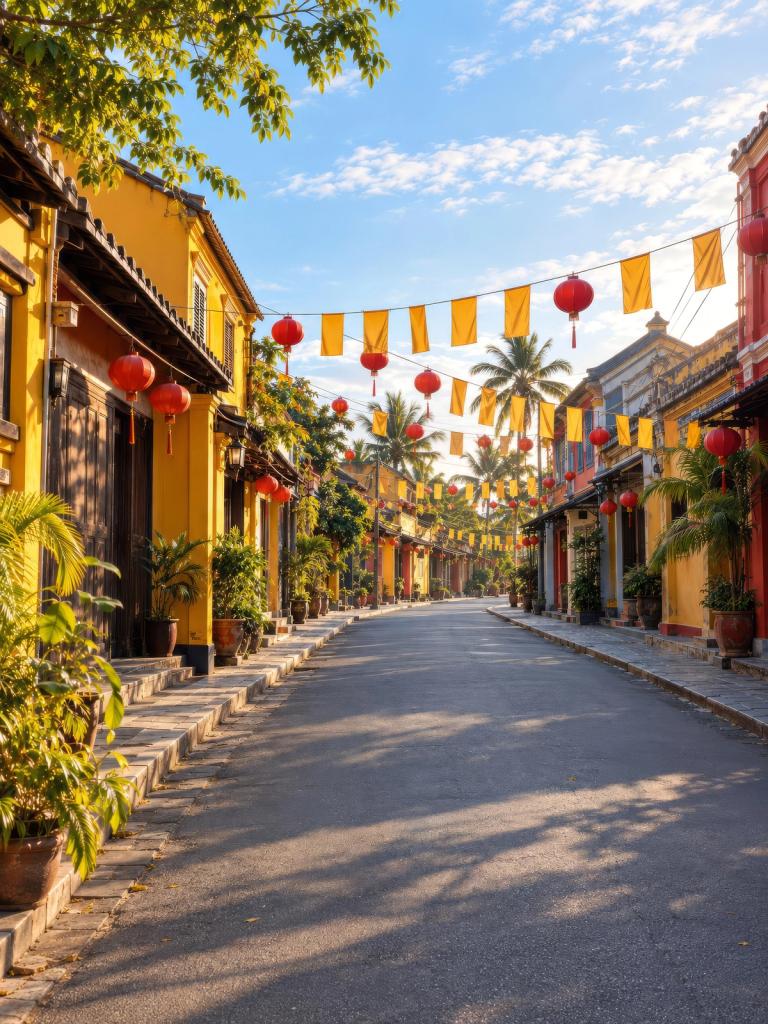
Phuket Old Town is famous for its rows of colourful Sino-Portuguese shophouses. It is also known for Peranakan culture and food, and its history as a tin-mining town. The Phuket Provincial Office defines the Old Town by these shophouses lining both sides of the street. It is the cultural heart of the island, far from the beaches.
Tin made Phuket rich. In the 19th and early 20th centuries, tin deposits drew Hokkien Chinese settlers to the island, TAT says. Many married local people, and their children became the Peranakan community. Their mix of Chinese, Thai and Malay traditions shaped the town's food, dress and architecture.
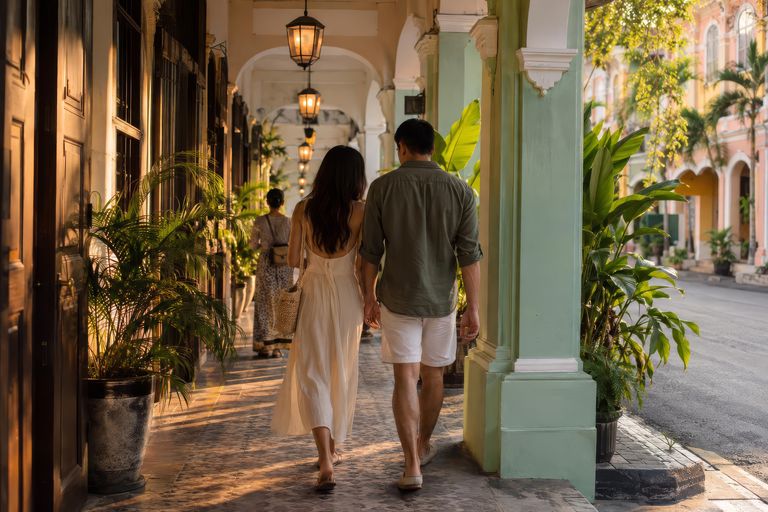
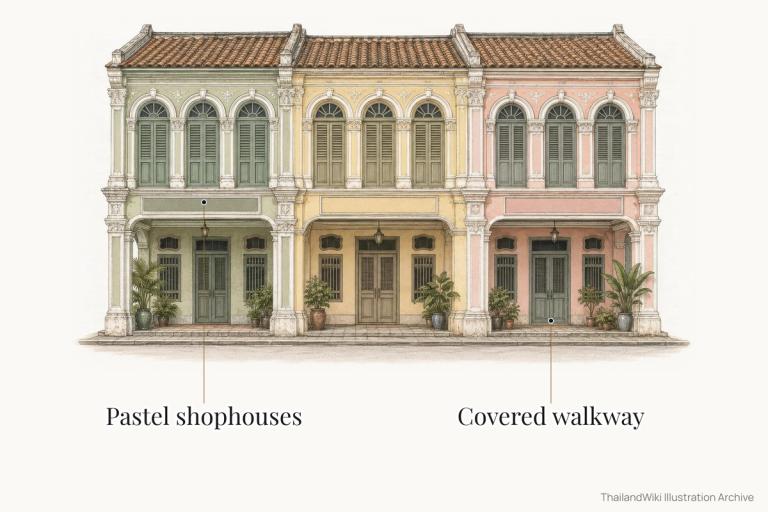
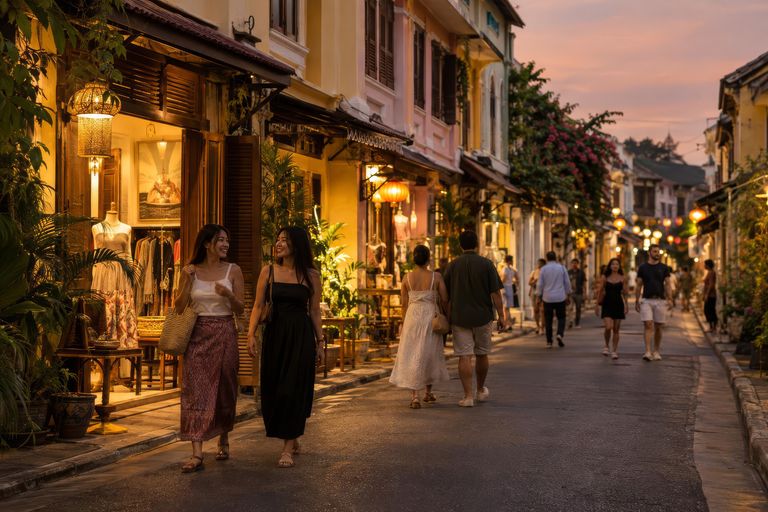
The shophouses are the clearest sign of that wealth. Narrow at the front and deep behind, they have shuttered windows, tiled floors and covered walkways along the street. Rich tin families also built grand mansions in a European style. Many have been restored and painted in soft pastel colours.
By mid-morning, shutters roll up on Thalang Road and incense drifts from the shrines into the street. The town is lively but relaxed. If you know only Phuket's beaches, it comes as a surprise.
Look closely as you walk. The covered walkway in front of the shophouses, called the five-foot way, gave shade and shelter to shoppers. Doors are often painted with Chinese characters, and old tiles line the floors. Above the shutters, plaster details show flowers, birds and family symbols. Small details tell the story of the people who built the town.
The town also has a strong sense of community. Old families still run shops their grandparents opened, and festivals bring the whole neighbourhood into the streets. Speak to a shop owner, and you may hear the story of a building in their own words.
Language is easy. Many shop owners and café staff speak some English, and signs in the main streets are often in English and Chinese as well as Thai.
Is it worth going to Phuket Old Town?
Yes, for half a day or an evening. It is the right move after three beach days, when you want history and real food. The Old Town has the culture, the stories and some of the best food on the island. It is not a beach area, so stay on the west coast and visit. A private car and a local guide make it easy.
Go in the morning, when the streets are cool and the light is soft. Or come in the late afternoon, when the shophouses glow and the restaurants open. On Sunday, the walking street on Thalang Road adds food stalls and music. Our advice: come back a second time for dinner.
Families enjoy it too. For grandparents, a private car can follow the route and pick everyone up when they tire.
It also suits a rainy day. When the sea is rough, the museums, cafés and covered walkways make the Old Town a fine alternative to the beach.
Example plan, a half day. Meet your guide at 8:30 on Thalang Road and walk the main streets while it is cool. Step into a mansion and a shrine, then stop for coffee in a shophouse café. Finish with a Peranakan lunch, and be back at your resort for an afternoon swim.
An evening visit is just as good. Arrive at about 17:00, walk as the light softens, climb Khao Rang for the sunset view and come back down for dinner. On a Sunday, end at the walking street for snacks and music.
Which streets should you walk in Phuket Old Town?
Walk Thalang Road, Soi Romanee, Dibuk Road, Krabi Road, Phang Nga Road, Yaowarat Road and Rassada Road. Together they form the centre of the Old Town, close enough to see on foot in a few hours. Each has its own character, from pastel shophouses to grand mansions and busy markets.
Thalang Road. The best-known street, lined with restored shophouses, textile shops and cafés. It hosts the Lard Yai Sunday walking street.
Soi Romanee. A short, colourful lane off Thalang Road, with brightly painted houses. Come early for quiet photographs.
Dibuk Road. A wider street with fine shophouses and some of the town's best restaurants and cafés.
Krabi Road. Home to several grand mansions built by tin families, set back behind gardens. Chinpracha House is here. It shows the wealth of the tin era at its height.
Phang Nga Road. A busy street with older hotels, shops and the way to Jui Tui Shrine. It has a more local, working feel.
Yaowarat Road. Running north to south across the Old Town, it links several of the main streets. Look for traditional shops and small shrines along the way.
Rassada Road. On the edge of the Old Town, with markets and everyday life. It shows how locals live and shop today.
A good route starts at Thalang Road and turns into Soi Romanee. It then crosses to Dibuk Road and ends with the mansions on Krabi Road. Your guide adjusts it to the heat and your interests.
Wear light clothes, a hat and comfortable shoes, as pavements can be uneven. Carry water, and use the covered walkways to stay in the shade. Many shops and cafés open from mid-morning, so a very early walk is best for photographs and a later one for shopping.
Murals add another layer. Your guide can point out the best of them, many in quiet side lanes.
Talat Yai. The wider old-town district around these streets is known as Talat Yai, meaning the big market.
What can you do in Phuket Old Town?
In Phuket Old Town, visit the Peranakan mansions and museums and climb Khao Rang for the view. Step into the Chinese shrines and spend time in the galleries and cafés. Chinpracha House charges ฿150, the Thailand Tourism Directory says. Mornings suit the museums, and evenings suit food and walking.
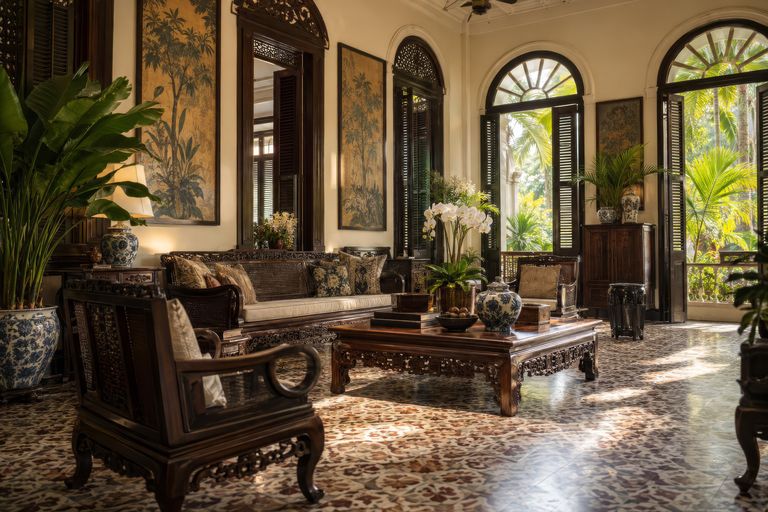
Chinpracha House. A grand family mansion from the tin era, kept with its original furniture and decoration. It shows how wealthy Peranakan families lived. Entry is ฿150, the Thailand Tourism Directory lists. Check opening hours on the day.
Thai Hua Museum. A former Chinese school turned into a museum about Phuket's Chinese and Peranakan history. TAT listed ฿200 for foreign adults on a 2020 page, so check on the day. The building itself is beautiful.
Khao Rang viewpoint. A hill just north of the town with wide views over Phuket Town and the bay.
Galleries and cafés. Small galleries sell local art and photography. Cafés in restored shophouses serve good coffee and Peranakan sweets. They are perfect for a rest between walks.
A Peranakan dress experience. Some studios let you dress in traditional Peranakan clothing for photographs. Ask your guide to recommend a respectful one.
Big Buddha. Not in the Old Town, but often combined with it on the same day. Read our Big Buddha guide.
Our luxury chauffeur service covers the day with a driver who drops you at the start and meets you at the end.
A Peranakan cooking class. Learn to make moo hong, curry pastes and sweets with a local cook. Many classes start with a walk through the market to buy fresh ingredients.
A private photo walk. A local photographer guides you to the best corners at the best time of day and helps with your camera settings. Couples and families leave with pictures they keep.
A heritage tea break. Old coffee shops in the Old Town serve strong local coffee and tea with simple snacks. Sit for half an hour and watch daily life go by. It is the slow side of the town.
An evening walk. After sunset, the shophouses are softly lit and the streets are cooler. Many restaurants and small bars open, and the Old Town takes on a calm, warm mood. It is a fine way to end a day of sightseeing.
Which shrines should you see?
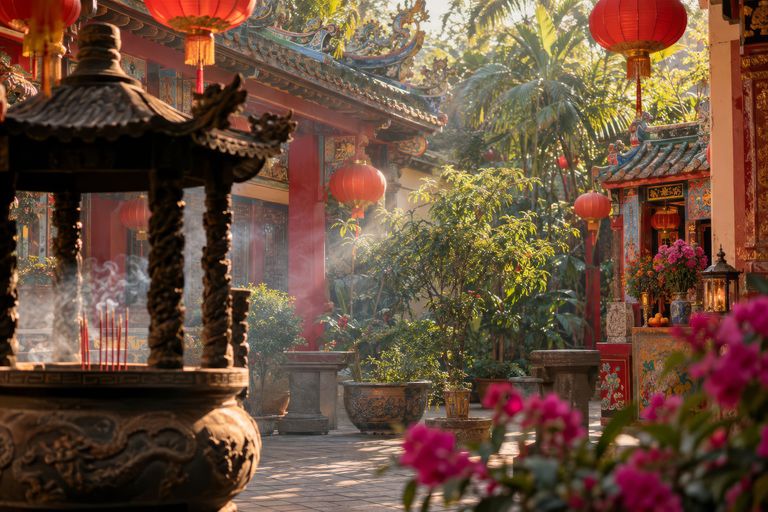
See Jui Tui Shrine and Pudjor Shrine, the two main centres of the Phuket Vegetarian Festival. Add the Shrine of the Serene Light, at the end of a narrow lane. TAT names Jui Tui as the starting point of a festival procession route and Pudjor as a historic shrine open to visitors. All three welcome respectful visitors.
Jui Tui Shrine. A large, colourful Chinese shrine with dragons on the roof and incense in the courtyard. It is busiest during the Vegetarian Festival.
Pudjor Shrine. A historic shrine close to Jui Tui. It is calmer and a good place to sit quietly.
Shrine of the Serene Light. A small family shrine at the end of a narrow alley off Thalang Road. Its gate is easy to miss. Inside, the walls are dark with age and incense.
Behave quietly in every shrine. Do not point your feet at the altars, ask before you take photographs and leave a small donation if you wish.
Shrines are active places of worship, not museums. Dress modestly, with shoulders and knees covered, as you would at a Thai temple.
Where should you eat in Phuket Old Town?
Eat Peranakan dishes in the Old Town's family restaurants, such as moo hong, mee hokkien and o-tao. Save another morning for a dim sum breakfast. One Chun on Thep Krasatti Road holds a Bib Gourmand in the MICHELIN Guide Thailand 2026. RAYA Phuket Authentic Restaurant, in Talad Yai, serves classic Phuket dishes in an old mansion.
Moo hong. Pork belly slowly braised in soy sauce, black pepper and garlic, a Peranakan classic. It is rich and gentle in spice.
Mee hokkien. Thick yellow noodles fried with seafood and pork in a light sauce, a dish brought by Hokkien settlers.
O-tao. A savoury taro and oyster omelette, crisp at the edges, sold at local stalls and restaurants.
Dim sum breakfast. Phuket Town has a strong dim sum culture. Locals gather early for tea, steamed dumplings and buns. Our guide takes you to a favourite.
Peranakan sweets. Try colourful layered cakes made with coconut, pandan and rice flour. They are perfect with coffee in a shophouse café.
Note that PRU, Phuket's MICHELIN-starred restaurant, is not in the Old Town; it is in Choeng Thale on the west coast. Our Phuket dining guide covers the island's best tables. For halal or vegetarian meals, we choose restaurants and order in advance.
Loba and khanom jeen. Loba is a plate of fried snacks with a sweet chilli sauce, popular as a street food. Khanom jeen is fresh rice noodles with curry, a favourite Phuket breakfast. Both are easy to try with a guide.
Heat levels vary. Peranakan cooking is often milder than other Thai food, but ask for less chilli if you prefer. Restaurants in the Old Town are mostly casual. For a special evening, we can book a private dining room or a chef's table in a restored mansion.
What should you buy in Phuket Old Town?
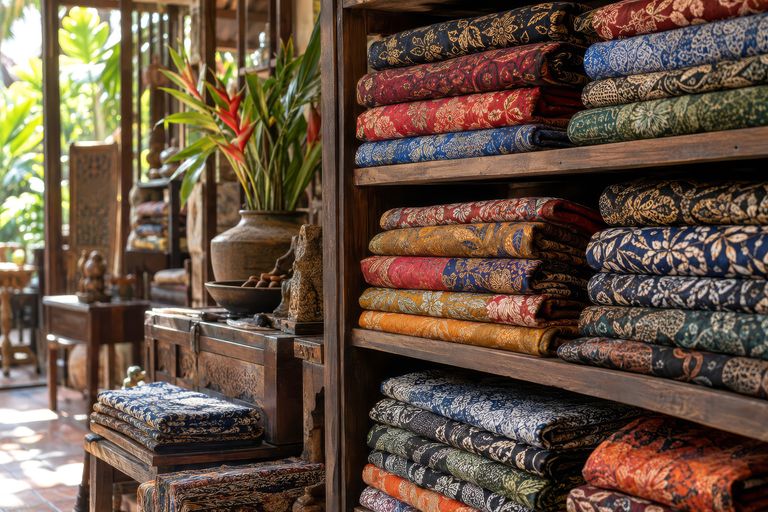
Buy batik and Peranakan textiles, local coffee, Peranakan sweets and design pieces from small shops in restored shophouses. Thalang Road is the best street for fabrics and gifts. Quality is good, and most shops are run by local families. Avoid counterfeit goods, which are illegal to sell and to bring home in many countries.
Batik and textiles. Hand-printed batik sarongs and shirts, and fabrics with Peranakan patterns, make good gifts.
Coffee and tea. Local roasters sell beans from southern Thailand. Old tea shops sell Chinese teas.
Design and crafts. Small studios sell ceramics, jewellery and prints inspired by the Old Town's architecture.
Peranakan beaded shoes. Hand-beaded slippers, a Peranakan tradition, are delicate and beautiful. Ask how they are made.
Most shops open from late morning to early evening, and some close one day a week. Prices in small shops are usually fixed, though a friendly question about a discount on several items is fine.
For a meaningful gift, look for items made by local craftspeople, such as hand-printed fabrics or small ceramics with Old Town motifs.
When is the Phuket Vegetarian Festival?
The Phuket Vegetarian Festival runs for nine days in late September or October. It follows the ninth month of the Chinese lunar calendar, so the dates move each year. In 2027 it is expected from about 30 September to 8 October, and the shrines confirm the dates. Devotees dress in white, follow a strict diet and take part in processions from the main shrines.
The festival is a religious event, not a show. Devotees avoid meat, animal products and alcohol for the nine days. Some rituals involve piercings and fire walks, which can be hard to watch.
Visit respectfully. Wear white if you can, keep a distance from the processions and protect your ears from firecrackers. Ask your guide where to stand. Vegetarian food stalls, marked with yellow flags, are a highlight for food lovers.
Read our Phuket Vegetarian Festival guide for the full programme once the 2027 dates are confirmed.
If you want to see it, book early and let us plan your route and timing.
Food lovers enjoy the festival in a different way. Stalls across town sell vegetarian versions of Thai and Chinese dishes, from noodles to curries and sweets. Ask your guide to point out the best stalls.
When should you walk the Old Town?
The best time to visit Phuket Old Town is the morning or the late afternoon. The heat is lower and the light is soft. Sunday is special, because the Lard Yai walking street runs on Thalang Road from 16:00 to 22:00, its official page says. December to March is the driest season.
In the rainy season, from about May to October, short showers are common. The covered walkways keep you dry, and the museums make good shelter. Late September or October brings the Vegetarian Festival, which changes the mood of the town completely. Plan around it, either to join or to avoid it.
Chinese New Year is another lively time, with lanterns, lion dances and family gatherings in the shrines. It falls on Saturday 6 February 2027.
Weekdays are calmer than weekends, when many Thai visitors come to see the streets. For the quietest experience, walk early on a weekday morning.
Heat is the main thing to plan for. From March to May, the middle of the day is very hot. Keep walks short, and plan museums or lunch for midday.
How do you get to Phuket Old Town?
Drive with a private chauffeur from your resort on the west coast or from the airport. Phuket International Airport is 32 km north-west of Phuket Town, the Civil Aviation Authority of Thailand records. No official drive times are published, and traffic varies, so we plan pick-up times with care. Parking in the Old Town is hard.
A chauffeur solves the parking problem. Your driver drops you at the start of the walk and meets you at the end. There is no walk back in the heat. Read our Phuket guide for the island's areas and resorts.
The Old Town combines well with other sights in the south and east of the island. In one day, see the Old Town in the morning and have lunch. Then visit the Big Buddha and end with sunset at a viewpoint. We plan the order around the heat and the traffic.
If you arrive by private jet, your driver can meet you at the private jet terminal at Phuket airport. You can go straight into town for lunch before you check in. It is a gentle first taste of the island.

Where should you stay near Phuket Old Town?
Stay on Phuket's west coast and visit the Old Town for a day or an evening. Amanpuri, open again since 14 September 2026, Aman says, and Trisara are among the island's top resorts. Both are in Cherngtalay. We do not list a luxury hotel inside the Old Town itself.
If you want to sleep in town, we suggest one night in a restored boutique property, after we check its current standard. Ask Tanner for options. For most trips, a west-coast resort and a private car give you both sides of the island.
Where on the west coast? Cherngtalay and Bang Tao have several of the top resorts and the Laguna area. Kata and Kamala offer beaches and good restaurants. Patong is the busiest area, best avoided if you want calm. From each, a private car reaches the Old Town easily.
A private villa suits families and groups: picture a 5-bedroom villa above the sea with a pool, staff and a chef. Tanner sends photos and a written quote. One planner sets the villa, the car, the guide and the dinner table, so the Old Town day runs on your clock. Our Phuket guides know these streets, and we skip the sights that are not worth the heat.
| Name | Kind | Area | Price | Best for | Note |
|---|---|---|---|---|---|
| Thalang Road | attraction | Phuket Old Town | ฿ | Architecture | Sino-Portuguese shophouses; Sunday evening market. |
| Jui Tui Shrine | attraction | Phuket Old Town | ฿ | Culture | Starting point of a Vegetarian Festival procession. |