Is the country safe for VIP visitors?
Yes. You arrive with a known face, a busy programme and a lot of phones pointed your way. Thailand is safe for VIP visitors who plan well, and violent crime against visitors is rare. The real risks are crowds, photographers, traffic and the sea. Good close protection here is calm planning and discretion more than force.
The US State Department rates Thailand at Level 1, exercise normal precautions, in advice issued on 7 July 2026. Yala, Pattani and Narathiwat, and the Cambodian border region, are Level 2, and none is a usual VIP destination. Check your own government's advice in the week you travel.
For most VIP guests, the main pressure is attention, not danger. A famous face draws phones in a lobby, a mall or a night market within minutes. So the plan relies on controlled entrances, private rooms, short walks and a car waiting at every stop.
The Tourist Police answer in English on 1155. Call 191 for the police and 1669 for an ambulance. Your security lead saves these, the hotel's duty manager and the nearest international hospital before day one.
For the everyday rules every visitor should know, read our guide: Is Thailand safe?
What the law says about bodyguards in Thailand
The Security Guard Business Act B.E. 2558 sets the rules for all guard work in Thailand. A security business must be a licensed, majority Thai-owned company, and every guard needs a personal licence. To get one, the guard must be a Thai national, aged 18 or over, with compulsory schooling and certified training.
In practice, foreigners cannot work as security guards in Thailand, and that includes bodyguards and close protection officers. A team that flies in with the principal cannot take on the guard role, however experienced it is.
What this means for your plan:
- Who protects: licensed Thai officers from a licensed Thai firm, working to your team's plan.
- Who plans: your own head of security, with our team, before and during the visit.
- Who is responsible: the licensed firm answers for its officers under Thai law.
- Who you contract: VIP Luxury Services Co., Ltd. contracts our licensed security partner and coordinates the whole visit.
Ask any security provider for its company licence and each officer's licence. A provider that cannot show both is working outside the law, and that puts the principal at risk. We share the licence details with your security lead before the visit.
Thai officers take direction from their own licensed firm. Your head of security agrees the plan with the firm's team leader, who briefs the officers in Thai. This keeps the operation legal and clear.
Bodyguard or close protection officer?
A bodyguard usually means one person close to the principal. A close protection officer works in a planned team, with advance work, routes, drivers and medical cover. In Thailand both are licensed Thai officers, while your head of security leads the planning.
One bodyguard can walk a principal through a lobby. A close protection team checks the lobby first, holds a lift, places a car at the side door and knows the route to hospital. For a public figure, the team is the safer choice.
A typical team has a team leader, one or two officers close to the principal, a driver for each car and an advance officer. Larger visits add officers at the hotel and each venue. We can place an officer with you on about 2 hours' notice, for a minimum of 4 hours, in 4-, 8- or 24-hour blocks.
Can your own team travel with you?
Yes, your own security staff can travel with you, but under the Security Guard Business Act B.E. 2558 they cannot act as guards. Their role is to plan, advise and coordinate with the licensed Thai team, and stay close to the principal as staff.
Work rules also apply. The Ministry of Foreign Affairs states that no foreigner may work in Thailand on any visa without a work permit from the Department of Employment. How this applies to a short-visit adviser depends on the role, so Tanner's team checks with the Department before your trip.
Weapons are the other firm line: do not bring or plan to carry any. Licensed guards who protect visitors are usually unarmed, and permits to carry a gun are rare.
Check each staff member's entry rules before you fly, as visa-free stays depend on the passport. Your team leader carries a list of party members with passport numbers.
The advance plan, step by step
A good advance plan covers every place the principal will be, every route between them and every way out. We start it two to four weeks before arrival. For a high-profile visit, an advance officer walks the hotel, venues and routes a few days ahead.
These are the steps we follow for each visit:
- Brief: the principal's programme, profile, known risks, medical needs and privacy wishes.
- Hotel or villa check: floor plans, entrances, lifts, staff contacts and the guest list on the floor.
- Routes: main and back-up routes for each move, with drive times at the hour you will travel.
- Venues: side entrances, private rooms, seating plans and the manager's direct phone.
- Communications: one group channel for the team, with radio or phone back-ups.
- Medical plan: the nearest international hospital for each place, and the route there.
- Contingency: what happens if the press arrive, a car breaks down or the weather turns.
- Daily review: a short evening meeting to confirm the next day's plan.
Each step ends with a short written note that your head of security signs off, and the notes form one advance file. The team leader carries it on the day. Our VIP checklist gives a short version for your own staff.
On the day, each person has one job. The team leader stays with the principal and makes the calls. The advance officer confirms each room is ready. Drivers stay with their cars, and your head of security talks to our coordinator.
Discretion runs through every step. We use code names in all messages, limit the guest list at each venue and ask venue staff to sign non-disclosure agreements where allowed.
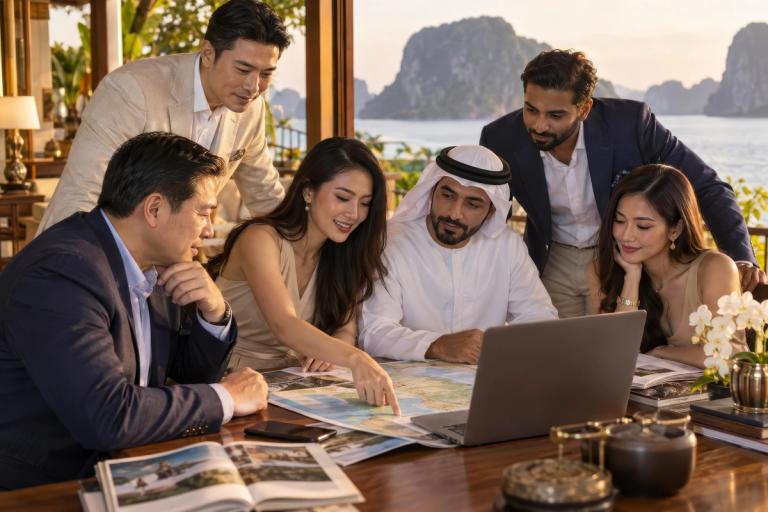
Arrival and ground transport
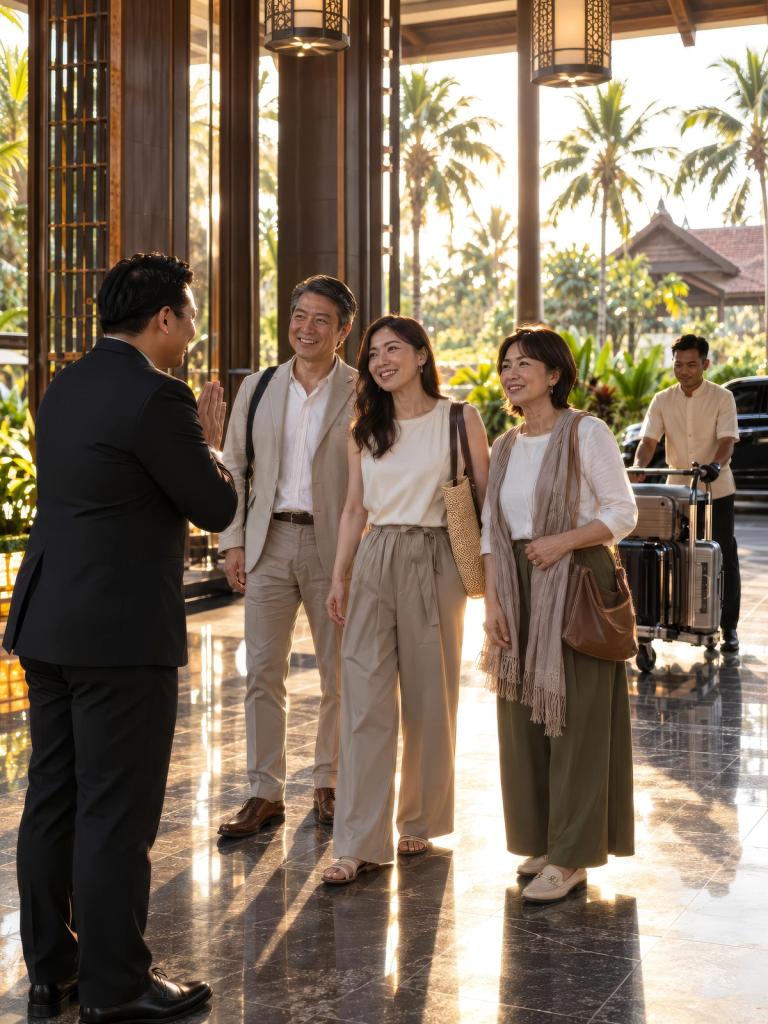
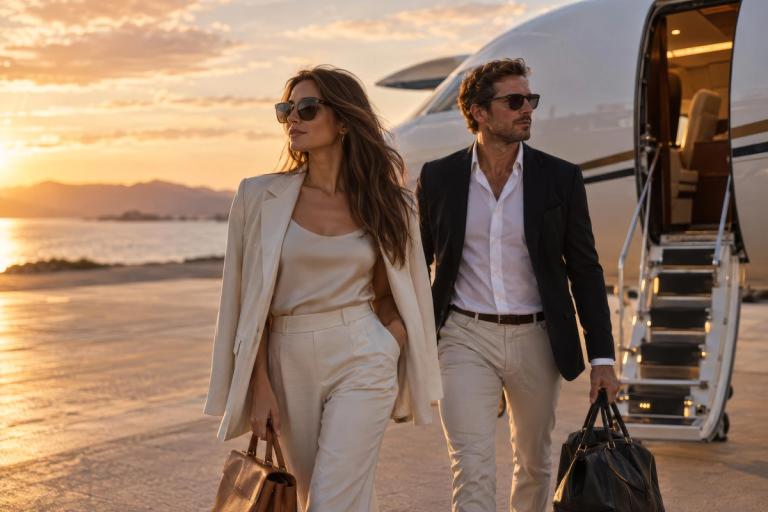
The safest arrival is through a private jet terminal, or with a private meet-and-assist service on a scheduled flight. Thai immigration sells no paid fast track through any company. On a private jet, the ground handler meets the principal at the aircraft; on a scheduled flight, our host meets the party in the arrivals hall and stays through every formality.
Phuket, Don Mueang and U-Tapao airports have private jet terminals. Any public airport can take a private aircraft with permission from the Civil Aviation Authority of Thailand, a ground handler and a slot. Our page on private jet arrivals explains each step.
On a scheduled flight, the priority lane at immigration is only for set groups. These include disabled passengers, small children and their parents, the elderly, diplomatic and official passport holders, and Thailand Privilege and APEC card holders. A meet-and-assist host saves time on everything else, from the arrivals hall to the car door.
On the road, a convoy usually means two or three cars. The principal rides in the lead car with the team leader, and a second car carries staff and luggage. Drivers know the routes and keep cars at the door, not in a distant car park.
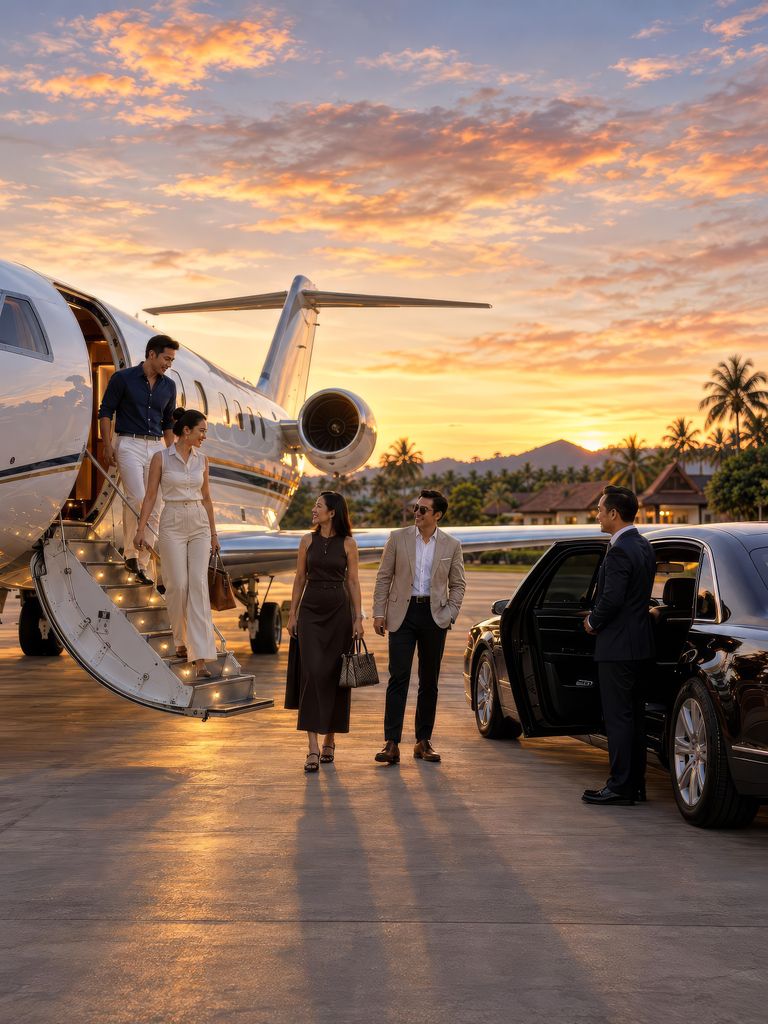
Example plan: your jet lands at the Don Mueang private terminal at dusk. Two cars wait at the door, with the team leader in the lead car. The advance officer has already walked the hotel's side entrance and holds a lift. Within the hour you are in your suite, without crossing the lobby.
Bangkok traffic is heavy at rush hour, so plan moves outside it. A planned route with a back-up saves more time than speed.
Helicopters shorten long moves, such as Bangkok to Hua Hin or Phuket to a coast resort. No main Thai airport has a separate helicopter landing area, so helicopters use the runway. Resort helipads are rare; Anantara Layan in Phuket shows one on its own site. We confirm each landing site and permit before the day.
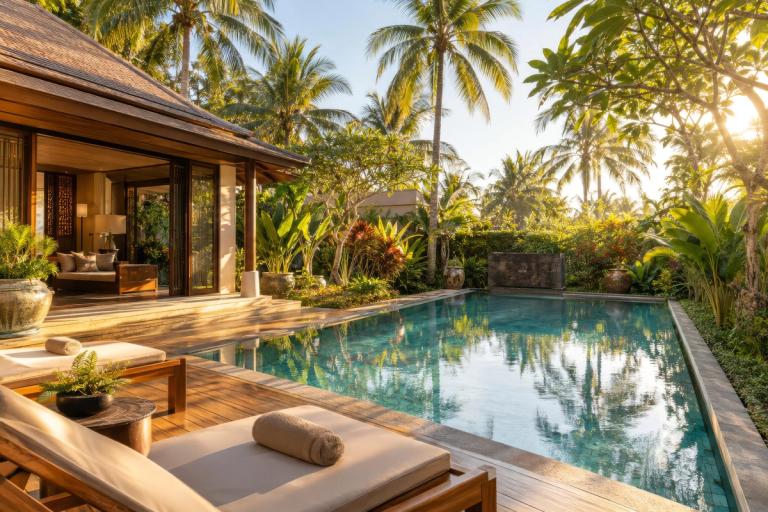
Hotels, villas and venues
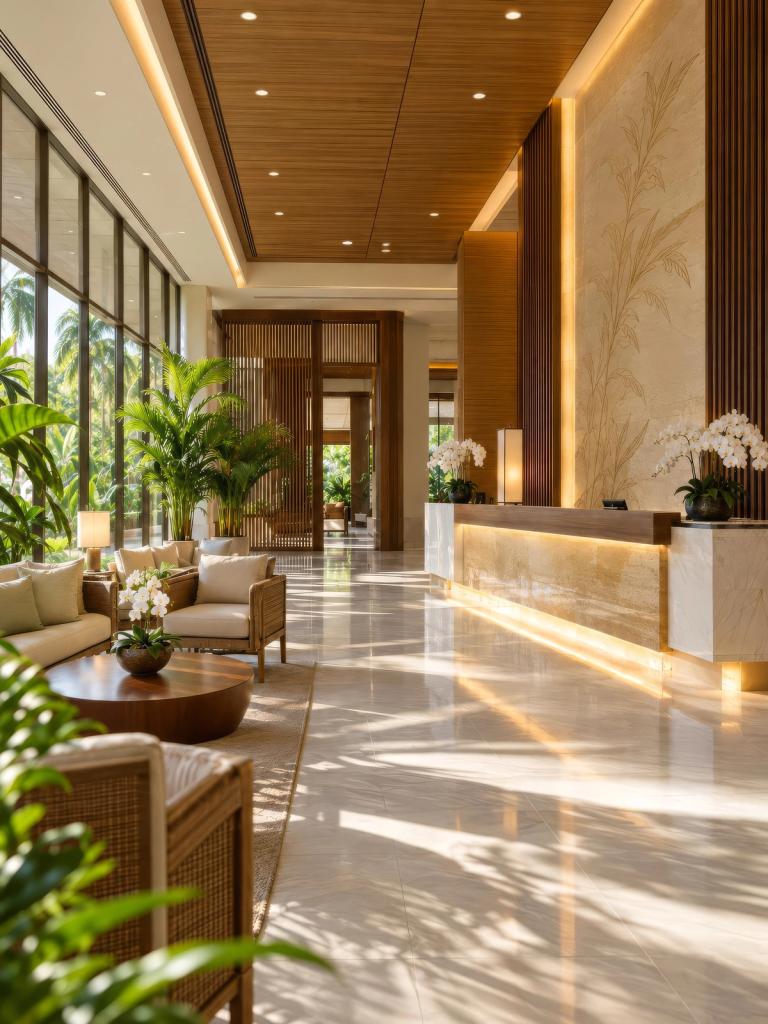
The best hotels for a VIP visit offer a private floor or wing, a separate entrance and a team that has hosted heads of state. Villas give more privacy, with one gate to control and no public lobby.
In a hotel, take rooms on one corridor, with the principal's suite away from the lift and the team next to it. The same staff serve the floor each day, and housekeeping visits at agreed times.
A villa estate gives the most control: one gate, high walls and space for the whole team. We describe villas by size and setting, never by name, and give full details only to your team. See our page on private stays for the options.
Restaurants and clubs can close a private room or the whole venue, with a side entrance, no photos and a set guest list. We book under a neutral name and confirm each detail with the manager the day before.
Some luxury stores in Bangkok open early or late for a private visit. Temples and museums are busiest at midday, so start early. For each stop, the team leader agrees the drop-off point, the time inside and the pick-up.
Medical planning
Every VIP visit needs a medical plan for each place on the programme. The Joint Commission International list, checked on 30 October 2026, shows several accredited hospitals near the main VIP destinations.
- Bangkok: Bumrungrad International, Samitivej Sukhumvit, BNH and Vejthani are on the JCI list.
- Phuket: Bangkok Hospital Phuket and Bangkok Hospital Siriroj, both in Phuket Town.
- Pattaya: Bangkok Hospital Pattaya.
- Chiang Mai: Bangkok Hospital Chiang Mai and Chiangmai Ram Hospital.
- Koh Samui: Bangkok Hospital Samui in Chaweng is the main international hospital, though not on the JCI list.
For an emergency, call 1669 for an ambulance. The plan names the hospital for each venue, the route and the international desk contact, plus the principal's blood group and regular medicines. The team leader holds medical notes in a sealed envelope. For a long stay, we also arrange a doctor who visits the hotel or villa.
Keep travel insurance details with the team leader. Private hospitals ask for a guarantee of payment before major treatment, and a call from your insurer's assistance line usually settles it quickly.
Culture and law briefing for the principal
A short briefing on Thai law and customs prevents the most common mistakes, most of which happen in public and are filmed. We give it in writing before arrival, and the team leader repeats the key points on the first day.
- The monarchy: insulting the King, Queen, Heir or Regent is a serious crime under section 112 of the Criminal Code, including online posts.
- Drones: they need registration with both the NBTC and CAAT, plus insurance, and may not fly within 9 km of an airport.
- Vapes: e-cigarettes and vapes are illegal, and devices are seized.
- Cannabis: since June 2025 it is sold only on prescription from a licensed shop, and no part of the plant may enter or leave Thailand.
- ID: foreigners must carry a passport or a copy of the photo page and latest entry stamp.
- Temples: cover shoulders and knees and take shoes off before entering buildings.
Read the full list in our guide to Thai laws for visitors. The briefing also covers manners: a polite wai, a calm voice and no public anger.
Many venues, temples and palaces limit photos and filming, so the principal's photographer checks each venue's rules in advance.
Which part of Thailand is the safest?
The main resort areas and Bangkok's hotel districts are the safest places for VIP visitors. They are well policed, close to international hospitals and used to high-profile guests. We plan first in Phuket, Koh Samui, Hua Hin and central Bangkok.
The UK Foreign Office advises against all but essential travel within 20 km of the Cambodian border and to Pattani, Yala and Narathiwat. It gives the same advice for four districts of Songkhla: Chana, Thepa, Na Thawi and Saba Yoi. We do not plan VIP programmes in these areas.
In Bangkok, Sukhumvit, Silom and the riverside have the best hotels and the shortest routes to hospital. In Phuket, the west-coast resorts and the north near the airport are the usual choice. On Koh Samui, choose a villa in the quieter north or north-east.
At the coast, the sea is a bigger risk than crime: swim only at beaches with lifeguards and obey the red flags.
How much does private security cost in Thailand?
Private security in Thailand starts from ฿9,000 per licensed officer for an 8-hour shift, VAT included, and the full plan is priced on request. A two-officer team for a dinner costs far less than a full team for a week of public events.
- Team size: set by the principal's profile and how public the programme is.
- Hours: day cover only, or round the clock with shifts.
- Cars: one car with a driver, or a convoy of two or three.
- Advance work: a site visit before arrival adds days of work for the advance officer.
We quote one price for the whole plan, including officers, cars, advance work and coordination. There are no packages. Our VIP security service shows what we arrange.
Plan it with Tanner
One planner runs the whole visit with your head of security. That covers the Thai protection team, the arrival, cars, hotel or villa, venues and medical plan. Our Thai team covers a party of two or a full entourage, in every main town. We tell you honestly when a big convoy draws more eyes than it saves. Start with our celebrity and VIP guide, then send us your dates.