Is it easy to find halal food in Thailand?
Yes, in the main cities and the south. Bangkok and Phuket have the widest choice of halal restaurants and hotel menus, and the southern provinces have a large Muslim community. The key is to look for a current halal certificate from the Central Islamic Committee of Thailand, not a handmade sign.
You are flying in with your family, and the first question is what everyone will eat. Thailand takes these guests seriously. Visitors from the Middle East spent ฿7,713 a day on average in 2025, Ministry of Tourism and Sports figures show. They also stayed longest, at 11.45 days. Hotels and restaurants know that Gulf families want good halal food, not only a safe choice.
Away from the big cities and the south, halal choice is thinner, especially in the north and in small beach towns. That is where a hotel kitchen that cooks to order, or a private chef, makes the difference. Start with our Thailand dining guide for the bigger picture.
Thai food itself helps. Rice, fresh fish, seafood, chicken, vegetables and fruit fill most menus, and many classic dishes contain no pork at all. The care is in the details: the meat supplier, the stock, the cooking oil and any wine or pork fat used in sauces.
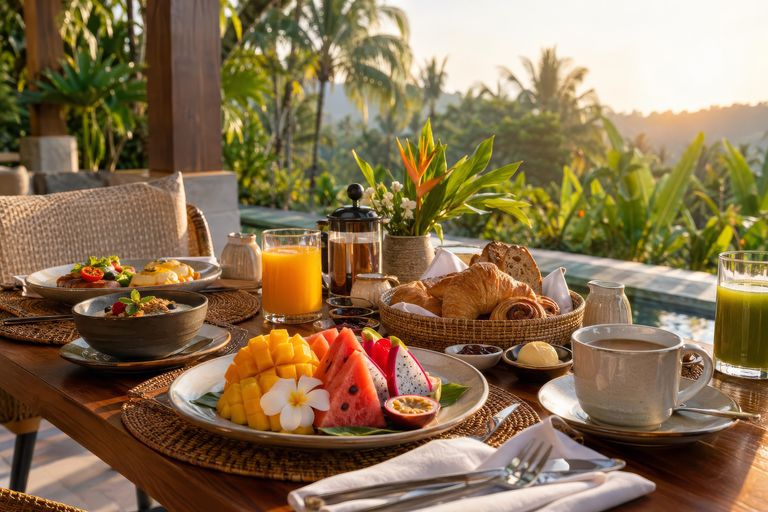
How halal certification works in Thailand
The Central Islamic Committee of Thailand, known as CICOT, certifies halal food through its Halal Affairs Division. In January 2026, CICOT announced it had been accredited by the GCC Accreditation Center as a halal certification body. It said this brings Thai certification in line with Gulf standards.
When a restaurant says it is halal, ask to see the certificate and check the date on it. A certificate covers a named business and kitchen, so a hotel may hold one for a single restaurant but not for the others. CICOT also runs an online halal register at halal.or.th, which you can search.
Some places are Muslim-owned or serve no pork but are not certified. Our advice: treat these as a personal choice, not as certified halal. We tell you which is which, so you decide.
Four questions settle most doubts. Is the kitchen certified, and is the certificate current? Does the meat come from a certified supplier? Are pork and alcohol kept out of the kitchen? Are grills, pans and fryers shared with non-halal food? A good restaurant answers all four without hesitation.
Halal fine dining in Bangkok
Bangkok has the widest choice of halal dining in Thailand, from casual Thai Muslim cooking to formal hotel restaurants. For fine dining, we book only restaurants whose certificate we have seen and dated. Where a top restaurant is not certified, we ask the chef about a halal menu prepared on request.
Our verdict: Thai Muslim cooking is a treat in its own right, and worth at least one lunch. Look for massaman curry, khao mok gai (spiced chicken rice) and roti. These dishes come from Thailand's Muslim communities and are often made by families who have cooked them for generations.
For a business dinner or a family celebration, a private room makes everything easier. We agree the menu with the kitchen in advance, confirm the meat supplier and set the table without alcohol. See our Bangkok dining guide and private dining rooms.
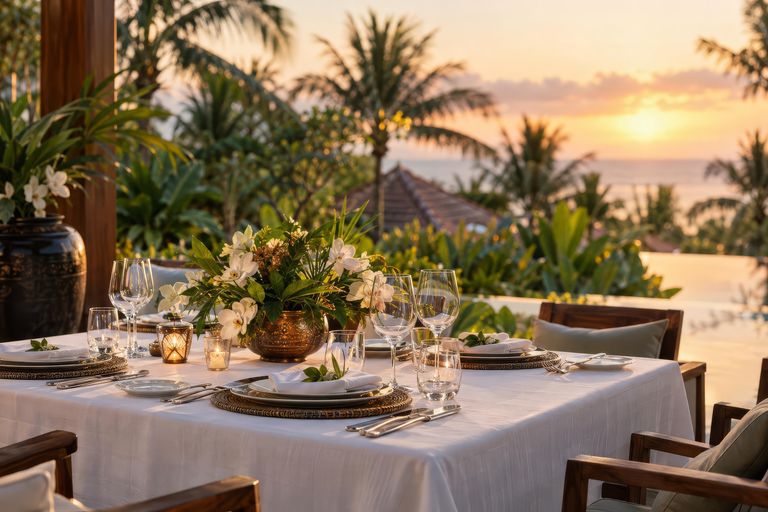
Hotels with halal kitchens
Many luxury hotels in Bangkok and Phuket offer halal menus, and some hold a certificate for one of their kitchens. Le Méridien Bangkok is one example: the hotel says it serves halal-certified breakfasts, in-room dining and banquets (October 2025). Its chicken and beef come from halal-certified suppliers, and CrescentRating recognises it for halal travel. Still, ask before you book which outlets are certified and whether room service follows the same rules. We do this for every hotel we propose.
Ask for a prayer mat and the qibla direction in your room. We can also ask the hotel for a copy of the Quran. Many hotels also clear the minibar of alcohol on request. For Ramadan, ask the hotel to serve suhoor in your room and to hold an iftar table at sunset.
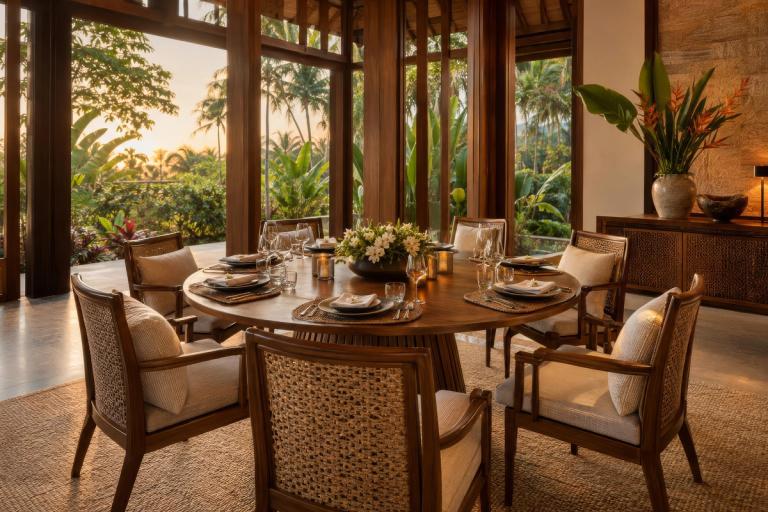
Halal food in Phuket and the islands
Phuket has a long-standing Muslim community, so halal food is easier to find here than on most Thai islands. Resorts in Phuket, Krabi and Koh Samui usually prepare halal meals on request when you ask ahead. Certified restaurants exist, but we confirm each one before we book.
In a pool villa, the simplest answer is a private chef who cooks halal for your family every day. You choose the menu, and the chef shops from certified suppliers. Our Phuket dining guide covers the island's wider food scene.
On a yacht day, ask for a halal lunch on board. We tell the crew in advance and send you the menu for approval. The meal at sea then follows the same rules as the meal at the villa.
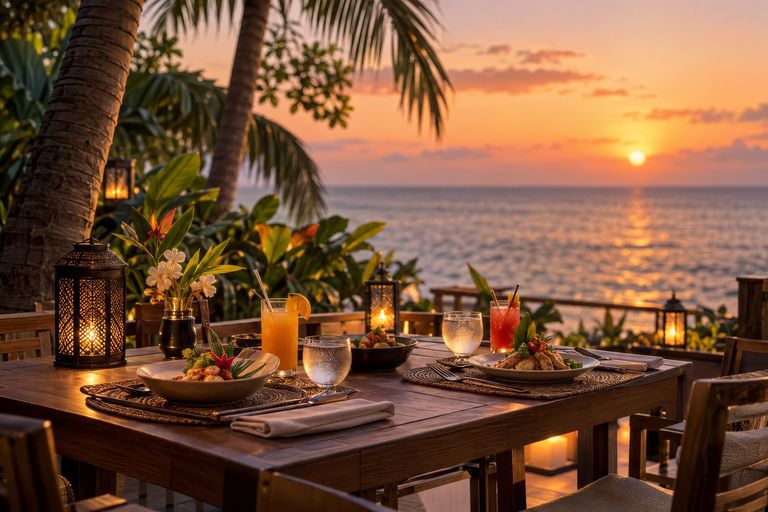
Prayer rooms, mosques and Ramadan
Bangkok and Phuket both have mosques, and prayer rooms are common in large malls and airports. Eid al-Fitr 2027 is expected around 10 March and Eid al-Adha around 17 May, according to Gulf school calendars. The exact dates depend on the moon sighting. Plan around these dates if you travel then.
At Suvarnabhumi, Airports of Thailand lists three Muslim prayer rooms, all open 24 hours. The first is on the 3rd floor of the main terminal near Entrance 7, in the public area. The second is on the 2nd floor of Concourse C, for arriving passengers. The third is on the 3rd floor of Concourse E, for departing passengers. For Phuket airport, our team checks the current prayer room arrangements with the airport before you fly.
Our meet-and-assist team can walk you to a prayer room at the airport. If you plan to visit a mosque as a guest, dress modestly: long sleeves and long trousers or skirts, with a scarf for women. In the city, your driver knows the nearest mosque for Friday prayers. Example plan for a Ramadan day: suhoor in your room, a quiet morning, rest in the afternoon and an iftar table at sunset.
Other dietary needs: vegetarian, gluten-free and kosher
Thailand is easy for vegetarians. Look for a yellow flag with the red word 'jay', which marks Chinese-Thai vegan food without meat, fish or garlic. Most good restaurants also adapt dishes for gluten-free diets if you tell them early. For kosher meals, Chabad Bangkok lists a kosher restaurant, Mivtza Kashrut, and runs a kosher store and a kitchen koshering service. Tell us well before you travel, and we arrange the rest.
Phuket's Vegetarian Festival is the biggest 'jay' event in the country. It usually falls in late September or October, following the Chinese lunar calendar; we add the 2027 dates as soon as they are announced. See our guide to the Phuket Vegetarian Festival.
Allergies need clear words. We send your list to each kitchen in Thai before you arrive, so every cook reads it in their own language.
Gluten-free guests should know that many Thai sauces, such as soy and oyster sauce, can contain wheat. Ask the kitchen to cook with gluten-free versions. Nut and shellfish allergies also need care, because peanuts, dried shrimp and shrimp paste appear in many Thai dishes.
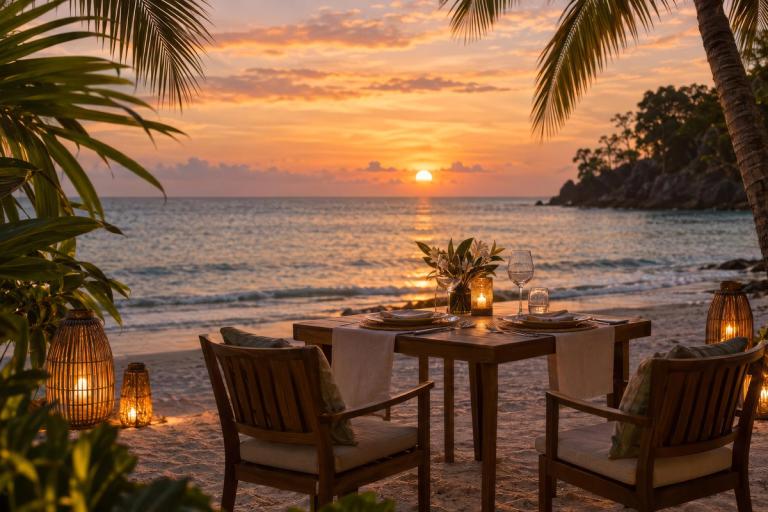
A private halal chef
A private halal chef is the best way to eat well, and worry-free, in a villa. The chef plans the menu with you, buys from certified suppliers and cooks every meal in your kitchen. Breakfast, lunch, a seafood barbecue and a Thai feast all follow your rules. Give us 1 to 2 days' notice; one guest is enough, and the groceries are in the quote. Prices are on request.
This works well for large families, longer stays and Ramadan, when meal times change. The chef can also teach your children a Thai dish. Or the chef can cook a Gulf favourite with Thai ingredients, so home food and local food meet at the same table. See our private chef service for how it works.

Plan your trip with Tanner
One planner holds your rules for the whole trip. Tell Tanner your dietary needs and your plans, and we build them into every booking. We check certificates, brief hotel kitchens and book private rooms without alcohol. We add prayer times to your daily plan, so dinners and drives fit around them. When a 'halal' sign is not enough, we tell you honestly.
Our team speaks with your family before you arrive, so the first meal in Thailand is already right. We get back to you right away.
How we choose: we list or book a restaurant as halal only when we have seen a current certificate and noted its date. Where we have not, we say so plainly. No restaurant pays to be named on this page.