Do you need a permit to film in Thailand?
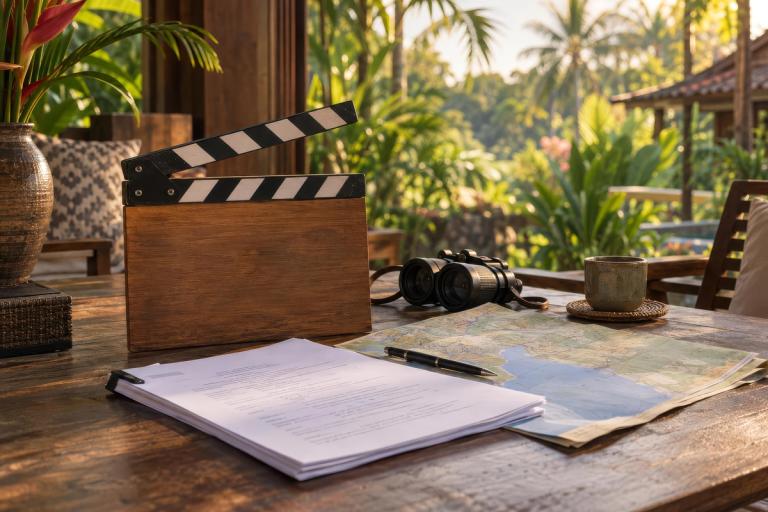
Yes. The location is chosen and the cast is booked; now Thailand wants paperwork. Every foreign production needs a film permit from the Thailand Film Office before shooting. The Film Office says foreign filmmakers must hire a local coordinator who is officially registered with it. The coordinator files the application, and a committee reviews the content before it approves the shoot.
The Film Office lists the papers needed. They include a letter from the local coordinator to the Director-General of the Department of Tourism. They also include a letter from the foreign producer appointing that coordinator. The committee reviews supporting material such as a storyboard, treatment, synopsis or script, depending on the type of production.
Decision times depend on the format. The Film, Video and Digital Media Committee decides within 3 business days for advertising, documentaries, music videos and TV programmes. It takes 5 to 10 business days for feature films, TV series, dramas, reality shows, short films and TV content with sensitive themes.
Plan for the review before you book flights. Changes to the script after approval may need a new review, so share the final version early. Your coordinator also arranges the separate permissions for national parks, historical parks and other protected places.
Equipment needs planning as well. The Film Office's guidance for foreign productions covers bringing camera kit in under an ATA Carnet. This is a customs document for goods that leave the country again. Ask your coordinator to check the kit list against it well before you fly.
What is the Thailand film incentive (cash rebate)?
The Thailand Film Office offers foreign productions a cash rebate of up to 30% of qualified spending in Thailand. The scheme starts at ฿50 million of Thai spend, and the 30% cap includes every extra, says TAT Newsroom (22 January 2025). Higher spending and certain choices add to the base rate.
TAT Newsroom (22 January 2025) sets out the rates as follows:
- Main rebate: 15% for qualified Thai spending from ฿50 million.
- Spend uplift: a further 5% for spending of ฿100 to 150 million, or 10% above ฿150 million.
- Thai key crew: 5% for productions that employ Thai nationals in key positions.
- Thailand's image: 5% for productions that promote tourism, soft power and a positive image of Thailand.
- Designated locations: 3% for filming at locations named by the Department of Tourism for at least 25% of the shooting schedule.
- Post-production: 3% for spending at least 15% of the budget on post-production in Thailand.
For the Thai key crew rebate, the office scores roles by points, with at least 30 points needed. For example, a Thai director scores 5 points and a Thai director of photography scores 4. Productions apply for the rebate within 90 days after the film permit is granted. They should start shooting within 120 days of that application, per the Film Office's process page.
The rebate rewards productions that plan for it from the start. Choosing Thai key crew, finishing post-production in Thailand and filming at the named locations can each lift the rate. Your local coordinator manages the claim, so pick one with rebate experience.
Can foreign crews and talent work in Thailand?
Yes, but the work rules depend on how long they work. The Thailand Film Office says that for work of 15 days or less, the filmmaker notifies the Department of Employment, using forms WP. 34 and WP. 36. For more than 15 days, each foreign crew member needs a work permit.
Visas come first. Since 15 September 2026, Thailand's visa exemption covers tourism only, so crews should not arrive on it for work. Your local coordinator advises on the right visa for each crew member and each nationality.
The Destination Thailand Visa (DTV) is not a route for paid work here. The Thai embassy states that DTV holders may not get a Thai work permit or work for Thai companies. Plan the crew list early, because each visa and notice takes time.
Drone, location and security rules
Drones, protected places and security each have their own rules in Thailand. A drone must be registered with both the NBTC and CAAT, with third-party insurance of at least ฿1,000,000. Flights must be in daylight and in sight, never within 9 km of an airport, and over 90 m only with written approval.
National parks add their own layer. Drones in a national park need permission from the park officer, and only in the areas the officer sets. Park entry fees apply to every crew member, and some parks close each year. For example, Ang Thong near Koh Samui is closed from 1 November to 15 December 2026. Filming in a park needs a permit, applied for at least five working days ahead. The Thailand Film Office lists park fees of ฿3,500 a day for feature films and TV dramas. Documentaries, adverts and music videos pay ฿3,000 a day.
Security follows Thai law too. Under the Security Guard Business Act B.E. 2558, guards must be licensed Thai nationals working for licensed Thai firms. A production's own security team from abroad cannot work as guards. Our page on advance teams and security explains how we plan protection for talent.
Where are the best filming locations?
Thailand's best filming locations fall into five types. Big-city Bangkok, the Andaman coast around Phuket and Phang Nga, and the Gulf islands are three. The northern hills around Chiang Mai and historic temples and ruins are the others. Each gives a very different look within a few hours of travel.
- Bangkok: rooftops, the Chao Phraya River, old shophouse streets and glass towers.
- Phang Nga Bay: limestone islands rising from green water. The Phang Nga Provincial Administrative Organisation notes that The Man with the Golden Gun was filmed at Ko Tapu in 1974. Ao Phang Nga charges ฿300 per foreign adult, per the Department of National Parks.
- Koh Samui: palm-lined beaches and hillside villas. The White Lotus season 3 used Four Seasons Resort Koh Samui, per a Four Seasons press release.
- Chiang Mai and the north: mountains, rice terraces and temples.
- Historic temples and ruins: the old capital of Ayutthaya is a day trip north of Bangkok. Temple land needs its own permission, through your coordinator.
Distances matter for the schedule. A unit based in Phuket can reach Phang Nga Bay and the Andaman islands by boat in a day. A unit based in Bangkok can reach Hua Hin or Khao Yai by road, which suits a two-location shoot. Explore more in our guide to filming locations in Thailand. Many locations sit in national parks or on temple land, so your coordinator should apply for each one.
Can you rent a villa, yacht, club or rooftop for a shoot?
Yes. Many private villas, yachts, clubs and rooftops can be booked for a shoot through a buyout. We describe villas and yachts by size and setting, never by name, and put every detail in writing. Named hotels and venues take part only by direct agreement with their owners.
- Villas: a private estate gives control over light, noise and access for a full day.
- Yachts: described by builder and length, such as a Princess 65, with a licensed crew.
- Clubs and restaurants: closed for the shoot during the day, when they are quiet.
- Rooftops: booked for set hours, usually before opening.
See our page on venue takeovers for how buyouts work. Example plan: a villa terrace at golden hour, a rooftop before it opens, and a club closed for a day shoot. Each venue has its own rules on crew size, power and equipment, so we confirm them in writing before the day.
What we handle for talent and VIP crews
Your lead lands late and wants no lenses in the arrivals hall. That is our side of the shoot. We are not a production company: we handle talent arrivals, stays, transport, security and dining. The production's licensed local coordinator handles permits and crew. The director works, and the cast is looked after.
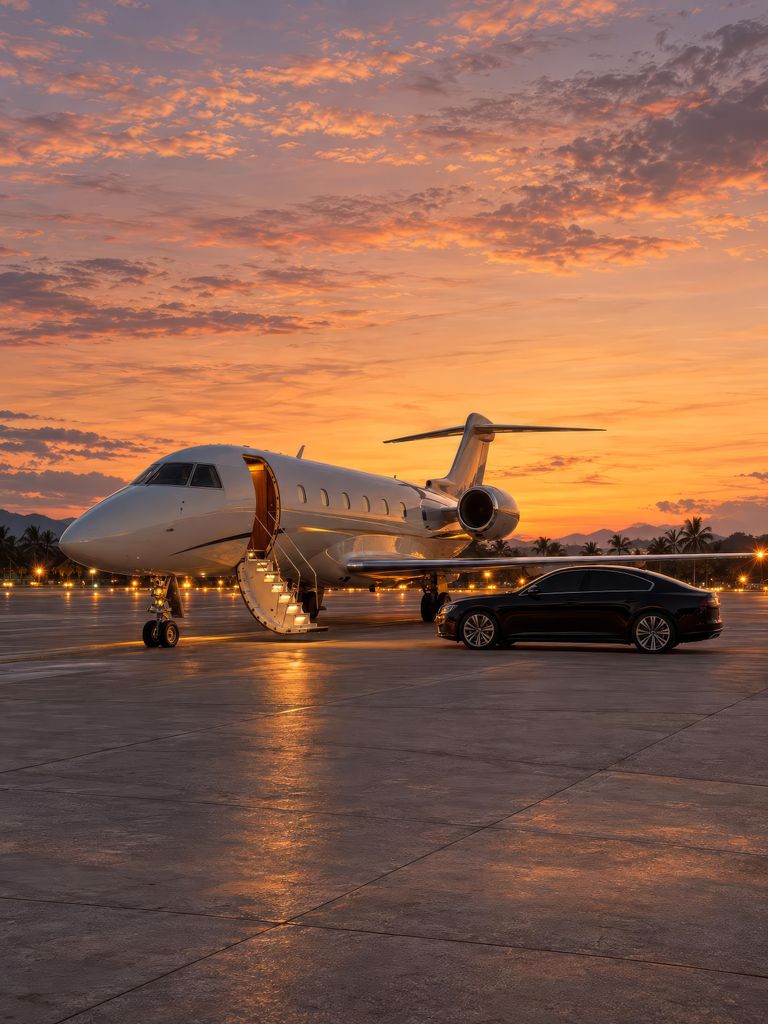
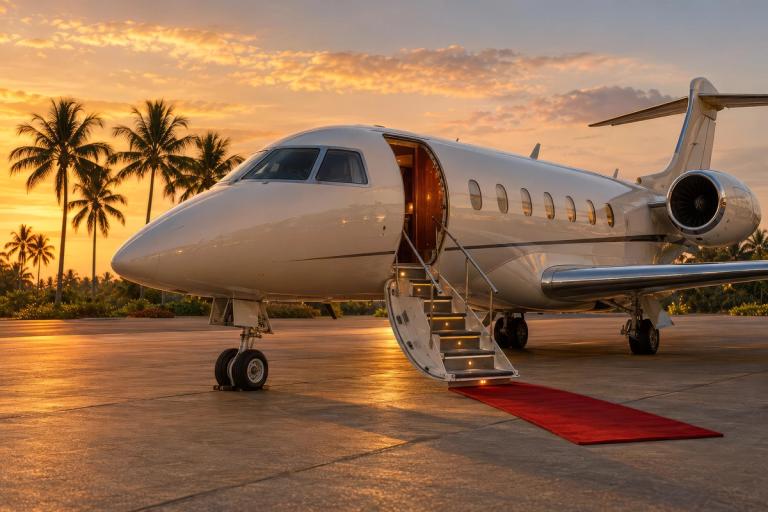
- Arrivals: private jet terminals in Phuket, Don Mueang and U-Tapao, or a private meet-and-assist host on a scheduled flight. Thai immigration sells no paid fast track through any company. Our private jet charter page covers flights in.
- Stays: suites, private floors or a villa with one gate to control.
- Security: licensed Thai officers on about 2 hours' notice, and planned routes.
- Drivers: cars and vans on call for talent and key crew.
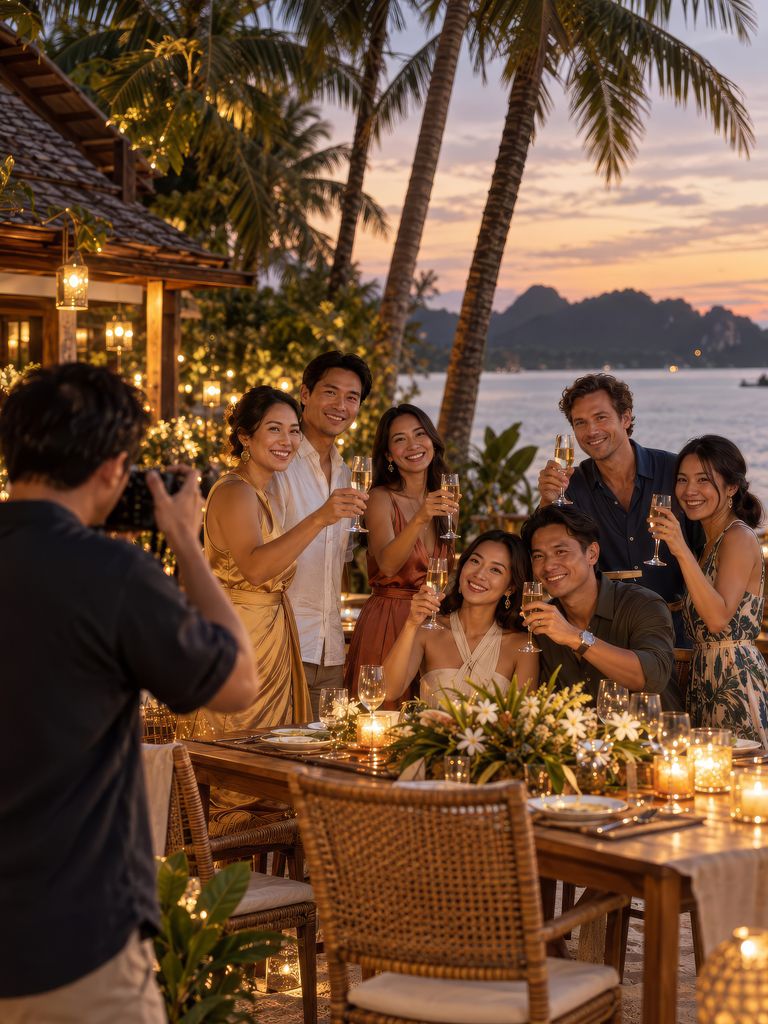
- Dining: private rooms and chefs, with no photos and a set guest list.
Discretion runs through every booking. Every member of our team has signed an NDA with VIP Luxury Services, and we can arrange a separate NDA for your production. We use code names for talent in all messages and keep the guest list short at each venue. Where the venue allows it, we ask its staff to sign NDAs too. One contact runs your side of the shoot from arrival to wrap.
When is the best season to shoot?
The best season to shoot depends on the coast. On the Andaman side around Phuket, December to March is driest. On the Gulf side around Koh Samui, February to April is driest, and November is the wettest month. In the north, the cool months bring clear air and soft light.
Chiang Mai has a smoky season, mainly from February to April, which can spoil wide shots. In 2026, Chiang Mai province had 53 days over Thailand's PM2.5 standard between 1 January and 31 May. For northern landscapes, plan for November to January.
Rain is not always a problem. Short tropical showers can give dramatic skies and empty locations. The bigger risk is rough sea for boat and island scenes, so build a weather day into any marine schedule.
Plan your production support with Tanner
One planner runs the whole private side: jet, villa, cars, security and the table at night, with our Thai team in every main town. Tanner works alongside your local coordinator, not instead of one. Send your dates, cities, cast size and any security needs. We get back to you right away with a plan for arrivals, stays, cars and dining. See our celebrity and VIP guide for more.